




























Views
Downloads


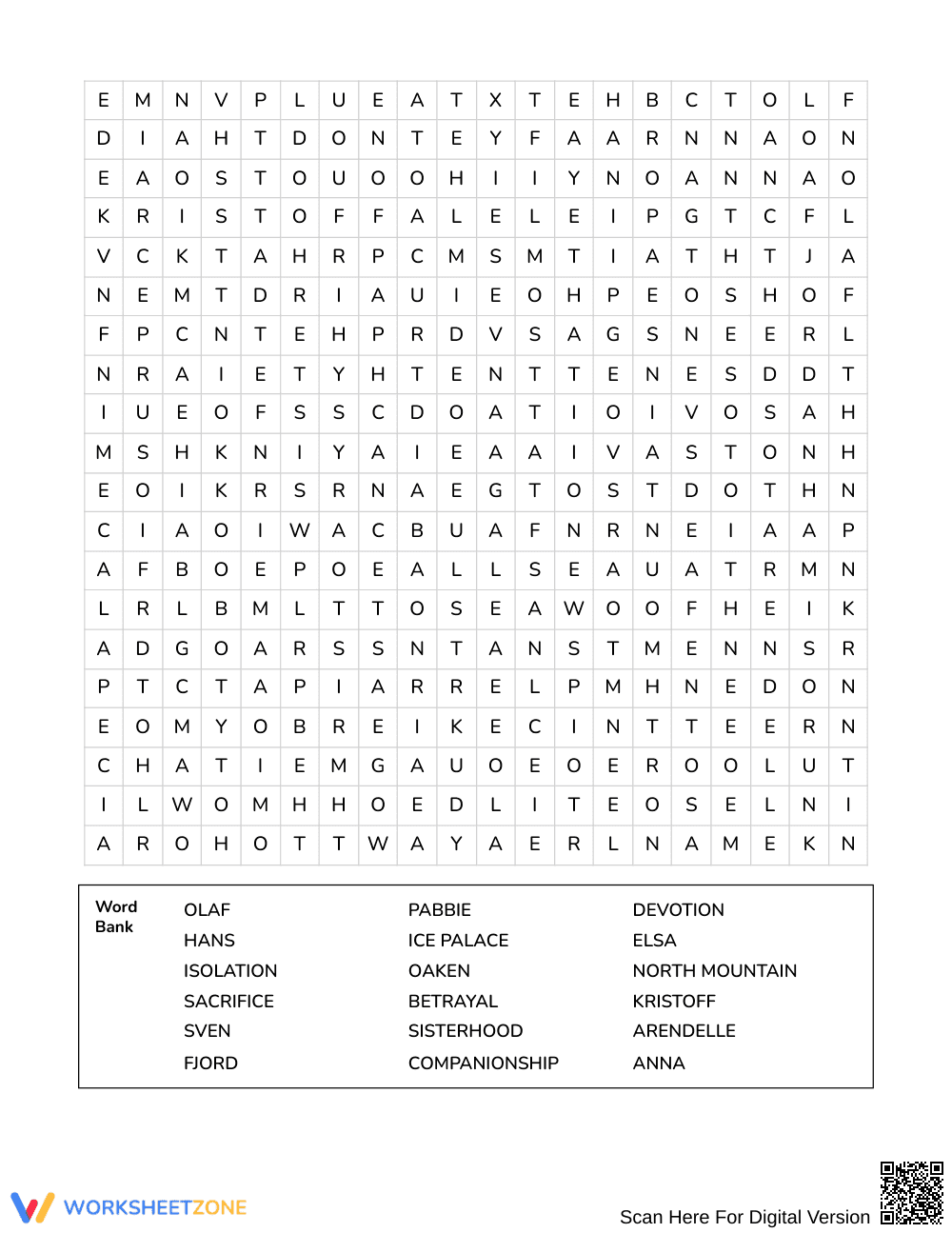

Complete Frozen Characters Word Search | Grades 7–8 ELA

Paste this activity's link or code into your existing LMS (Google Classroom, Canvas, Teams, Schoology, Moodle, etc.).
Students can open and work on the activity right away, with no student login required.
You'll still be able to track student progress and results from your teacher account.
This Grades 7–8 English Language Arts word search strengthens literary vocabulary by guiding students through 18 thematic words linked to characters, settings, and relationships. Learners analyze detailed narrative clues to identify key terms before tracking them down across a letter grid, reinforcing plot comprehension and textual terminology through engaging cumulative review.
At a Glance
- Grade: Grades 7–8 · Subject: English Language Arts (ELA)
- Standard: Not standards-assessed — vocabulary enrichment
- Skill Focus: Literary analysis of characters, narrative settings, and interpersonal relationships
- Format: 3 printable pages · 18 hidden words · Full answer key included · PDF document
- Best For: Cumulative novel study review, sub plans, and literary enrichment
- Time: 25–35 minutes of active student engagement
What's Inside
This 3-page printable activity pack features an extensive vocabulary search paired with descriptive character and setting clues. The resource presents an 18-term shuffled word bank alongside descriptive definitions that require students to connect character traits, dramatic plot points, and key locations before searching the grid. A complete 4-page answer key provides clear letter placements, ensuring rapid verification during whole-class check-ins or self-paced grading.
How the Puzzle Works
Students navigate a dense 20-by-20 letter grid containing 18 thematic vocabulary words hidden in all directions: north, northeast, east, southeast, south, southwest, west, and northwest. To complete the activity, learners read rigorous textual clues that define key figures like Elsa, Anna, and Kristoff, thematic concepts like sisterhood and betrayal, and geographic settings like Arendelle and the North Mountain. After deducing the correct term from the shuffled word bank, students trace the terms forwards, backwards, and diagonally through the grid, reinforcing spatial awareness alongside literary recall.
Standards Alignment
This word search is designed strictly as a vocabulary enrichment resource and does not align to an official Common Core or state academic standard. Rather than assessing formal benchmarks, the activity functions as supplementary ELA coursework that deepens thematic familiarity and reinforces character analysis concepts within an engaging puzzle framework.
How to Use It
Deploy this puzzle as a cumulative review activity after completing a character study unit, or assign it as an engaging independent task for early finishers and emergency sub plans. During the 25 to 35 minutes of working time, circulate the room and monitor which narrative clues cause hesitation, identifying characters or motifs that may require targeted whole-group review.
Who It's For
This activity is tailored for middle school students in Grades 7–8 who benefit from contextual vocabulary reinforcement and literary recall. Teachers can support struggling readers by encouraging peer collaboration on the descriptive clues, while advanced learners can compose original sentences demonstrating each term's role in the narrative. Pair this printable with a character relationship anchor chart or plot diagram to anchor vocabulary in deep literary analysis.
Developing strong literary vocabularies through thematic clues and puzzle-based retrieval reinforces textual comprehension and narrative retention for middle school students. While unattached to a formal standard code, this vocabulary enrichment resource targets character, setting, and relationship recognition across a 20-by-20 grid. According to Fisher & Frey (2014), purposeful vocabulary acquisition relies on structured exposure to content terminology across varied contexts, which solidifies semantic connections and enhances student engagement during independent or paired study. By requiring students to interpret complex definitions before locating hidden terms, the activity bridges passive word recognition with active textual analysis. This method ensures that cumulative review exercises remain intellectually rigorous rather than purely visual tasks. Integrating structured word puzzles alongside core English Language Arts curricula offers an accessible, low-anxiety pathway for diverse learners to consolidate narrative themes, build disciplinary literacy, and retain essential academic vocabulary across extended reading units.


