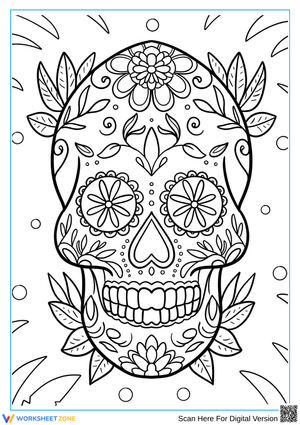
Engaging Skull Coloring Pages for Creative Classroom Art Projects
Skull coloring pages offer a unique way for students to explore the intersection of art, history, and biology. While some associate skull imagery with the macabre, these designs serve as foundational structures in artistic study and represent significant cultural traditions. By introducing these printables into your classroom, you provide learners with a versatile canvas to practice symmetry, proportion, and color theory. Whether planning a lesson for a cultural celebration or a detailed anatomy unit, these resources help students see the human form as a fascinating subject. Worksheetzone provides high-quality designs that cater to various skill levels, ensuring every student can find a page that sparks their curiosity. These activities are about connecting with visual history and developing essential fine motor skills.
Historical Significance of Skull Art through the Ages
The use of skull imagery in art has a long history spanning civilizations. From Renaissance memento mori paintings to modern pop art, skulls symbolize a wide range of human experiences. In many artistic traditions, the skull serves as a powerful reminder of the precious nature of life. By teaching students about these historical contexts, you help them understand that symbols carry deep meanings depending on the era. According to History.com, Día de los Muertos is a Mexican holiday celebrated on November 1 and 2, when families welcome back the souls of their deceased relatives. This tradition uses sugar skulls, or calaveras, which represent the departed and are decorated with vibrant colors to celebrate life rather than mourn death. This context allows students to see the skull as a vessel for memory and celebration. Understanding these roots encourages a thoughtful approach to the art they create, transforming a simple coloring session into an exploration of human heritage.Exploring Diverse Artistic Styles and Creative Approaches
Our collection of skull coloring pages features a broad spectrum of artistic styles, allowing teachers to tailor lessons to student interests. For younger learners, simple outlines with large areas are ideal for practicing basic color application. These friendly, cartoon-style designs help normalize the imagery and make it accessible. In contrast, older students might gravitate toward intricate geometric patterns or realistic illustrations that challenge their technical abilities. These detailed pages provide an excellent platform for teaching shading techniques, such as cross-hatching, to create depth. Geometric designs are particularly useful for reinforcing mathematical concepts like symmetry, showing how math and art overlap. By offering a variety of choices, you empower students to take ownership of their artistic journey and select a style that resonates with their personal aesthetic. This diversity ensures the activity remains fresh for all learners, from those just starting their journey to those looking to refine their skills.Cultural Appreciation: The Art of the Sugar Skull
One visually striking form of skull art is the Mexican sugar skull, or calavera. These designs are known for vibrant colors, floral patterns, and intricate details that celebrate the lives of loved ones. Integrating these designs into your curriculum provides an opportunity to discuss cultural appreciation and the importance of understanding traditions. When students color these pages, they can learn about symbols like marigolds, which guide spirits, and patterns that represent the joy of life. This lesson helps students move beyond seeing symbols as decorative and encourages them to research the narratives they represent. It is a meaningful way to broaden global awareness and respect for diverse traditions. You can challenge students to create their own symbolic patterns within the skull framework, using colors representing their family histories. This personal connection makes the final art piece more significant and helps students develop a nuanced understanding of how art can process complex emotions.Developmental Benefits of Detailed Coloring Activities
Coloring offers significant developmental benefits for students. Engaging with complex skull designs requires focus, helping students develop the ability to sustain attention. This mental discipline is a transferable skill that supports success in other academic areas, such as reading and problem-solving. Furthermore, the act of coloring intricate patterns helps refine fine motor skills and hand-eye coordination. Navigating small spaces requires precise hand movements, which are essential for developing legible handwriting. Recent neuroscientific research suggests that the repetitive motion of coloring symmetrical patterns can effectively lower cortisol levels and promote a sense of calm. This physiological response is helpful in high-energy environments where students need a structured way to transition between subjects. By providing focused art periods, teachers support emotional regulation while building neural pathways associated with creative thinking and sustained focus. This dual benefit makes coloring a valuable tool in any educational toolkit.Teacher Tips for Successful Classroom Implementation
To maximize the impact of skull coloring pages, provide clear context before starting. Begin with a brief discussion about the ways skulls have been used in art throughout history. This ensures students approach the theme with curiosity. Providing a variety of coloring tools is also essential for keeping students engaged. While crayons work well for younger children, older students will appreciate using colored pencils or fine-liner pens to add detail. You might also consider turning the activity into a collaborative project. Once pages are finished, create a gallery display in the hallway, grouping skulls by style. This celebrates the collective effort of the class and allows students to see how peers interpreted the same shape. Another tip is using the finished pages as a basis for a short writing assignment. Ask students to describe symbols they used or write a story about their design. This integrates literacy into the art lesson and encourages deeper reflection on their creative choices and the meaning behind their work.Integrating Skull Art into Science and Biology Lessons
Skull coloring pages are an interdisciplinary tool that can bridge the gap between art and science. During units on the skeletal system, these printables help students visualize and memorize the different bones of the head. By assigning different colors to specific bones, such as the frontal or mandible, students create an anatomical map that serves as a useful study guide. This hands-on approach makes scientific study more accessible for learners who might struggle with traditional textbooks. You can also use these pages to discuss how the skull protects the brain and supports facial structure. This connection between form and function is a fundamental concept in biology easily illustrated through art. For older students, you can introduce anatomical terms and challenge them to label their drawings accurately. This blend of creative expression and scientific inquiry helps students see the world through multiple lenses and encourages a holistic approach to learning. It turns a standard biology lesson into an interactive experience that appeals to visual learners.Advanced Artistic Techniques for Sophisticated Designs
For students ready to push their boundaries, skull coloring pages serve as a canvas for practicing advanced techniques. Encourage learners to think about light sources and how they would create shadows and highlights. By using multiple shades of the same color, students can practice blending to create a sense of volume and depth. This technical engagement transforms a simple coloring sheet into an exercise in value and form. They can also experiment with texture, trying to replicate the smooth surface of bone or patterns found in lace designs. Techniques like burnishing with colored pencils or using white gel pens for highlights add a professional finish to their work. You might also introduce complementary colors to create high-contrast designs that pop. These challenges keep the activity interesting for experienced artists and provide a safe space to experiment without the pressure of starting a complex drawing from scratch. By mastering these methods, students build the confidence and skill set needed for ambitious projects. It is a great way to bridge the gap between guided practice and independent creative work.Frequently Asked Questions
1. Are skull coloring pages appropriate for elementary students?
Yes, they are appropriate when teachers select age-suitable designs. For younger children, cartoon-style skulls with friendly features are recommended. These designs help demystify the human skeletal system and can be used as an introduction to anatomy or cultural celebrations like Day of the Dead. When presented as a creative activity, young learners find them engaging.2. How do these pages help teach about the Day of the Dead?
These printables are a perfect tool for discussing the traditions of the Mexican holiday. They allow students to engage with the symbolic imagery of the sugar skull. Teachers can explain how vibrant colors represent a joyful remembrance. This helps students understand the celebratory nature of the calavera, encouraging cultural empathy and global awareness among students.3. What are the best tools for coloring intricate skull designs?
For detailed patterns, colored pencils are the best choice as they allow for precision and blending. Fine-liner pens are also excellent for outlining small details. Providing a variety of tools allows students to experiment and discover which medium best suits their individual style and artistic goals in the classroom.4. Can these coloring pages be used for interdisciplinary projects?
Absolutely. These resources are ideal for connecting art with subjects like history and biology. Whether studying the skeletal system or exploring history, skull art provides a versatile starting point. This approach makes learning more dynamic and meaningful for all students involved, ensuring the information is more likely to be retained.Clear All