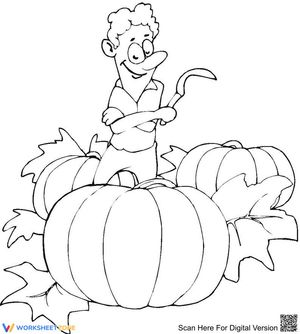
Pumpkin Coloring Pages for Fall Centers, Art Time, and Seasonal Classroom Displays
Why pumpkin coloring pages fit fall instruction so well
Pumpkin coloring pages work because they match the rhythm of the school year. Teachers often need low-prep activities that still feel connected to the season, and pumpkins can support that in art, morning work, indoor recess bins, and holiday centers. On the Worksheetzone pumpkin coloring pages collection, the focus is clearly on printable arts and crafts use, which makes the resource easy to plug into October and November planning.
For preschool and elementary classrooms, pumpkins are familiar without being narrow. They can fit a harvest theme, a Halloween theme, a letter study, or a simple fall bulletin board project. That flexibility matters when a class includes learners at different readiness levels. One child may just be practicing grip and color choice, while another is adding details, labeling parts of a pumpkin, or discussing where pumpkins come from.
Which learners benefit most from pumpkin coloring pages
These printables are strongest in preschool through upper elementary settings because the format is easy to differentiate. Younger learners usually do best with bold outlines, large spaces, and a single pumpkin image. Those pages reduce frustration and give students more control as they build hand strength and stay inside a shape. In kindergarten and first grade, that simplicity also supports quick success during seasonal rotations.
Older elementary students can use more detailed pumpkin coloring pages with stems, vines, jack-o'-lantern faces, or harvest scenes. That added complexity extends the task without changing the basic routine. A second or third grade class might compare color choices, discuss how pumpkins look in different seasons, or write a few describing words after coloring. Upper elementary teachers can even use the printable as a fast warm-up before a paragraph on fall traditions or crops.
Skills teachers can build during a coloring activity
Pumpkin coloring pages are often treated as filler, but they can support concrete early learning goals when used with intention. Fine motor practice is the most obvious benefit. Students control crayons, pencils, or markers, adjust pressure, and work within borders. Those small movements matter in early grades because they connect directly to handwriting readiness and tool control.
Color recognition and oral language are also easy to layer in. Teachers can ask students to follow a color plan, compare shades of orange and green, or name the pumpkin parts they see. That keeps the activity active rather than passive. With emerging readers, a teacher can prompt simple sentence frames such as My pumpkin is bright orange or I colored the stem green. The page stays visual, but vocabulary work is happening alongside it.
Creative expression matters too. Not every seasonal printable needs one correct answer. Some students will color a realistic pumpkin, while others will create patterned pumpkins for a bulletin board display. That choice gives teachers a way to keep the task accessible while still making student work feel personal. In mixed-ability classrooms, that balance between structure and choice is useful.
Easy cross-curricular links for science and vocabulary
Pumpkin coloring pages connect naturally to simple content learning, which is why they are easy to justify in instructional time. Britannica identifies pumpkins as a type of squash in the gourd family, giving teachers a straightforward science tie-in. Even a short discussion about how pumpkins grow, what parts students can see, or where pumpkins are found can move the activity beyond decoration.
USDA background statistics show that pumpkins remain a widely produced U.S. crop, which helps explain why they appear so often in classroom fall themes. That detail gives teachers a concrete way to connect seasonal printables to agriculture, harvest discussions, and regional crop awareness instead of treating the page as a standalone craft. Source: Pumpkins: Background & Statistics | USDA ERS.
Vocabulary work can stay simple and still feel purposeful. Teachers might introduce words such as pumpkin, stem, vine, harvest, squash, and gourd before students begin. After coloring, students can sort those words, use two in a sentence, or point to the matching part on the page. That structure turns pumpkin coloring pages into a support tool for speaking, labeling, and descriptive writing.
Classroom Implementation
In most classrooms, the best use of pumpkin coloring pages is not as an isolated packet. They work better when placed inside a routine. During centers, one group can color while another completes letter work or reading practice. During arrival, the pages can sit in a tray as a calm entry task. During a fall party or themed day, they can provide a quieter option that still matches the event.
Teachers can also keep prep light by deciding the purpose before copying. If the goal is independence, choose a simple page and place crayons at the table. If the goal is discussion, model vocabulary first and ask students to explain their color choices. If the goal is display, give students a consistent direction such as using warm fall colors or adding a short label beneath the finished page.
- Use simple outlines for preschool, kindergarten, and intervention groups that need shorter tasks.
- Offer more detailed pages in early finisher bins for students who want extra challenge.
- Pair the printable with a mini-lesson on pumpkin parts, harvest vocabulary, or the letter P.
- Mount finished work on colored paper for an instant seasonal bulletin board.
This kind of implementation keeps the activity practical. It stays easy to run, but it also supports planning choices that matter in real classrooms: time, grouping, transitions, and visible student products.
What to look for in a printable pumpkin set
Not all pumpkin coloring pages solve the same classroom problem. A useful set gives teachers options. Simple pumpkins with thick lines are best when the goal is motor control, quick completion, or low-stress participation. More detailed pumpkins help when the class needs longer engagement or when teachers want display pieces that feel a little more finished.
Variety also matters because fall lessons are not always the same. One week, a teacher may want a plain pumpkin shape for color practice. Another week, the class may be discussing harvest imagery, seasonal celebrations, or classroom decor. A good printable collection supports both. That is part of why the Worksheetzone resource works well for school use: the pumpkin theme can be reused across multiple October and November contexts rather than for one narrow lesson.
How pumpkin coloring pages support low-prep seasonal planning
Seasonal resources earn their place when they reduce planning load without weakening instructional value. Pumpkin coloring pages do that well because they can fill several roles at once: art activity, center task, transition support, and display piece. For teachers managing multiple groups or short planning windows, that versatility is the point.
They also store well. A teacher can print a class set for a single lesson, or keep a stack ready for substitute plans, rainy-day indoor choices, and fast-finish folders. Because the pumpkin image is so recognizable, students usually need very little frontloading. That means the printable is usable even when time is compressed.
When paired with a short vocabulary prompt or a simple science note about pumpkins being a squash in the gourd family, the page becomes more than coloring time. It becomes a seasonal tool that supports classroom flow and gives students a familiar, age-appropriate task tied to fall learning.
Frequently Asked Questions: using pumpkin coloring pages in the classroom
1. What age or grade levels work best for pumpkin coloring pages?
They work best from preschool through elementary grades. Younger learners usually need large outlines and fewer details, while older students can handle more detailed pages and short extension tasks such as labeling, describing, or writing about the image.
2. How can teachers use pumpkin coloring pages in a fall lesson plan?
Teachers can use them in centers, arrival routines, art time, indoor recess bins, seasonal celebration stations, or as a follow-up to vocabulary and science mini-lessons. The strongest use is to connect the page to a clear fall objective instead of treating it as disconnected filler.
3. Are there simple pumpkin pages for preschool and kindergarten?
Yes. Simple pumpkin coloring pages with thick borders and open spaces are the most effective choice for preschool and kindergarten because they support hand control, color recognition, and task completion without overwhelming early learners.
4. Can pumpkin coloring pages support science or vocabulary activities?
Yes. Teachers can connect the printable to basic science by noting that pumpkins are a type of squash in the gourd family and to vocabulary by teaching words such as stem, vine, harvest, and pumpkin before or after the coloring activity.
Clear All