Why Coffee Makes Such a Great Coloring Subject
Coffee coloring pages draw on one of the most recognizable visual identities in everyday life — a steaming mug with a foam heart, iced cold brew with condensation on the glass, a scatter of roasted beans. The warm, earthy palette is particularly forgiving for beginners: espresso browns, caramel tones, creamy off-whites, and soft beige work naturally together on the page.
For adult colorists, shading a detailed latte art design can feel like the same slow, intentional ritual as brewing a morning cup — unhurried and genuinely satisfying.
What's in the Collection
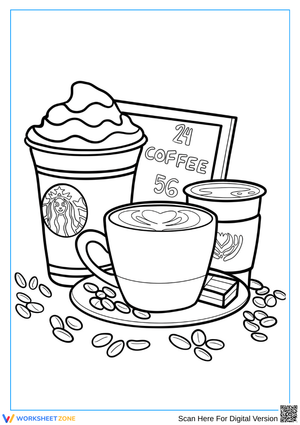
The coffee coloring pages on Worksheetzone span many styles and skill levels. Simple designs feature a single mug or travel cup with open outlines suited to younger kids and quick sessions. More detailed sheets include espresso machine close-ups, overhead flat-lay arrangements with beans, cinnamon sticks, and saucers, and intricate latte art patterns like rosettes and tulips in outline form.
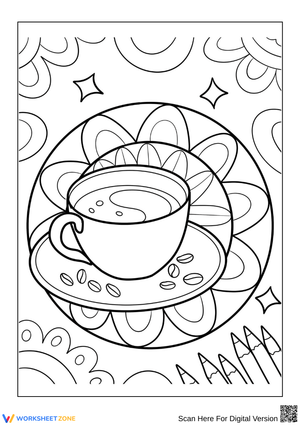
Beyond realistic scenes, the collection includes kawaii-style mugs with expressive faces, hand-lettered coffee quote frames, and mandala-style designs built around a cup motif. Styles range from clean single-object outlines to full multi-element café interiors.
Coloring Tips for Coffee Pages
Layering warm tones is the key to getting strong results. For the coffee surface inside the cup, start with a medium warm brown, then deepen the edges with burnt sienna or dark chocolate to suggest depth and the curve of the vessel. For foam, leaving the paper's natural white as the highlight works better than applying any cream-colored pencil — it reads as brighter and more realistic.
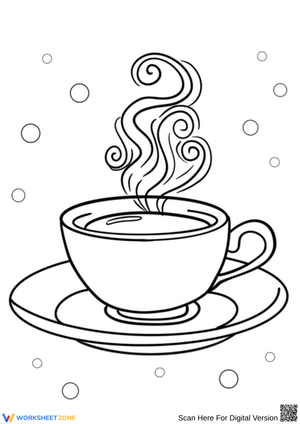
Alcohol markers handle flat fills on mug bodies and backgrounds well, while colored pencils give better control over the gradual tonal shifts on curved surfaces. For steam wisps, a very light cool gray applied with minimal pressure looks more natural than solid white lines or heavy outlines.
Frequently Asked Questions
What age group are these coffee coloring pages best for?
The collection includes designs for all ages. Simple mug outlines with large open shapes suit kids ages 4 and up, while detailed café scenes and latte art patterns are better matched to ages 10+ and adults who enjoy fine-detail work.
What colors do I need for a realistic coffee illustration?
A core set of warm browns handles most of the coloring: dark espresso brown, medium caramel, warm tan, and light cream for foam. A muted terracotta or burnt orange adds warmth to ceramic surfaces, and cool gray handles steam wisps and shadows cleanly.
What paper type works best for printing these sheets?
Standard 20 lb copy paper works well for colored pencils and crayons. For alcohol markers or watercolors, use 60–80 lb cardstock to prevent bleed-through and keep the page from warping while you work.
Did you know that free-pour latte art was pioneered in Seattle?
The technique of creating rosettes, hearts, and tulips by steering steamed milk into espresso was developed by David Schomer at Espresso Vivace in Seattle during the late 1980s — he formalized it into a teachable skill and helped launch latte art into the global barista competition scene it's known for today.












 Interactive Worksheet Maker
 Quiz Maker
 Word Search Maker
 Crossword Puzzle Maker
 Word Scramble Generator
 Sentence Scramble Generator
 Handwriting Worksheet Generator
 Name Tracing Generator
 Fill In The Blank Generator