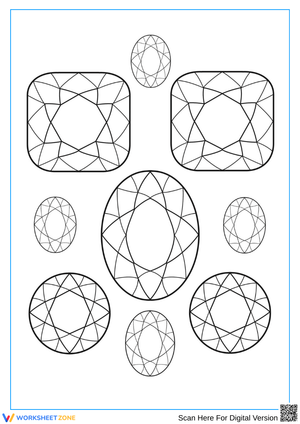
What Makes Diamond Designs So Satisfying to Color
Diamonds are built on geometry — a network of triangular and kite-shaped facets that redirect light in every direction. That structure makes them unusually rewarding to color. Each facet works like a small canvas, letting you layer gradients from pale ice-blue to deep indigo, or shift from white at the top table to a rich grey at the culet. The natural symmetry of a diamond is forgiving: even a simple two-tone fill looks polished.
Beyond classic clear stones, diamond coloring pages can feature crown settings, tennis bracelets, engagement rings, and Art Deco geometric patterns. This range means the same theme can feel minimalist on one sheet and ornate on the next.
What You'll Find in the Worksheetzone Collection
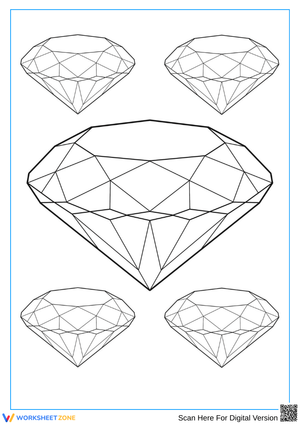
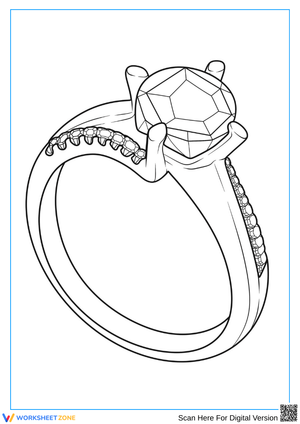
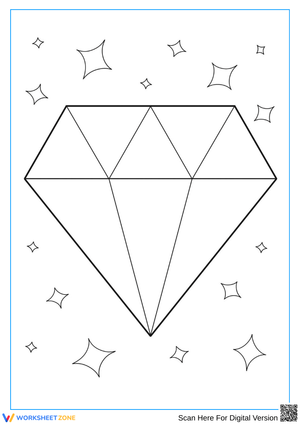
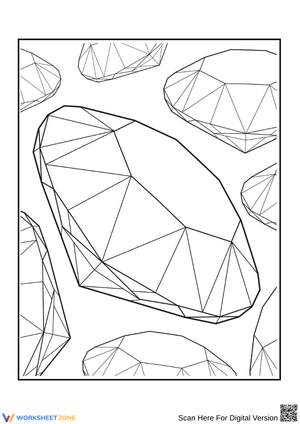
Worksheetzone's diamond coloring pages cover a range of styles and complexity. Single floating gems — princess, oval, and round brilliant cuts — sit alongside full jewelry scenes like ring settings and gem clusters. Some sheets have large, open facet lines suited to younger colorists; others pack in fine angular detail for those working with fine-tipped markers or colored pencils.
- Stand-alone gem outlines in multiple cut styles
- Diamond shapes used in repeating geometric backgrounds
- Jewelry scenes including rings, necklaces, and crowns
- Mandala-style designs that incorporate faceted shapes
Coloring Tips for Realistic Shine and Sparkle
Getting a diamond to look luminous on paper comes down to contrast. Identify the light source first, then leave one or two facets near-white or barely tinted. Build progressively darker values — cool greys, pale lavender, or icy blue — moving toward the stone's edges and underside. Prismacolor or Polychromos pencils blend smoothly for gradual shading, and silver or white gel pens add crisp highlight dots after the base color is down.
For a colored-stone effect, rose-cut designs respond well to blush pinks and champagne golds. A fine white gel pen drawn along facet edges finishes the look cleanly without overworking the paper.
Frequently Asked Questions
What age group are diamond coloring pages best suited for?
The printables span a broad range. Simple large-facet sheets work well for kids aged 6 and up, while detailed jewelry scenes and intricate geometric cuts are better matched to older teens and adults who enjoy precision coloring.
What colors work best when coloring a diamond?
Clear diamonds look most realistic with cool greys, pale blues, and white highlights. For colored stones, try light amethyst purple for a tanzanite effect or soft pink for a rose diamond — just keep one facet nearly white to suggest a light source.
What paper size and print settings should I use?
Print on standard 8.5 x 11 white cardstock at the highest quality setting your printer allows. Cardstock at 65 lb or heavier holds up better to blending with markers or multiple pencil layers without buckling or tearing.
Why does the modern round brilliant cut diamond sparkle so much more than older cutting styles?
The round brilliant cut, developed by mathematician Marcel Tolkowsky in 1919, uses 58 precisely angled facets calculated to maximize total internal reflection — meaning light bounces around inside the stone before exiting through the top. Older cuts like the rose cut or old mine cut were shaped by eye and let more light escape through the base, producing a softer, less brilliant glow by comparison.












 Interactive Worksheet Maker
 Quiz Maker
 Word Search Maker
 Crossword Puzzle Maker
 Word Scramble Generator
 Sentence Scramble Generator
 Handwriting Worksheet Generator
 Name Tracing Generator
 Fill In The Blank Generator