Why Circle Coloring Pages Have Lasting Appeal
Circle coloring pages tap into one of the most universally pleasing shapes in visual art. Symmetry makes circles easy to fill, shade, and layer — a clean sun outline gives beginners a satisfying entry point, while a dense pattern of concentric rings can hold an adult's attention for a full session.
Many recognizable coloring styles — mandalas, bubble art, and radial geometric patterns — are built entirely from circles and arcs. These printables are as useful for young learners practicing shape recognition as for adults who find repetitive, predictable patterns calming to fill.
What the Worksheetzone Circle Collection Includes
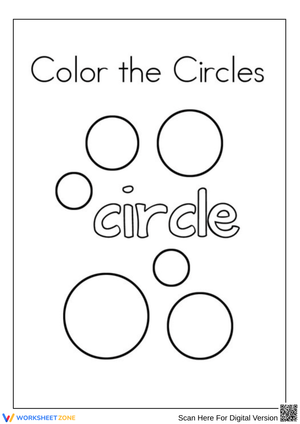
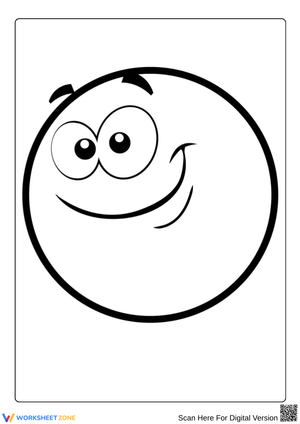
Worksheetzone's circle sheets span a wide skill range. Simple single-circle outlines suit preschool-age children learning to stay inside curved lines — a task that's harder than it looks, since curves don't anchor a crayon the way straight edges do. More complex designs feature dozens of intersecting arcs and subdivided ring grids suited to older kids, teens, and adults.
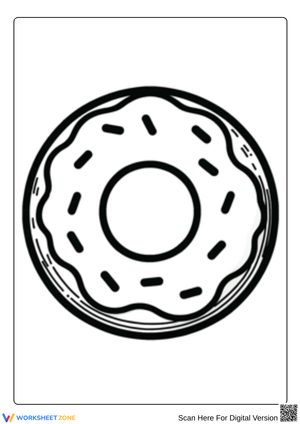
Beyond pure geometry, some pages use circles as a framing device — a circular border around a flower center, rings arranged as a target, or radial petal clusters that echo mandala compositions. A kindergarten class and a high school art student can both find something useful here without overlap.
Coloring Techniques for Circle-Based Patterns
For concentric-ring designs, working outward from the center gives you better color control. Analogous color progressions — blues into purples, or yellows into oranges — let each ring shift gradually rather than clash. Colored pencils blend smoothly along curved edges without the bleeding risk of broad markers on tight arcs.
- Start with a light pass and build intensity along each ring's outer edge
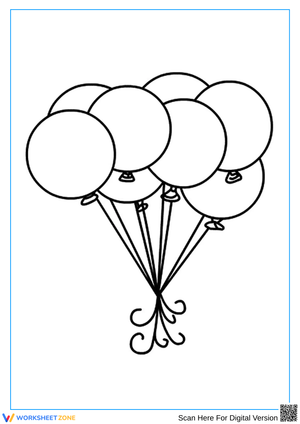
- On bubble and polka-dot sheets, add a small highlight spot in the same corner of every circle for a three-dimensional look
- Fine-tip gel pens work well for adding dot or spiral details inside larger circles
- Broad washable markers in primary colors keep simple, bold designs clean and vivid
Frequently Asked Questions
What age group are circle coloring pages best suited for?
Simple bubble and single-circle designs work well for children aged 3 and up, while intricate concentric-ring and radial patterns are better matched to ages 8 and above, or younger children coloring with adult support.
What coloring tools work best on circular patterns?
Colored pencils give the most control on tight curved sections, while broad washable markers suit large open areas. Fine-tip gel pens add detail and texture inside larger circles without smudging.
Are circle sheets useful for classroom geometry lessons?
Yes — they pair naturally with lessons on radius, diameter, and basic symmetry. Worksheetzone allows one free download per day without a login, making it easy to pull a page quickly for class.
Why do circles appear so often in both nature and art?
A circle encloses more area per unit of perimeter than any other flat shape — a property called the isoperimetric inequality. That efficiency explains why circles appear in soap bubbles, tree rings, and pupils, and why circular compositions in art tend to feel naturally complete and balanced.












 Interactive Worksheet Maker
 Quiz Maker
 Word Search Maker
 Crossword Puzzle Maker
 Word Scramble Generator
 Sentence Scramble Generator
 Handwriting Worksheet Generator
 Name Tracing Generator
 Fill In The Blank Generator