


























Views
Downloads
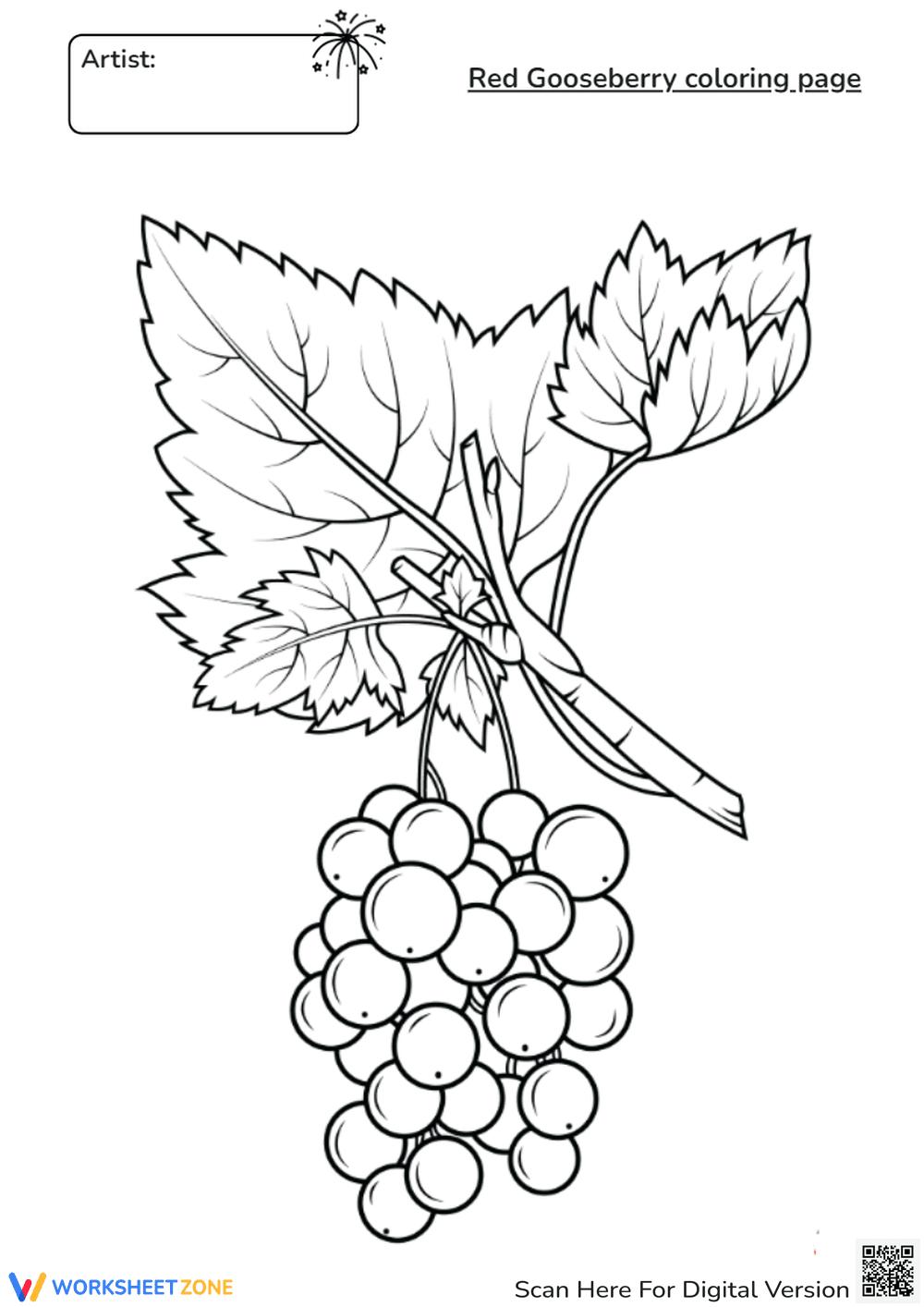

Printable Red Gooseberry Coloring Page | Grade 8
Paste this activity's link or code into your existing LMS (Google Classroom, Canvas, Teams, Schoology, Moodle, etc.).
Students can open and work on the activity right away, with no student login required.
You'll still be able to track student progress and results from your teacher account.
This printable Red Gooseberry coloring page provides students with a focused creative task that builds fine motor control and mindfulness. By engaging with this detailed botanical illustration, learners practice sustained attention and color application while producing a personalized piece of visual art suitable for classroom displays or project covers.
At a Glance
- Grade: 8 · Subject: English
- Standard:
CCSS.ELA-LITERACY.SL.8.5— Integrate visual displays to add interest- Skill Focus: Botanical Illustration
- Format: 1 page · 1 task · No answer key · PDF
- Best For: Brain breaks and early finishers
- Time: 15–30 minutes
This single-page resource features a high-quality, black-and-white line drawing of a red gooseberry branch, complete with textured leaves and clustered berries. The page includes a designated space for the student artist's name at the top. The intricate design offers a balanced level of detail, making it engaging for older students. No answer key is required.
Zero-Prep Workflow
This resource requires absolutely no teacher preparation.
- Print (1 minute): Send the PDF to your copier. The crisp lines ensure excellent quality.
- Distribute (1 minute): Hand out alongside colored pencils or markers.
- Review (0 minutes): No formal grading required for this creative task.
With under two minutes of prep, this worksheet is an ideal addition to any emergency sub plan.
Standards Alignment
This activity supports CCSS.ELA-LITERACY.SL.8.5: Integrate multimedia and visual displays into presentations to clarify information, strengthen claims and evidence, and add interest. While primarily a creative exercise, completing detailed botanical illustrations helps students develop the visual communication skills necessary for creating engaging multimedia presentations and scientific diagrams. Both standard codes can be copied directly into lesson plans, IEP goals, or district curriculum mapping tools.
How to Use It
This coloring page serves as an excellent transition activity or a quiet, independent task for early finishers. As a formative assessment observation tip, educators can monitor students' fine motor stamina as they navigate the intricate leaf patterns. Expected completion time ranges from 15 to 30 minutes.
Who It's For
This resource is primarily designed for middle school and junior high students, specifically those in Grade 8, who benefit from structured creative outlets. The sophisticated botanical subject matter appeals to older learners, avoiding the juvenile themes often found in standard coloring pages. For differentiation, students requiring fine motor support can use thicker markers, while advanced artists can practice shading and blending with colored pencils. It pairs naturally with a science lesson on plant biology or an English unit on nature poetry, serving as a thematic visual companion.
Integrating creative visual tasks like this botanical illustration into the secondary classroom provides significant cognitive and emotional benefits for older students. According to a recent RAND AIRS 2024 report on adolescent learning environments, incorporating structured mindfulness activities, such as detailed coloring, measurably reduces student anxiety and improves sustained attention during complex academic blocks. By practicing these visual skills, students indirectly support CCSS.ELA-LITERACY.SL.8.5, learning to integrate visual displays to add interest and clarity to their broader academic work. The focused nature of coloring intricate patterns allows the brain to rest from heavy cognitive loads while maintaining active fine motor engagement. This dual benefit makes such resources highly valuable for maintaining classroom focus, managing transitions, and supporting overall student well-being throughout the demanding school day.


