Thanksgiving STEM activities for kids are a fun, hands-on way to bring science, technology, engineering, and math into your seasonal learning. Whether you’re teaching in the classroom, homeschooling, or planning creative activities at home, Thanksgiving offers rich opportunities to explore engineering, chemistry, physics, coding, measurement, and more. These themed challenges help students problem-solve, think creatively, and make meaningful connections to real-world concepts – all while enjoying the excitement of the holiday season.
30+ Thanksgiving STEM activities for kids
Kick off your seasonal learning with this curated list of STEM-themed tasks. The following activities are grouped into categories so teachers and parents can easily plan lessons or build a full Thanksgiving STEM week.
Engineering and building challenges
Give kids a chance to invent, design, and construct with hands-on engineering tasks inspired by Thanksgiving themes. These activities strengthen creativity, problem-solving, and understanding of real-world structures.
1. Build a turkey trap
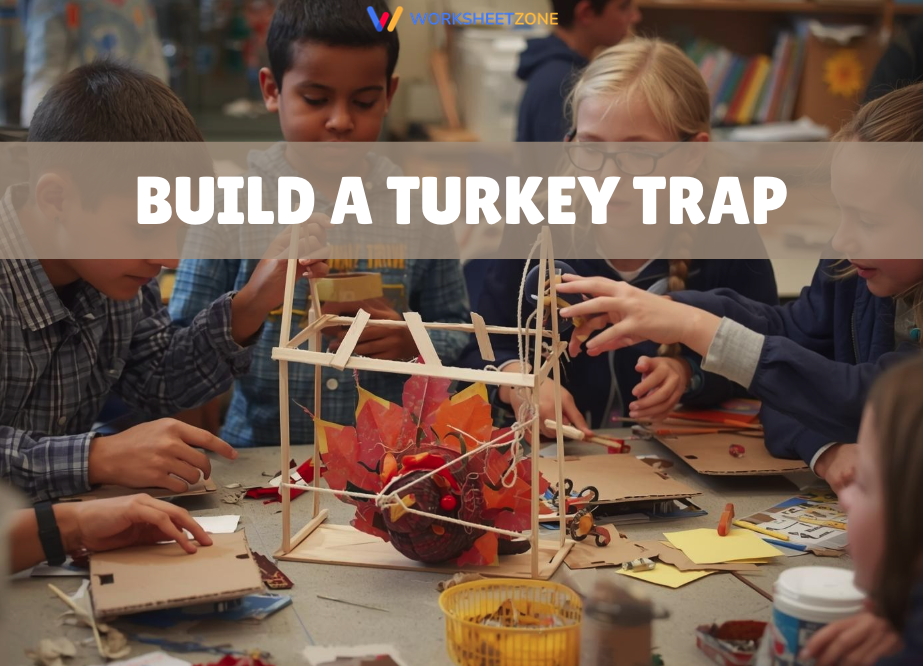
Challenge students to design a simple machine or structure to “catch” a runaway turkey. They can use cardboard, craft sticks, string, and paper to engineer creative solutions.
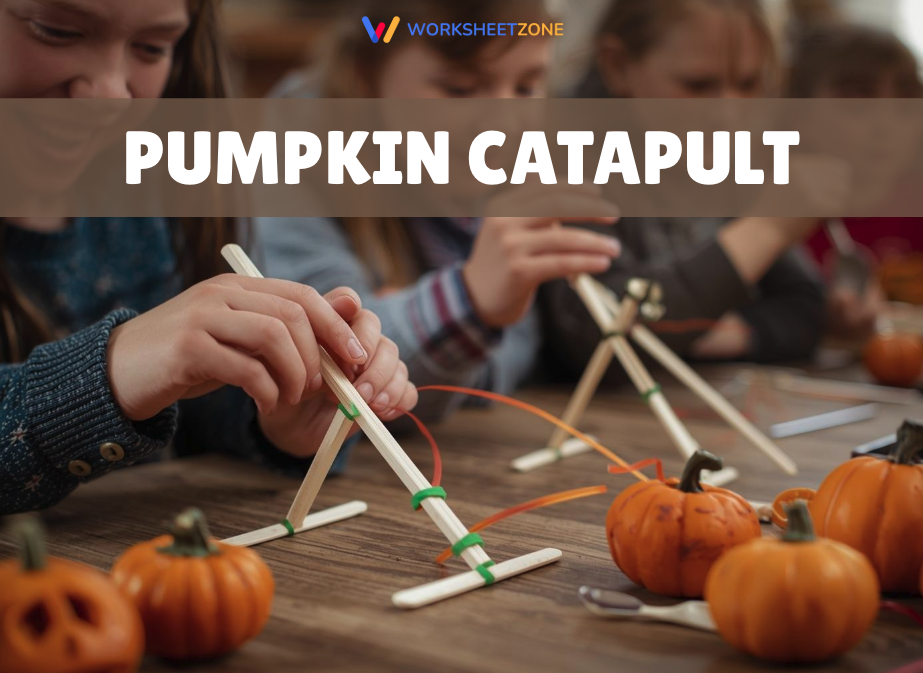
2. Pumpkin catapult
Using popsicle sticks, rubber bands, and spoons, kids build mini catapults and launch candy pumpkins while exploring force, trajectory, and angles.
3. Create a Mayflower boat
Students design and build small boats out of foil, cork, or recycled materials. Test how much weight each boat can hold before sinking.

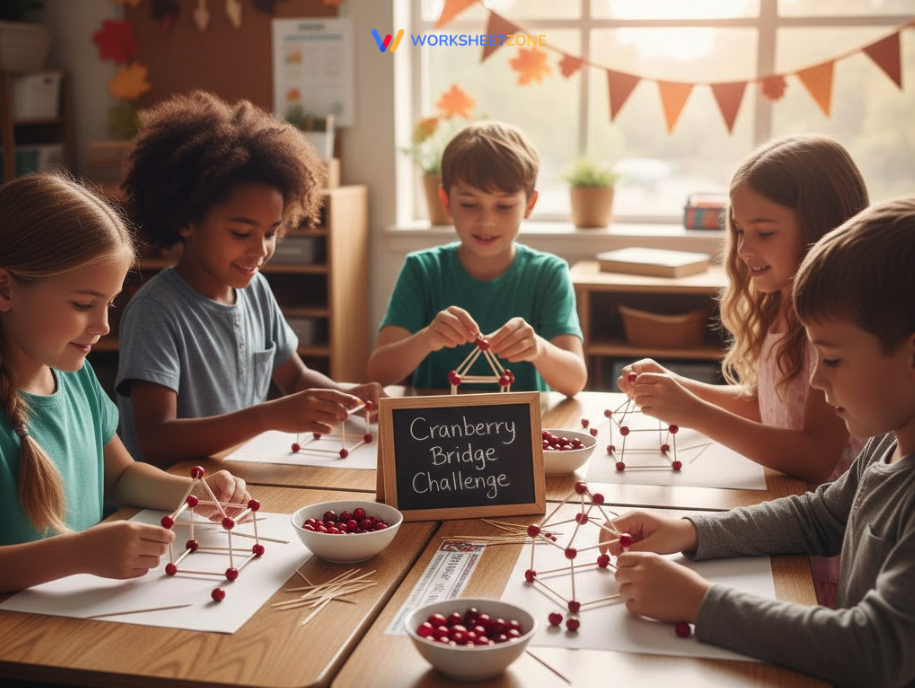
4. Cranberry Bridge challenge
Use toothpicks and cranberries to build strong bridges. This is a perfect activity to teach tension, stability, and balance.
5. Native-inspired shelter building
Let kids engineer mini shelters using natural materials, linking history, problem-solving, and structural design.

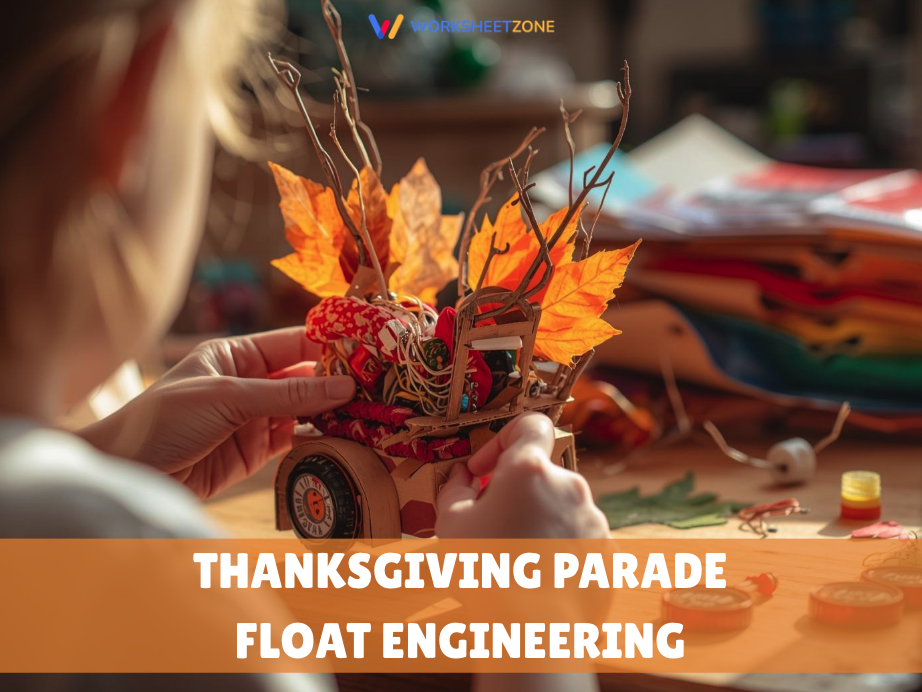
6. Thanksgiving parade float engineering
Students create their own miniature parade floats using recycled materials and then test how well the wheels roll or how steady the structure is.
7. Balloon Pilgrim hat launch
A balloon-powered launch activity that explores motion and propulsion. Kids attach a paper Pilgrim hat to a balloon racer and test how far it travels.

Science and math experiments
These Thanksgiving-themed science and math experiments help children explore chemistry, physics, measurement, and data collection in a fun, seasonal way. They turn everyday holiday materials into powerful learning tools.
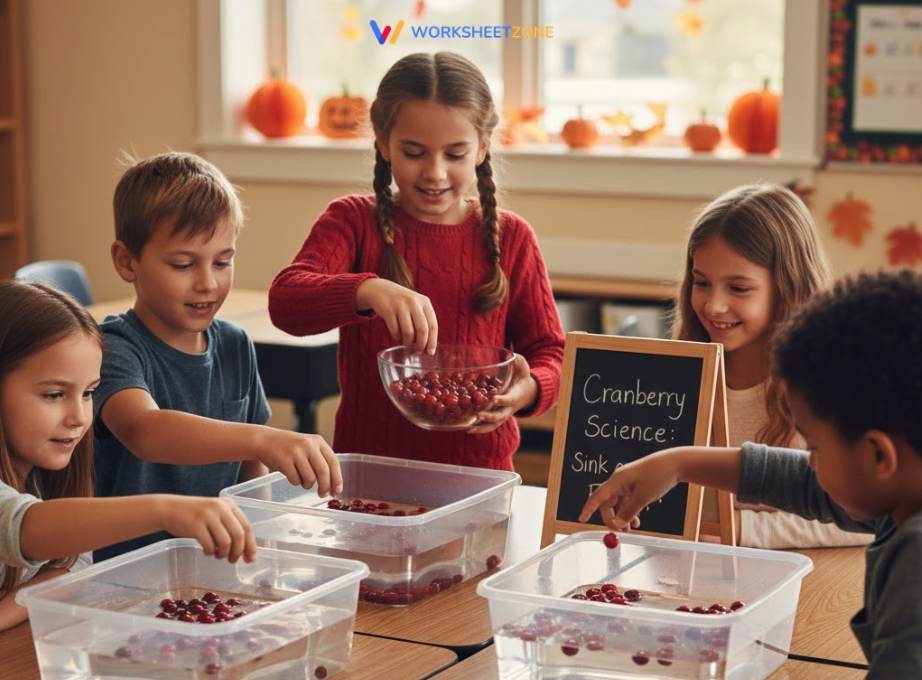
1. Cranberry science: Sink or float?
Use fresh and dried cranberries to explore density, buoyancy, and air pockets.
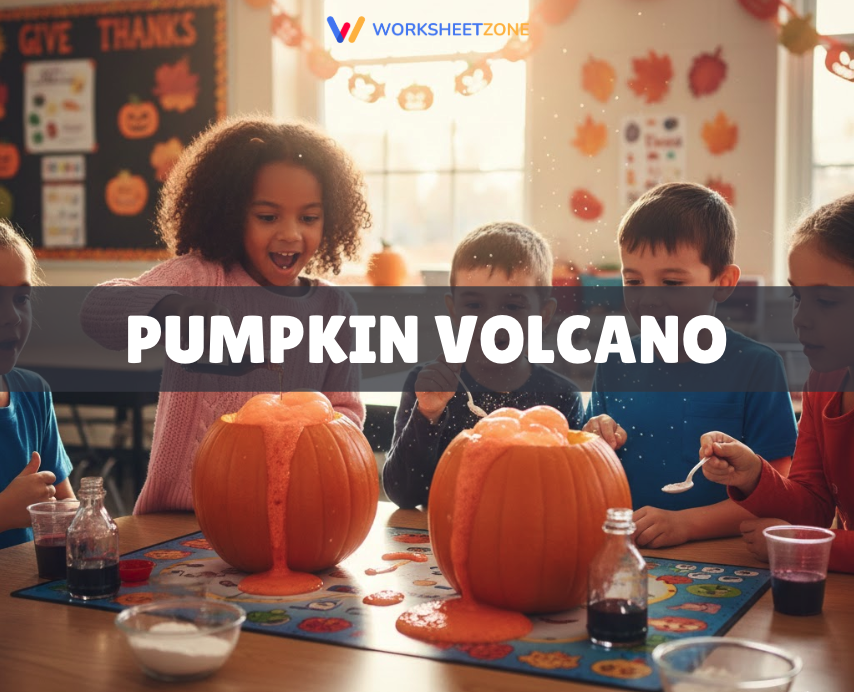
2. Pumpkin volcano
Combine baking soda, vinegar, and a hollowed pumpkin to create a festive erupting volcano.
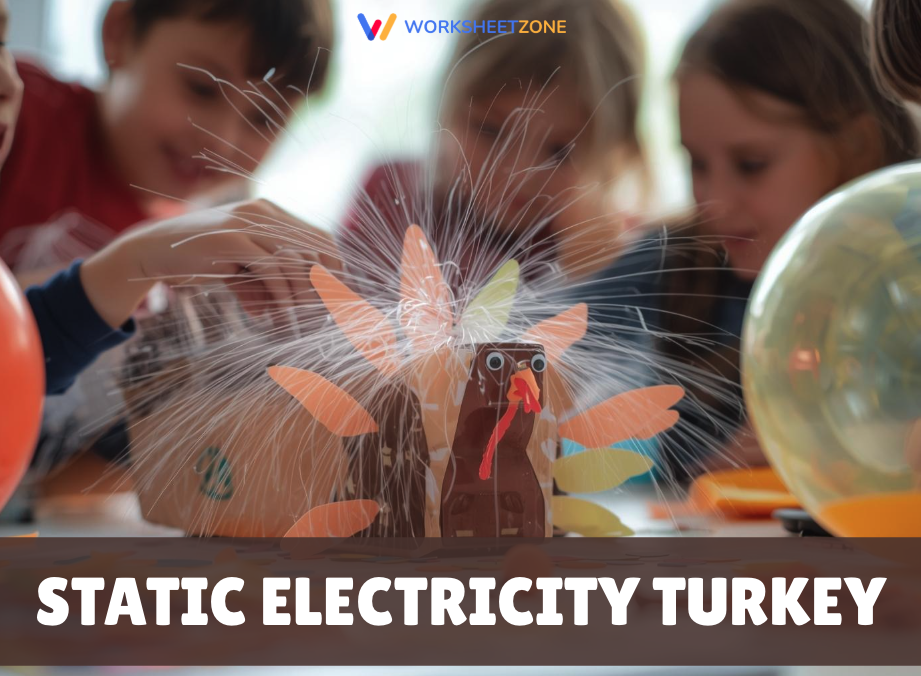
3. Static electricity turkey
Use tissue-paper feathers and a charged balloon to demonstrate static electricity by making feathers rise and move.
4. Corn Kernel prediction jar
Fill a jar with dried corn and have students estimate, calculate, and compare counts – perfect for number sense and estimation skills.

5. Candy corn dissolving experiment
Test which liquids dissolve candy corn fastest (water, vinegar, soda, etc.). Explore chemical reactions and solubility.

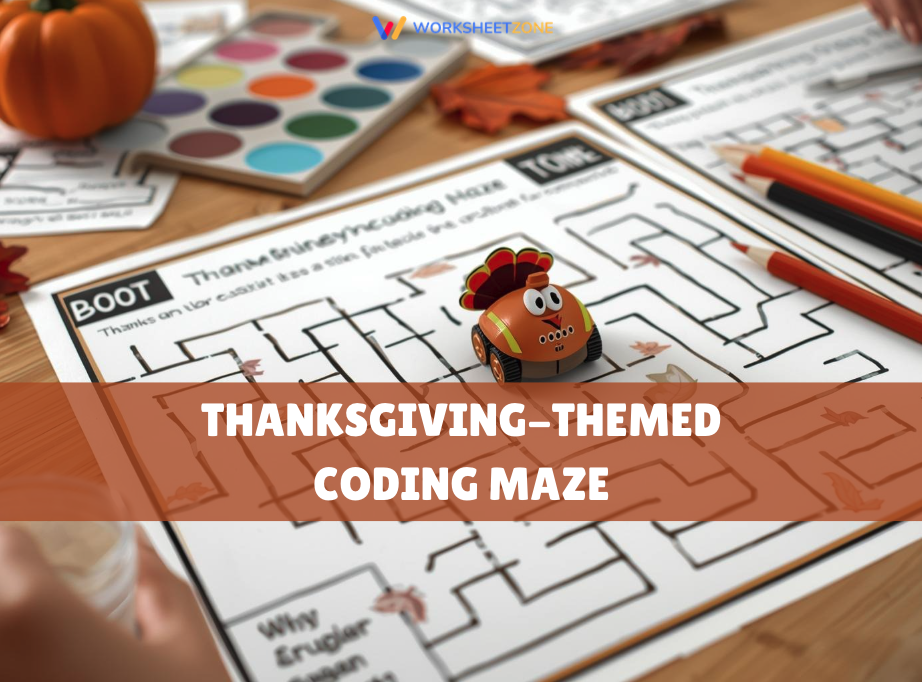
6. Thanksgiving-themed coding maze
Use printable grids where students code a “Turkey Bot” to move through a maze using directional commands.
7. Magnetic Mayflower exploration
Build small paper boats and attach a paperclip. Use magnets underneath the tray to make them “sail”.

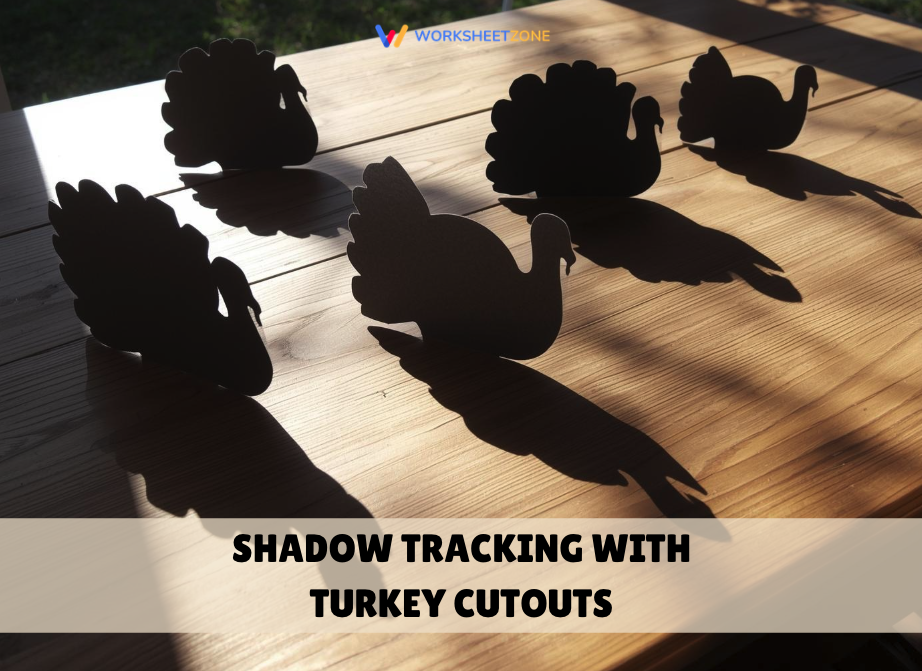
8. Shadow tracking with turkey cutouts
Use turkey silhouettes to explore how shadows change throughout the day. Great for understanding light, angles, and the sun’s movement.
Cooking and kitchen science
The kitchen is one of the best STEM labs, and Thanksgiving foods offer countless opportunities to explore states of matter, chemical reactions, and measurement. These activities blend science learning with delicious results.
1. Whipped cream science
Teach states of matter by shaking heavy cream to watch it transform from liquid to solid whipped cream.

2. Homemade butter in a jar
Kids shake cream inside a jar to observe emulsion separation – plus they can taste their results with Thanksgiving rolls!

3. Perfect pie ratios
Use measuring cups and fractions while preparing pumpkins or apple pies. Students can adjust recipes to double or halve servings.

4. The science of roasting marshmallows
Explore heat transfer and caramelization by experimenting with different roasting distances and times.

5. Cranberry sauce chemistry
Observe how cranberries burst and thicken during cooking, learning about pectin and chemical changes.

6. Yeast roll expansion experiment
Show how yeast produces carbon dioxide by comparing doughs placed in warm vs. cool environments.

name-image-21: yeast-roll-expansion-experiment
Nature and other activities
Outdoor exploration and nature-based projects connect students with the world around them while building observation, classification, and critical-thinking skills. These Thanksgiving-inspired ideas bring STEM learning into natural spaces.
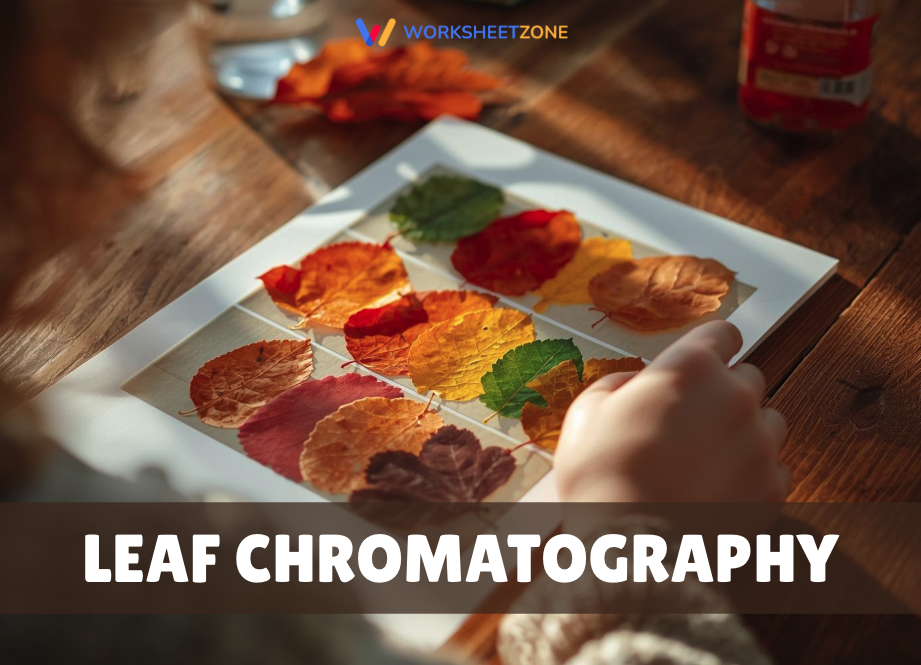
1. Leaf chromatography
Separate leaf pigments to learn why fall colors change. Thanksgiving timing makes this activity perfect.
2. Pinecone weather predictor
Explore how pinecones open and close in response to humidity and relate it to weather observation.

3. Nature scavenger hunt with math tasks
Collect acorns, leaves, or pinecones, then sort, graph, or measure them for math practice.

4. Turkey feather symmetry art
Use natural feathers or paper cutouts to teach the concept of symmetry in nature.

5. Corn husk doll engineering
Learn about Native American culture by designing dolls and exploring how materials bend and bind.

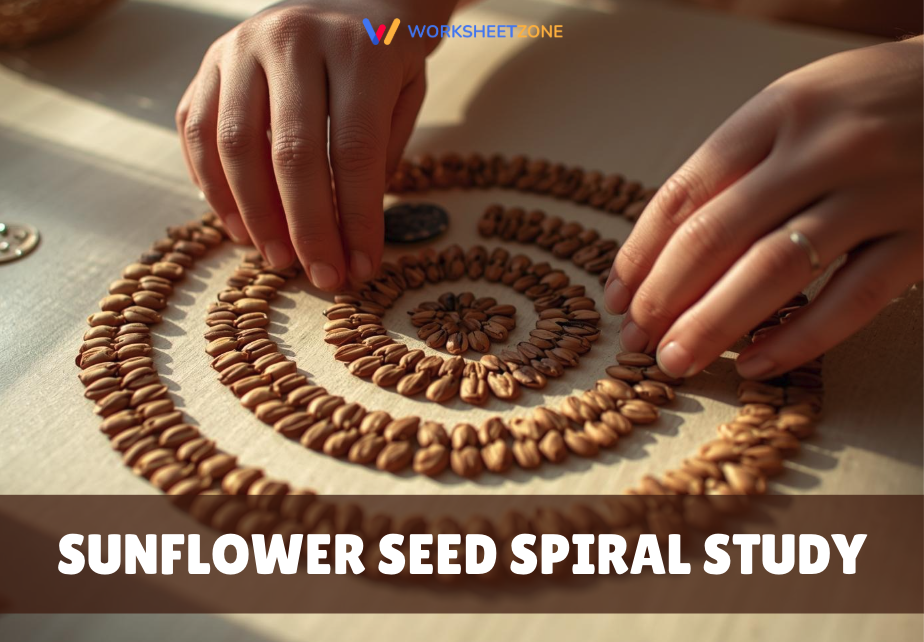
6. Sunflower seed spiral study
Examine sunflower heads and identify Fibonacci sequences present in nature.
7. Thanksgiving soundwalk
Take students outdoors to observe and record nature sounds, connecting sensory science and environmental awareness.

8. Build a natural materials turkey
Use rocks, leaves, twigs, and seeds to design turkey sculptures while practicing spatial and fine-motor skills.

9. Acron balance challenge
Test balance by stacking acorns or placing them on different surfaces to explore stability and friction.

10. Autumn weather chart
Track daily temperature, precipitation, and daylight leading up to Thanksgiving, creating graphs and analyzing patterns.

FAQs
1. What is the main benefit of Thanksgiving STEM activities?
Thanksgiving STEM activities engage learners with hands-on labs that connect core academic standards to real-world holiday traditions. This approach builds retention by allowing students to see science in their everyday environment, fostering curiosity through trial and error in a low-pressure, festive setting. These challenges also encourage collaborative problem-solving and critical thinking skills that are essential for future success in technical fields.
2. What age group is best for these STEM challenges?
While these tasks are highly adaptable, they are most effective for elementary-aged students in grades 1 through 5. Younger preschoolers can participate in sensory-based activities like the corn kernel prediction jar, while older students can tackle more complex engineering challenges like parade float construction or yeast roll chemical analysis. Modifying the tools and expected outcomes ensures that every learner can find a project suited to their developmental level.
Final thoughts
Thanksgiving is a wonderful opportunity to bring creativity, curiosity, and problem-solving into the classroom through Thanksgiving STEM activities for kids. These challenges help students explore the real scientific principles while tying learning to meaningful seasonal themes. Whether building structures, experimenting with cranberries, coding, or exploring the outdoors, each activity encourages deeper thinking and hands-on discovery. With so many ways to integrate STEM into the holiday, teachers and parents can create memorable learning experiences that spark excitement and strengthen essential skills.
You can also explore more fun ideas in our full list of STEM activities for preschoolers!