Thanksgiving facts are a fun way to explore the history, traditions, and surprising stories behind one of America’s most beloved holidays. From the original feast to modern-day celebrations, many details about Thanksgiving aren’t widely known – but they help us understand how this holiday has changed over centuries. Whether you’re teaching students, preparing a trivia game, or simply curious, these Thanksgiving facts will make your celebration even more meaningful and enjoyable.
30+ Thanksgiving facts
These Thanksgiving facts offer a fascinating look at how the holiday evolved – from the very first three-day feast to the traditions we recognize today. Explore the stories, surprises, and unique moments that shaped Thanksgiving throughout history.
1. Three-day feast
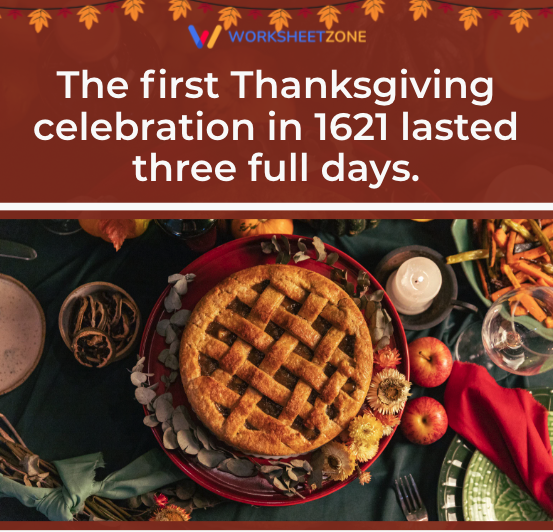
The first Thanksgiving in 1621 wasn’t a single meal – it lasted three full days. The Pilgrims and the Wampanoag people gathered for feasting, games, and diplomacy. This long celebration reflected the harvest traditions both groups practiced.
2. Not called “Thanksgiving” yet
The original 1621 gathering wasn’t known as “Thanksgiving”. In fact, the word “Thanksgiving” was used at the time to describe religious days of prayer and fasting, not feasting. The modern meaning came much later.
3. Turkey wasn’t the star dish

Although turkey is the centerpiece today, historical records suggest it wasn’t the main dish in 1621. The menu likely featured venison, seafood, and wildfowl such as geese or ducks. These foods were more abundant and easier to prepare.
4. The Wampanoag brought most of the food
The Wampanoag people contribute significantly to the feast. They brought five deer, along with vegetables and other local foods. Their agricultural knowledge and generosity were essential to the meal’s success.
5. No pumpkin pie yet
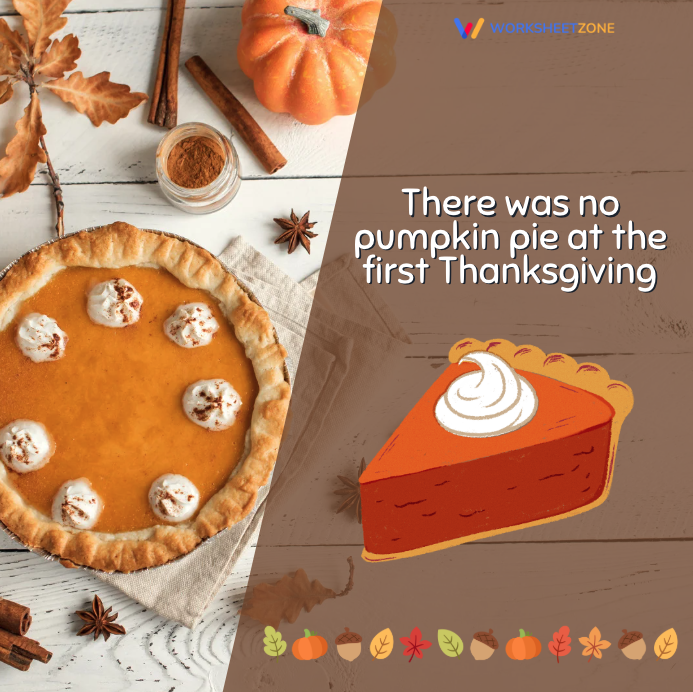
There was no pumpkin pie at the first Thanksgiving because colonists didn’t have access to sugar or baking ovens. They may have roasted pumpkin or simmered it into stews. Sweet, spiced pumpkin desserts became popular much later.
6. Cranberries weren’t sweetened
Cranberries existed in the region, but early settlers didn’t have the sugar necessary to make cranberry sauce. Instead, cranberries might have been added to savory dishes or eaten raw. The sweetened sauce we recognize today appeared in recipes decades later.
7. Macy’s parade began in 1924

The first Macy’s Thanksgiving Day Parade in 1924 was created to attract holiday shoppers. Instead of balloons, the parade featured zoo animals from Central Park. The event was an instant hit and quickly became an annual tradition.
8. The first balloons appeared in 1927
Giant character balloons were introduced to the parade in 1927. Felix the Cat was the first balloon to make an appearance. These balloons replaced live animals and became the parade’s most iconic feature.
9. Presidential turkey pardons started later than you think
Although stories claim earlier presidents spared turkeys, the official annual turkey pardon began in 1989 with George H.W. Bush. He formalized the tradition during a lighthearted ceremony. Since then, every president has participated.
10. Football became a tradition in 1876

Thanksgiving football traces back to 1876 when Yale and Princeton played a holiday match. The sport quickly became part of Thanksgiving celebrations across colleges and towns. Today, millions tune in to watch NFL games after dinner.
11. TV dinners were invented because of Thanksgiving
In 1953, a food company accidentally ordered too much frozen turkey – over 260 tons. To avoid waste, they packaged it with sides, creating the first TV dinners. This clever solution launched a new area of convenient frozen meals.
12. Abraham Lincoln made Thanksgiving a national holiday
President Abraham Lincoln declared Thanksgiving a national holiday in 1863 during the Civil War. His proclamation aimed to create a moment of unity and gratitude. The holiday has been observed annually ever since.
13. FDR changed – and then unchanged – the date
In 1939, Franklin Roosevelt moved Thanksgiving up one week to help boost retail sales. Many Americans disliked the change, calling it “Franksgiving”. Congress later stepped in and officially set the holiday on the fourth Thursday of November.
14. Americans eat 46 million turkeys each year

Thanksgiving is the biggest turkey-eating day of the year in the United States. Families buy, cook, and serve about 46 million turkeys annually – the demand for turkey spikes more during November than any other month.
15. Turkeys can run and fly faster than you think

Wild turkeys are surprisingly fast and agile. They can run up to 20 miles per hour and fly at speeds up to 55 miles per hour. Domestic turkeys, however, have been bred so large that they can’t fly at all.
16. Minnesota is the largest turkey producer
Minnesota raises more turkeys than any other state. The turkey farming industry there supplies millions of birds for Thanksgiving. Many of the turkeys served across the U.S. come from this region.
17. Green bean casserole was invented in 1955

The beloved green bean casserole was created by Dorcas Reilly of Campbell’s Soup Company in 1955. It was originally developed as a quick, simple recipe using pantry staples. Today, it remains a Thanksgiving favorite in many households.
18. Stuffing vs. dressing
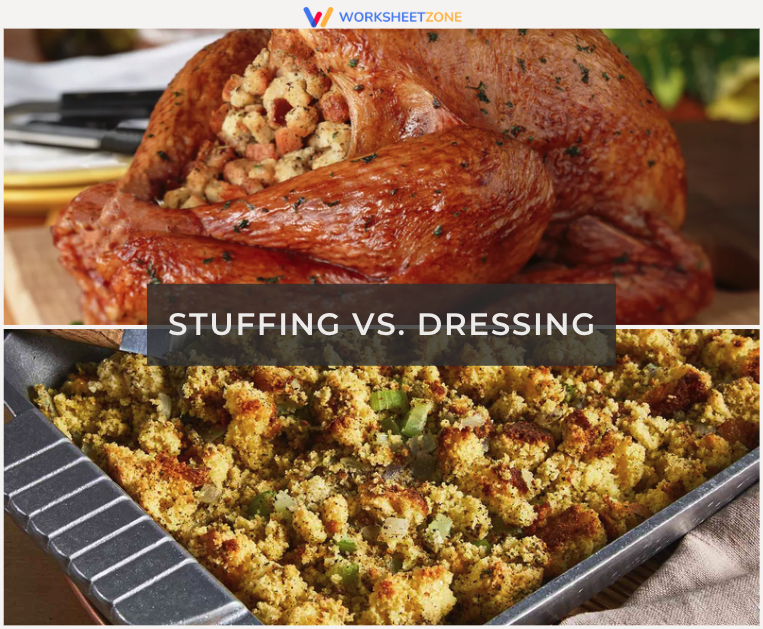
“Stuffing” is cooked inside the turkey, while “dressing” is baked separately. Despite the difference, most people use the words interchangeably. Regional traditions often determine which term families prefer.
19. Benjamin Franklin preferred the turkey over the eagle
Benjamin Franklin once wrote that he admired the turkey more than the bald eagle. He viewed the turkey as a more respectable and courageous bird. While the bald eagle ultimately became the national symbol, Franklin’s comments remain a well-known Thanksgiving tidbit.
20. The average meal had 4,500 calories

A standard Thanksgiving meal often includes turkey, stuffing, potatoes, rolls, desserts, and more. Altogether, it can add up to around 4,500 calories. While this is more than double the recommended daily intake, it’s a tradition many enjoy guilt-free.
21. Pumpkin pie was a later addition
Pumpkin pie became a Thanksgiving staple many years after the first feast. As sugar, spices, and baking tools became more accessible, pumpkin-based desserts grew in popularity. Today, millions of pumpkin pies are served each year.
22. Black Friday became famous after Thanksgiving
The term “Black Friday” originated with Philadelphia police officers in the 1960s to describe the heavy traffic after Thanksgiving. Over time, retailers embraced it as the start of the holiday shopping season. Now, it’s one of the biggest shopping days of the year.
23. Butterball has a turkey hotline
The Butterball Turkey Talk-Line launched in 1981 to help home cooks prepare their holiday meals. Experts answer thousands of phone calls, emails, and chats every year. From thawing times to roasting tips, the hotline covers it all.
24. Canada has its own Thanksgiving

Canada celebrates Thanksgiving in October, not November. The holiday is closely linked to harvest festivals rather than the Pilgrims. Despite being earlier, many traditions – like feasting with family – remain similar.
25. The wishbone tradition is ancient
Breaking the wishbone for luck dates back to ancient Roman and Etruscan customs. Early settlers brought the practice to America, and it eventually became part of Thanksgiving. The person who gets the bigger piece is said to have their wish come true.
26. Many Pilgrims were not actually “Pilgrims”
Only about half of the Mayflower passengers were religious Pilgrims. The rest were skilled workers, hired laborers, and families seeking a new life. The term “Pilgrims” became more widely used centuries later.

27. Clams and lobster were likely served
Seafood was a major part of the diet for both the Wampanoag and the colonists. This makes it likely that clams, oysters, and even lobster appeared on the first Thanksgiving table. These foods were plentiful and easy to gather.
28. The Pilgrims didn’t wear those black outfits
The iconic black clothing and buckled hats often shown in illustrations are historically inaccurate. Pilgrims actually wore colorful garments in shades of green, brown, and blue. The “black and buckles” look was popularized by later artists.
29. There was no fork at the first feast
Forks weren’t commonly used by English settlers until decades later. At the first feast, Pilgrims ate mostly with spoons, knives, and their hands. Dining customs were much simpler than modern holiday meals.
30. Corn was a brightly colored staple

The corn grown by the Wampanoag came in vibrant colors like blue, red, yellow, and white. This corn was used for bread, porridge, and other foods. It differed greatly from the sweet corn that families eat today.
31. Thanksgiving balloon inflation is a tradition of its own
Since the 1930s, crowds have gathered the night before the Macy’s Parade to watch the enormous balloons being inflated. This event has become just as beloved as the parade itself. Many families consider it the unofficial kickoff to Thanksgiving week.
FAQs
1. What food was actually served at the first Thanksgiving?
While modern meals focus on turkey, the 1621 feast primarily featured venison brought by the Wampanoag, along with local seafood like clams and lobster. Wildfowl such as geese and ducks were also common. There was no pumpkin pie or cranberry sauce because sugar and baking ovens were not yet available to the colonists.
2. When did Thanksgiving become an official national holiday?
President Abraham Lincoln declared Thanksgiving a national holiday in 1863, during the height of the American Civil War. He issued a proclamation calling for a day of “Thanksgiving and Praise” to help unify the country. It has been celebrated annually on the fourth Thursday of November since a 1941 Congressional resolution.
3. Why is football such a major part of the Thanksgiving tradition?
The connection between football and Thanksgiving began in 1876 when Yale and Princeton played a championship game on the holiday. The tradition grew as college and high school teams followed suit to attract large crowds. Today, the NFL continues this legacy with multiple games broadcast to millions of viewers throughout the day.
Conclusion
These Thanksgiving facts show how the holiday has grown from a simple three-day harvest feast to a nationwide celebration filled with food, family, and fun traditions. Understanding these stories adds meaning to the holiday and helps us appreciate the cultures, people, and history intertwined with it. Whether you use these Thanksgiving facts for a classroom activity, family trivia game, or personal curiosity, they offer a richer look at one of America’s most cherished celebrations.
If you want something more light-hearted after these facts, check out our fun collection of Thanksgiving jokes for kids!