




















Halloween season is the perfect time to bring some excitement into the classroom! From pumpkin math to haunted history debates, these Halloween activities for school are designed to spark creativity, teamwork, and learning. Whether you teach elementary, middle, or high school students, you’ll find plenty of fun and educational ideas below to make this spooky season unforgettable.
Halloween activities for elementary school students
Younger students love hands-on learning and creative play, so focus on simple, sensory, and story-based Halloween activities that boost fine motor skills, literacy, and imagination.
1. Pumpkin math
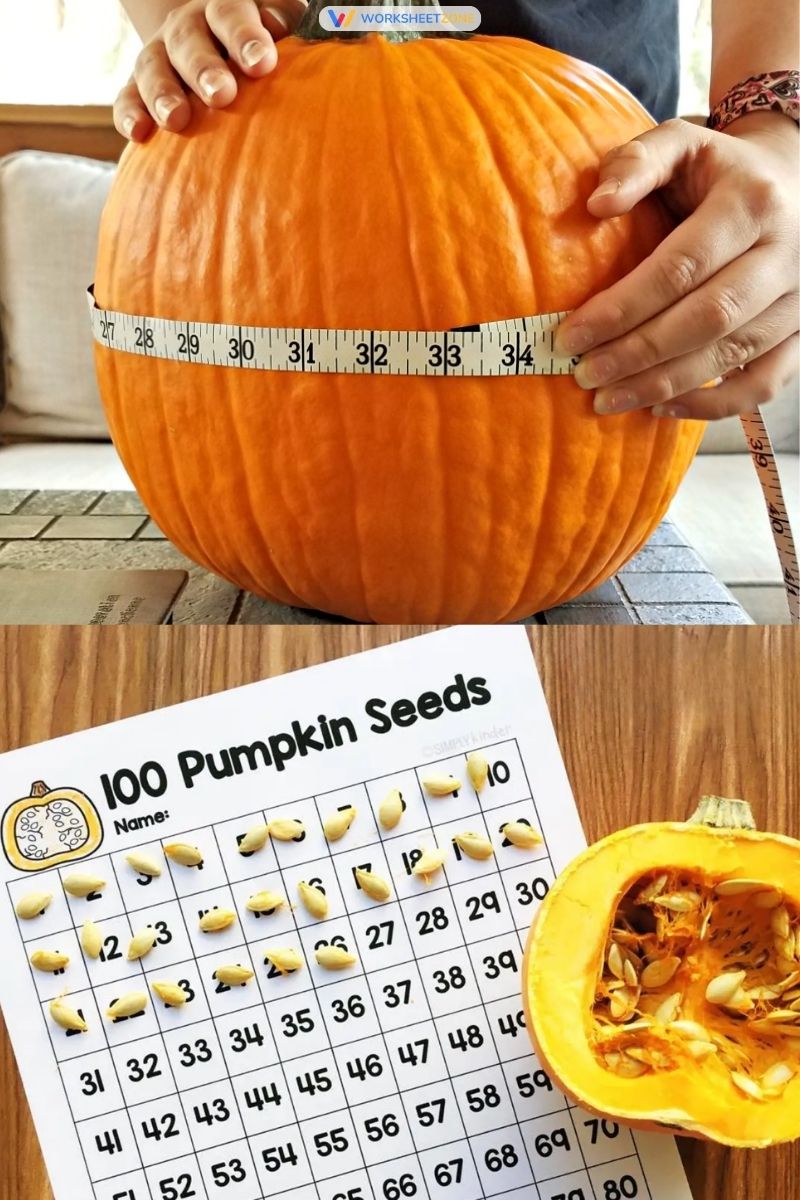
This fun hands-on activity helps students connect math concepts with real-world objects. By exploring pumpkins, they practice counting, measuring, and estimating while enjoying the Halloween spirit.
Materials needed:
- Small pumpkins (one per group or student)
- Measuring tape or string
- Scale for weighing
- Paper towels and bowls
- Pencils and worksheets for recording data
Instructions:
- Have students estimate the pumpkin’s weight and circumference.
- Measure the actual circumference using a tape measure and compare the results.
- Cut open the pumpkin and scoop out the seeds.
- Ask students to count the seeds or group them into sets of 10 for easier counting.
- Discuss differences between pumpkins and what the data shows about size and seed count.
For more hands-on fall learning, explore our pumpkin math activities — fun, seasonal ways to combine counting, measuring, and problem-solving in the classroom.
Recommendation: Printable Halloween Algebra Worksheets Download
2. Spooky story starters
Encourage creativity and literacy with this Halloween-themed writing activity. It lets students imagine their own spooky adventures while improving sentence building and storytelling skills.

Materials needed:
- Paper or writing notebooks
- Pencils and erasers
- Story prompt cards (teacher-created or printed)
- Optional: crayons or markers for illustration
Instructions:
- Give each student a Halloween story starter such as:
- “I opened the door, and a ghost handed me a pumpkin…”
- “The black cat whispered a secret to me on Halloween night.”
- Let them continue the story in their own words.
- Younger students can illustrate their stories instead of writing long sentences.
- Display completed stories on a “Haunted Story Wall” in the classroom.
You can make this activity even more fun with this printable Halloween Story Starter Worksheet
You can make this activity even more fun by pairing it with these Scary Stories for Kids — perfect for sparking imagination and setting a spooky Halloween mood!
3. Candy corn STEM tower
This exciting STEM challenge encourages teamwork, problem-solving, and creativity. Students use candy corn and toothpicks to design and test the stability of different structures.

Materials needed:
- Candy corn (or mini marshmallows as an alternative)
- Toothpicks
- Ruler or measuring tape
- Flat surface or paper plates for building
Instructions:
- Divide students into small groups.
- Provide each group with an equal number of candy corn pieces and toothpicks.
- Challenge them to build the tallest free-standing tower within 10–15 minutes.
- Once complete, measure the towers and discuss which designs were the most stable and why.
- Reflect on engineering concepts such as base width, weight distribution, and balance.
4. Halloween costume parade
A cheerful and inclusive way to let students express themselves and build confidence. This activity celebrates creativity while encouraging descriptive language and public speaking.

Materials needed:
- Classroom or playground space
- Music player or Halloween playlist
- Microphone or pretend stage area
- Optional: certificates or stickers for all participants
Instructions:
- Ask students to come dressed in their favorite (school-appropriate) Halloween costumes.
- Organize a short parade where each student walks the “runway.”
- Invite them to introduce their character or describe their costume in one or two sentences.
- Play fun Halloween music during the parade.
- End the event by applauding everyone and emphasizing creativity over competition.
5. Trick-or-treat sorting game
A simple yet engaging math and observation game perfect for early learners. It helps children recognize patterns, colors, and shapes while keeping the Halloween theme alive.

Materials needed:
- Plastic or paper candy pieces (or printed candy images)
- Sorting trays or small bowls
- Labels or colored paper for categories
- Optional: tweezers or tongs for fine motor practice
Instructions:
- Mix all candy pieces in a large bowl.
- Ask students to sort them by color, shape, or size into labeled containers.
- Once sorted, count how many items are in each group.
- Discuss which category has the most or least items to reinforce comparison vocabulary.
- End by letting students graph their results or draw what they observed.
Halloween activities for middle school students
For middle schoolers, Halloween is the perfect chance to mix academics with creativity. Students at this age enjoy group challenges and critical thinking games.
6. Haunted escape room
Turn your classroom into a spooky escape adventure where students use problem-solving and subject knowledge to “break free.” This activity encourages collaboration and critical thinking while reinforcing lessons from math, science, or literature.

Materials needed:
- Envelopes or boxes for hidden clues
- Locks, ciphers, or code sheets
- Flashlights or black lights
- Printable riddles and puzzles based on classroom topics
- Timer
Instructions:
- Create a storyline, such as “Escape from Dr. Frankenstein’s Lab” or “The Case of the Vanishing Potion.”
- Prepare a series of puzzles that require solving academic problems to unlock clues.
- Hide the clues around the classroom and divide students into small teams.
- Give each group a time limit to complete the challenge.
- Conclude with a reflection session where students discuss teamwork and problem-solving strategies.
7. Monster biography writing
This creative writing task combines Halloween imagination with academic writing structure. Students design their own monsters and write detailed biographies to describe how they “live,” “behave,” and “survive” in their world.

Materials needed:
- Writing notebooks or laptops
- Reference examples of creature descriptions
- Art supplies for optional illustrations
- Dictionaries and thesauruses
Instructions:
- Ask students to invent an original monster character.
- Have them include sections such as name, species, habitat, diet, and unique abilities.
- Encourage descriptive language, vivid adjectives, and scientific-sounding details.
- Allow students to share their monster biographies aloud or create a “Monster Gallery Wall.”
- Offer feedback on creativity, grammar, and structure.
Got writers who love ghosts? Try this “Have You Ever Seen a Ghost?” prompt to inspire spooky tales
8. Halloween history quiz
Make history come alive with a fun and educational trivia session. Students learn about Halloween’s cultural origins while practicing research and recall skills.

Materials needed:
- A list of Halloween-related trivia questions
- Answer sheets or whiteboards
- Pens or markers
- Small prizes like candy or stickers
Instructions:
- Divide the class into small teams.
- Prepare questions about Halloween origins, ancient Celtic traditions, and worldwide customs.
- Read each question aloud and let teams write their answers within a time limit.
- Award points for correct answers and offer bonus rounds for tricky facts.
- Discuss each answer briefly to highlight the history behind the traditions.
9. Pumpkin circuit challenge
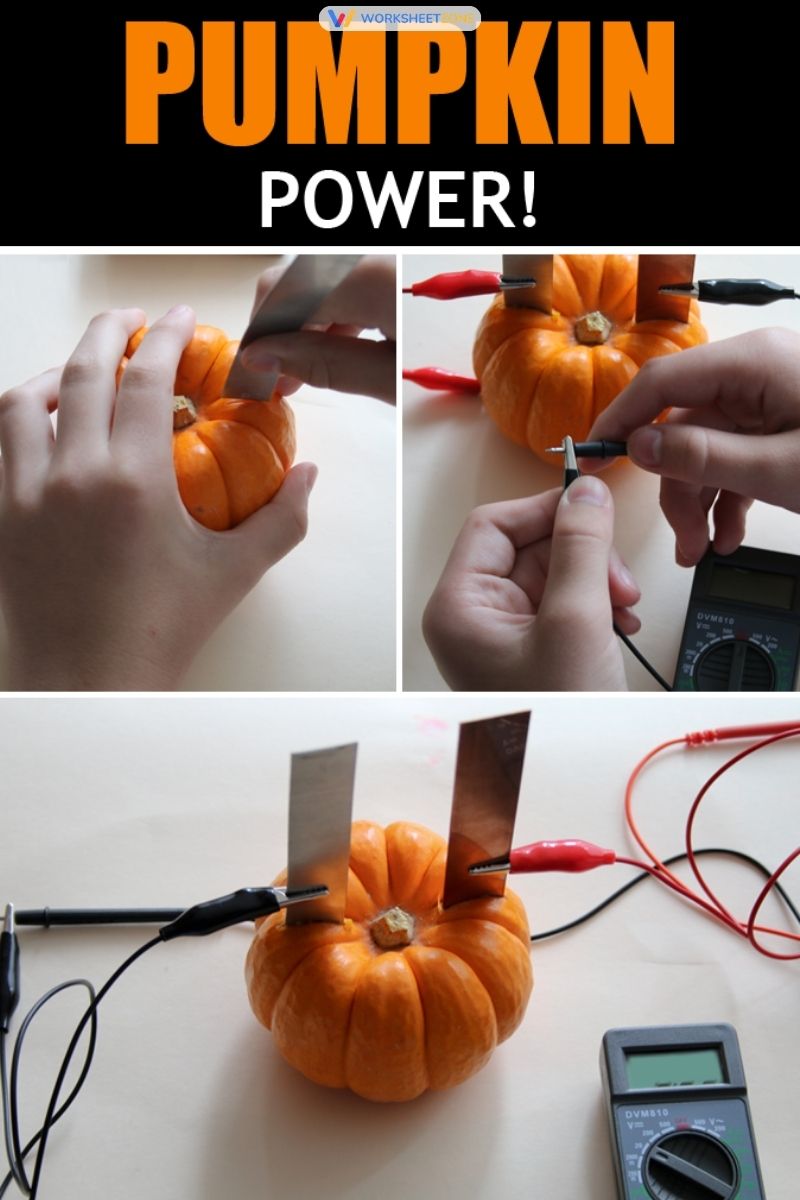
Bring STEM learning into the Halloween spirit with a science-based hands-on activity. Students create simple electrical circuits that make mini pumpkins or paper ghosts light up, helping them understand conductivity and energy flow.
Materials needed:
- Mini pumpkins or thick paper ghosts
- Small LED lights
- Copper tape or wires
- Coin cell batteries
- Scissors and tape
Instructions:
- Begin with a short lesson about open and closed circuits.
- Have students plan their circuit design on paper.
- Attach the copper tape or wires to connect the battery and LED.
- Insert the LED light into the pumpkin or attach it behind the ghost cutout.
- Test each circuit and observe how electricity completes the path to create light.
10. Mystery sound game
Turn the classroom into a guessing game full of eerie sounds to sharpen listening and inference skills. Students use reasoning and context clues to identify mysterious noises related to Halloween.

Materials needed:
- Audio clips of Halloween sounds (e.g., creaking doors, thunder, animal noises)
- Speakers or computer
- Recording sheet for answers
- Pen or pencil
Instructions:
- Play each sound one by one without showing its source.
- Ask students to write down what they think the sound is.
- After each round, discuss possible answers and reveal the correct one.
- Award points for correct guesses and reasoning explanations.
- Wrap up by having students create their own mystery sounds for others to guess.
Halloween activities for high school students
High school students appreciate challenges that combine creativity, leadership, and deeper learning. Halloween activities can easily tie into subjects like literature, science, and art.
11. Gothic poetry workshop
This literary activity allows students to dive into the eerie atmosphere of Gothic poetry. They analyze classic works and then write their own haunting verses to express emotion, rhythm, and imagery.

Materials needed:
- Copies of poems by Edgar Allan Poe or other Gothic writers
- Notebooks or laptops
- Writing prompts
- Pens and markers
Instructions:
- Begin by reading and analyzing a few Gothic poems such as “The Raven” or “Annabel Lee.”
- Discuss poetic elements like mood, symbolism, and rhyme scheme.
- Provide Halloween-themed prompts, for example, “A whisper in the dark hallway…”
- Ask students to write their own short poems inspired by these ideas.
- End with a classroom poetry reading or display their work on a “Gothic Wall of Words.”
12. Haunted history debate
This debate activity merges Halloween fun with historical research. Students investigate legends, myths, or real historical mysteries, then use evidence to argue different viewpoints.

Materials needed:
- Research materials or internet access
- Debate topic list (e.g., “Was Dracula based on a real person?”)
- Notecards for argument points
- Timer
Instructions:
- Assign each group a topic related to history, folklore, or cultural traditions.
- Divide the class into teams for or against the claim.
- Give time to research, prepare arguments, and anticipate counterpoints.
- Conduct structured debates, allowing rebuttals and conclusions.
- Afterward, discuss how research and persuasion skills apply beyond the classroom.
13. Halloween film analysis
Students can explore film as an art form while analyzing cinematic techniques and storytelling. This activity strengthens critical thinking, interpretation, and visual literacy.

Materials needed:
- A projector or screen
- A school-appropriate Halloween film (e.g., Coraline, The Nightmare Before Christmas)
- Viewing guide or question sheet
- Pens or laptops
Instructions:
- Introduce the chosen film and explain what students should focus on, such as mood, theme, and cinematography.
- Watch the film in class or assign it as homework.
- Have students answer discussion questions like “How does the director use color and sound to build suspense?”
- Encourage group discussions to share insights and perspectives.
- Conclude with a short essay or presentation analyzing a key scene.
14. Halloween charity drive
This service-based activity turns the Halloween celebration into an act of kindness. Students learn about empathy and leadership by organizing a community event for a good cause.

Materials needed:
- Donation boxes or bags
- Posters and markers for promotion
- Contact information for local charities
- Optional costumes to attract attention
Instructions:
- Choose a cause such as collecting canned food, books, or clothing for a local shelter.
- Have students design posters and announcements to promote the drive.
- Set up collection boxes around school or at a Halloween event.
- Track progress throughout the week and celebrate milestones.
- Wrap up with a reflection session on how small actions can make a big impact.
15. Science of fear
This interdisciplinary lesson combines biology and psychology to explore why people enjoy scary experiences. Students discover the science behind fear responses and emotional regulation.

Materials needed:
- Videos or articles explaining the “fight-or-flight” response
- Charts or diagrams of the human brain
- Worksheets for group discussion
- Optional: heart rate monitors or pulse check tools
Instructions:
- Start by discussing why people like horror movies or haunted houses.
- Introduce the biology of fear, focusing on how the brain and body react to threats.
- Have students record and compare heart rate data before and after mild “scary” stimuli like suspenseful music.
- Analyze the results and discuss the psychological reasons behind fear and excitement.
- End with a reflection on how fear can be both protective and entertaining.
FAQs
1. How do you celebrate Halloween in the classroom?
Celebrating Halloween in the classroom is all about combining fun with learning. You can decorate the room with student-made crafts, organize themed lessons, and plan hands-on activities that tie into your curriculum. Some easy and engaging ideas include:
- Hosting a pumpkin-themed math or science activity.
- Writing spooky stories or poems.
- Playing Halloween bingo or trivia games.
- Having a costume day or creative dress-up theme (like “Book Characters” or “Historical Figures”).
2. How do you plan a school Halloween party?
A successful school Halloween party balances excitement with structure. Start by choosing a theme and deciding what activities fit your students’ age group. You can then plan stations for games, crafts, and treats.
Here’s a simple way to plan:
- Pick a theme: “Monster Mash,” “Spooky Science,” or “Storybook Halloween.”
- Set up activity zones: pumpkin painting, costume photo booth, DIY mask-making.
- Prepare music and snacks: light background music and allergy-friendly treats.
- Include learning moments: quiz games or vocabulary challenges related to Halloween.
- End with reflection: let students share what they enjoyed or learned the most.
3. Why do schools celebrate Halloween?
Schools celebrate Halloween because it’s a fun, community-building tradition that promotes creativity and engagement. It encourages students to express themselves, cooperate with others, and learn about cultural traditions in a joyful way.
For teachers, Halloween also provides a chance to make lessons more interactive through themed science experiments, creative writing activities, and art projects. Beyond the costumes and candy, it offers an opportunity to spark curiosity and encourage teamwork in the classroom.
Final thoughts
Halloween in schools is not just about spooky decorations or sweet treats. It is a celebration of imagination, community, and learning. From pumpkin math to haunted debates, these Halloween activities for school help students of all ages connect with one another while discovering new skills. With thoughtful preparation and creativity, teachers can transform Halloween into a magical and meaningful experience that students will remember long after the candy is gone.


