


























1 / 5
0
Views
0
Downloads

0.0
0
Save
0 Likes
Share
Determine the Better Buy
0 Views
0 Downloads
Paste this activity's link or code into your existing LMS (Google Classroom, Canvas, Teams, Schoology, Moodle, etc.).
Students can open and work on the activity right away, with no student login required.
You'll still be able to track student progress and results from your teacher account.
Information
Description
What It Is:
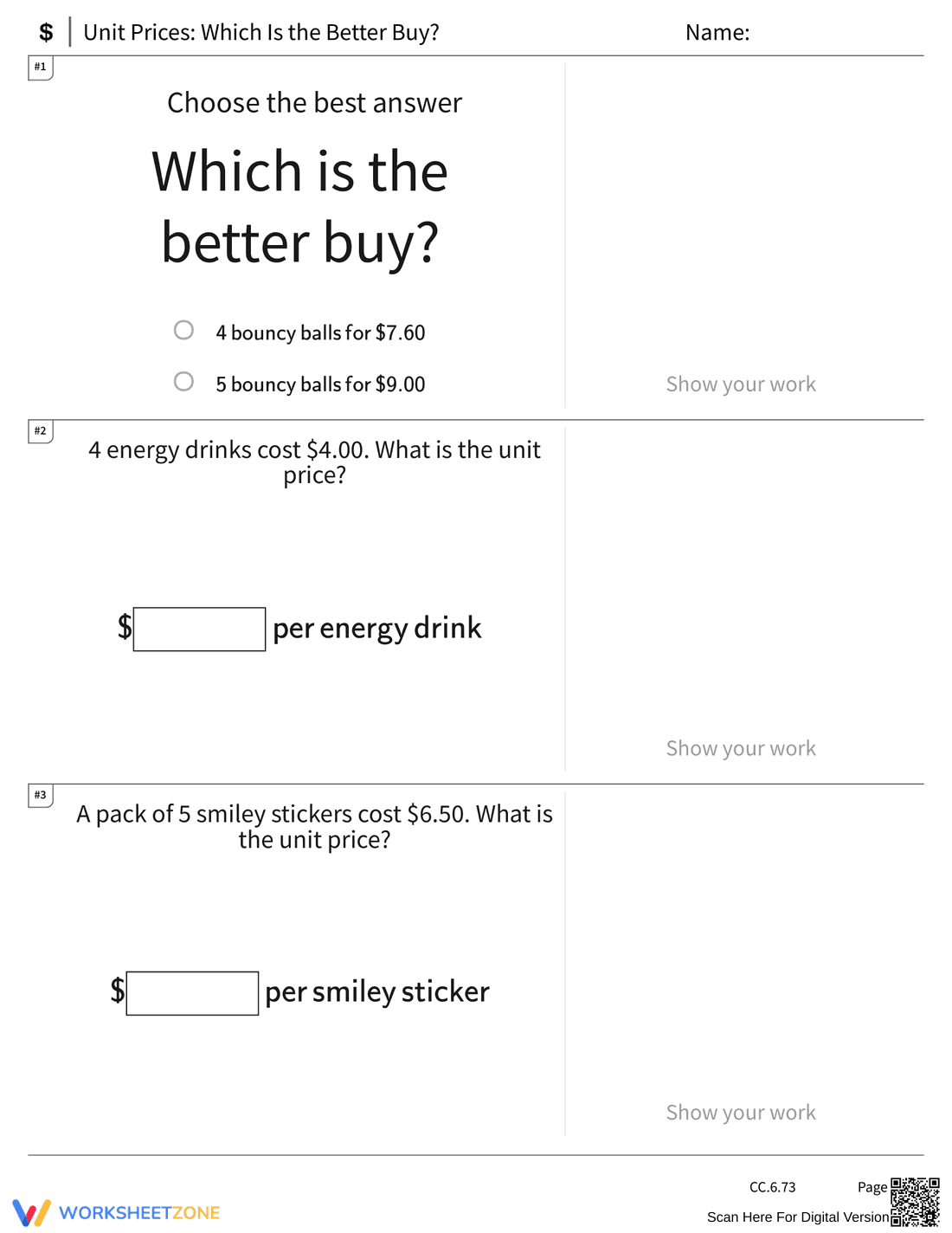
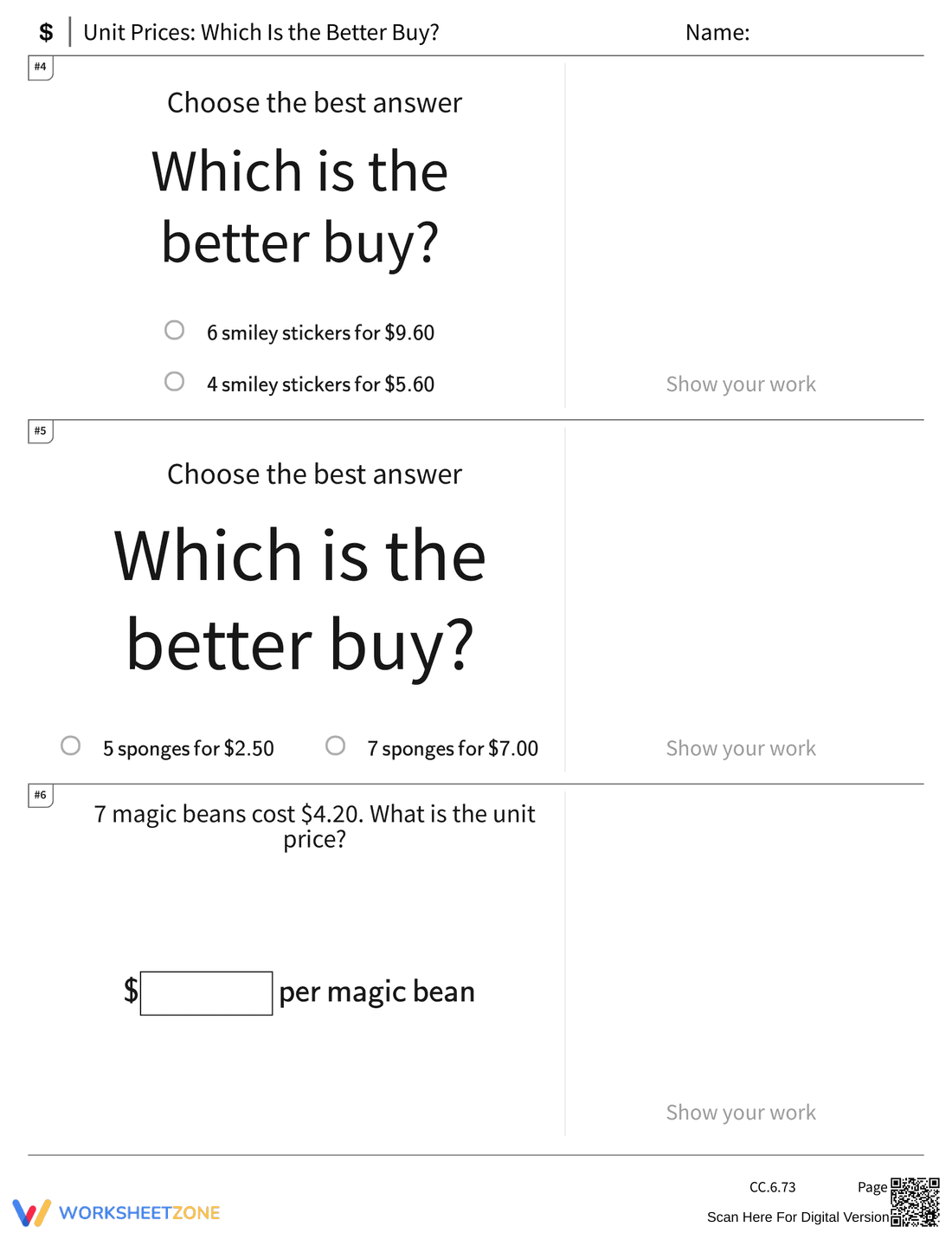
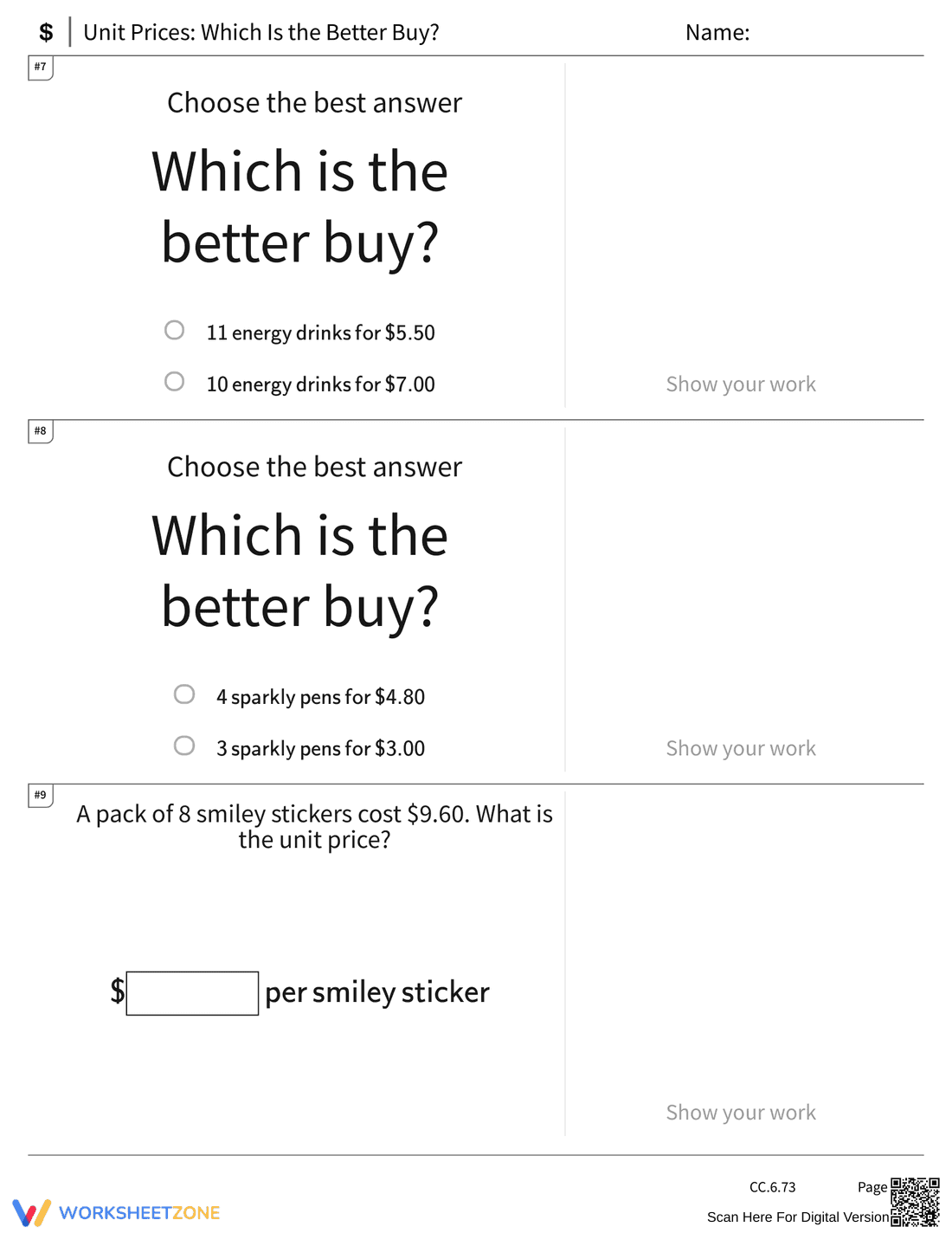
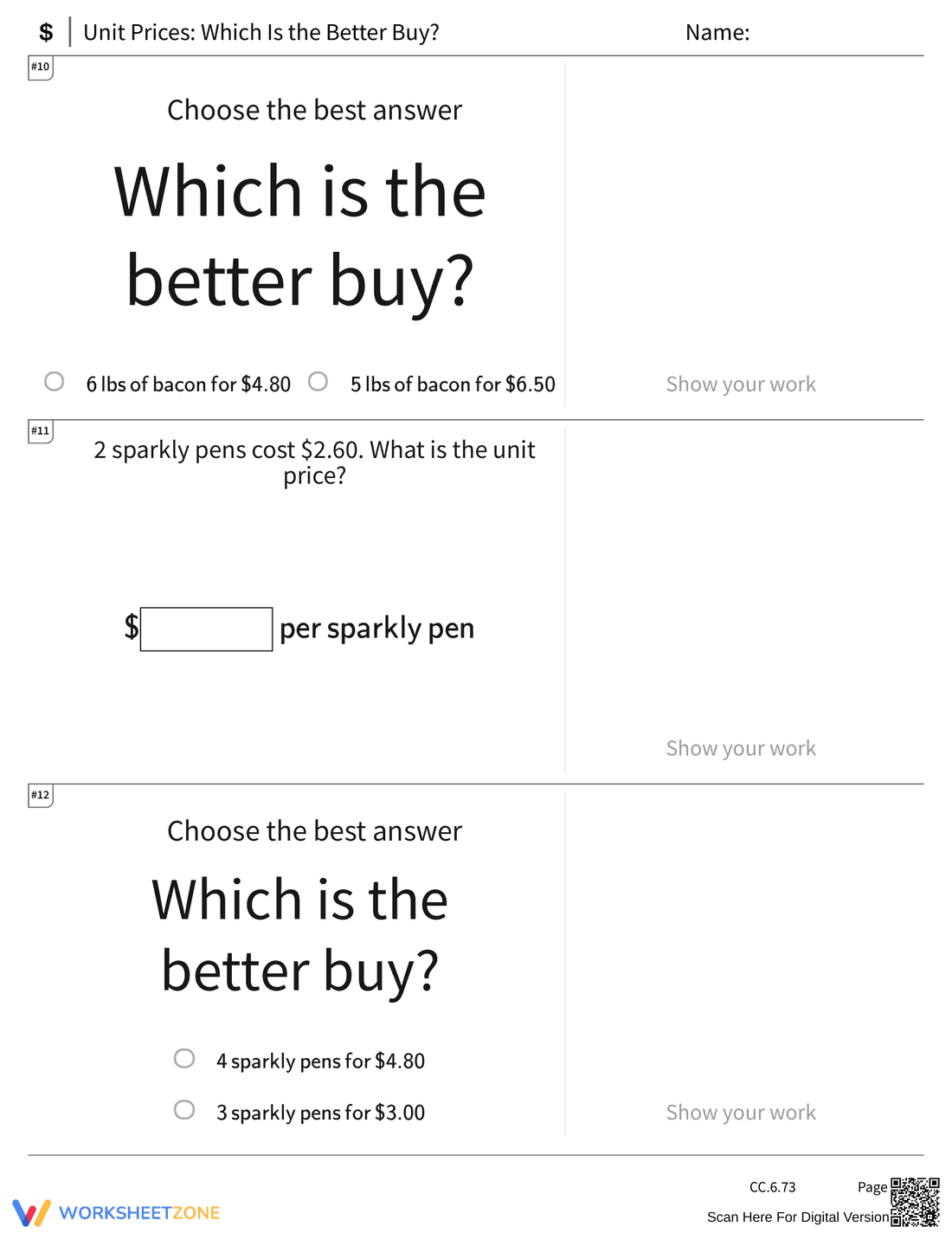
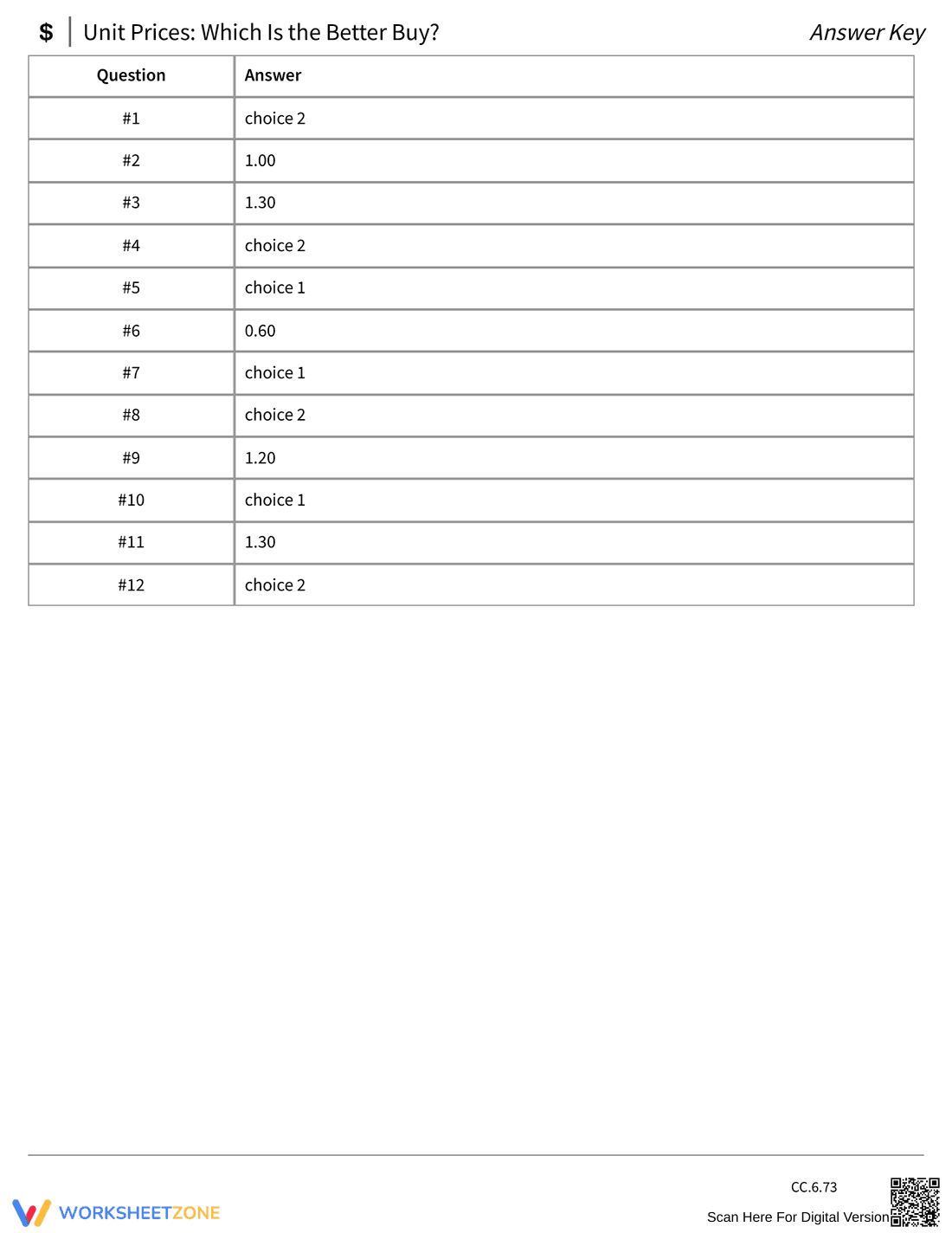
This is a math worksheet focusing on unit prices and determining the better buy. It includes questions where students need to compare the cost of different quantities of items (bouncy balls) to determine which is a better deal. It also includes problems where students need to calculate the unit price of items like energy drinks and smiley stickers given the total cost for a set quantity. A space to show your work is provided.
Grade Level Suitability:
This worksheet is suitable for grades 5-6. It requires students to understand division, decimals, and comparing prices, which are typically taught in these grades. The questions involve simple calculations and real-world scenarios, making it accessible for students in this age range.
Why Use It:
This worksheet helps students develop essential math skills related to unit pricing and making informed purchasing decisions. It reinforces division skills, decimal operations, and problem-solving abilities in a practical context. It also teaches students how to compare values and find the best deal, which is a valuable life skill.
How to Use It:
Students should read each question carefully and perform the necessary calculations to determine the unit price or compare the deals. They should show their work in the provided space to demonstrate their understanding of the process. For the better buy question, students must calculate the price per item for each option and then select the cheaper one. For the unit price questions, they need to divide the total cost by the number of items.
Target Users:
This worksheet is designed for students in grades 5-6 who are learning about unit prices and comparing values. It can be used in the classroom as part of a lesson on consumer math, or at home as a practice activity to reinforce these concepts. It is also beneficial for students who need extra practice with division and decimal operations in a real-world context.
This is a math worksheet focusing on unit prices and determining the better buy. It includes questions where students need to compare the cost of different quantities of items (bouncy balls) to determine which is a better deal. It also includes problems where students need to calculate the unit price of items like energy drinks and smiley stickers given the total cost for a set quantity. A space to show your work is provided.
Grade Level Suitability:
This worksheet is suitable for grades 5-6. It requires students to understand division, decimals, and comparing prices, which are typically taught in these grades. The questions involve simple calculations and real-world scenarios, making it accessible for students in this age range.
Why Use It:
This worksheet helps students develop essential math skills related to unit pricing and making informed purchasing decisions. It reinforces division skills, decimal operations, and problem-solving abilities in a practical context. It also teaches students how to compare values and find the best deal, which is a valuable life skill.
How to Use It:
Students should read each question carefully and perform the necessary calculations to determine the unit price or compare the deals. They should show their work in the provided space to demonstrate their understanding of the process. For the better buy question, students must calculate the price per item for each option and then select the cheaper one. For the unit price questions, they need to divide the total cost by the number of items.
Target Users:
This worksheet is designed for students in grades 5-6 who are learning about unit prices and comparing values. It can be used in the classroom as part of a lesson on consumer math, or at home as a practice activity to reinforce these concepts. It is also beneficial for students who need extra practice with division and decimal operations in a real-world context.


