


























Views
Downloads

Alphabet Sequence Practice | Essential Preschool Worksheet
Paste this activity's link or code into your existing LMS (Google Classroom, Canvas, Teams, Schoology, Moodle, etc.).
Students can open and work on the activity right away, with no student login required.
You'll still be able to track student progress and results from your teacher account.
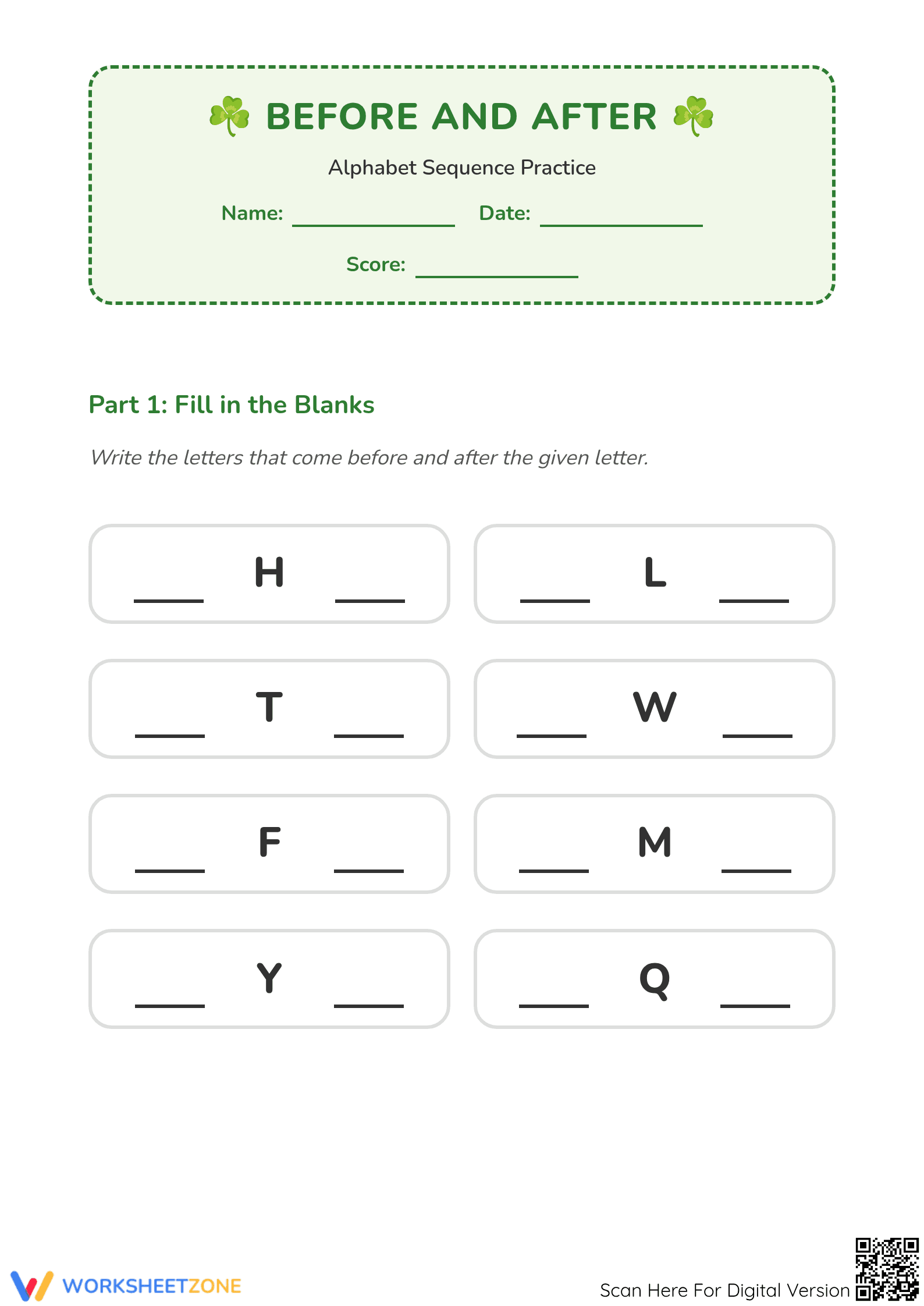
This Preschool alphabet worksheet provides a structured way for early learners to master letter sequencing. By identifying which letters come immediately before and after a target letter, students build the cognitive maps necessary for reading fluency and dictionary skills. It transforms abstract rote memorization into a concrete, spatial task that reinforces letter recognition and order.
At a Glance
- Grade: Preschool · Subject: ELA
- Standard:
CCSS.ELA-LITERACY.RF.K.1.D— Recognize and name all upper- and lowercase letters of the alphabet- Skill Focus: Alphabetical sequencing
- Format: 2 pages · 12 problems · Answer key included · PDF
- Best For: Literacy centers and morning work
- Time: 10–15 minutes
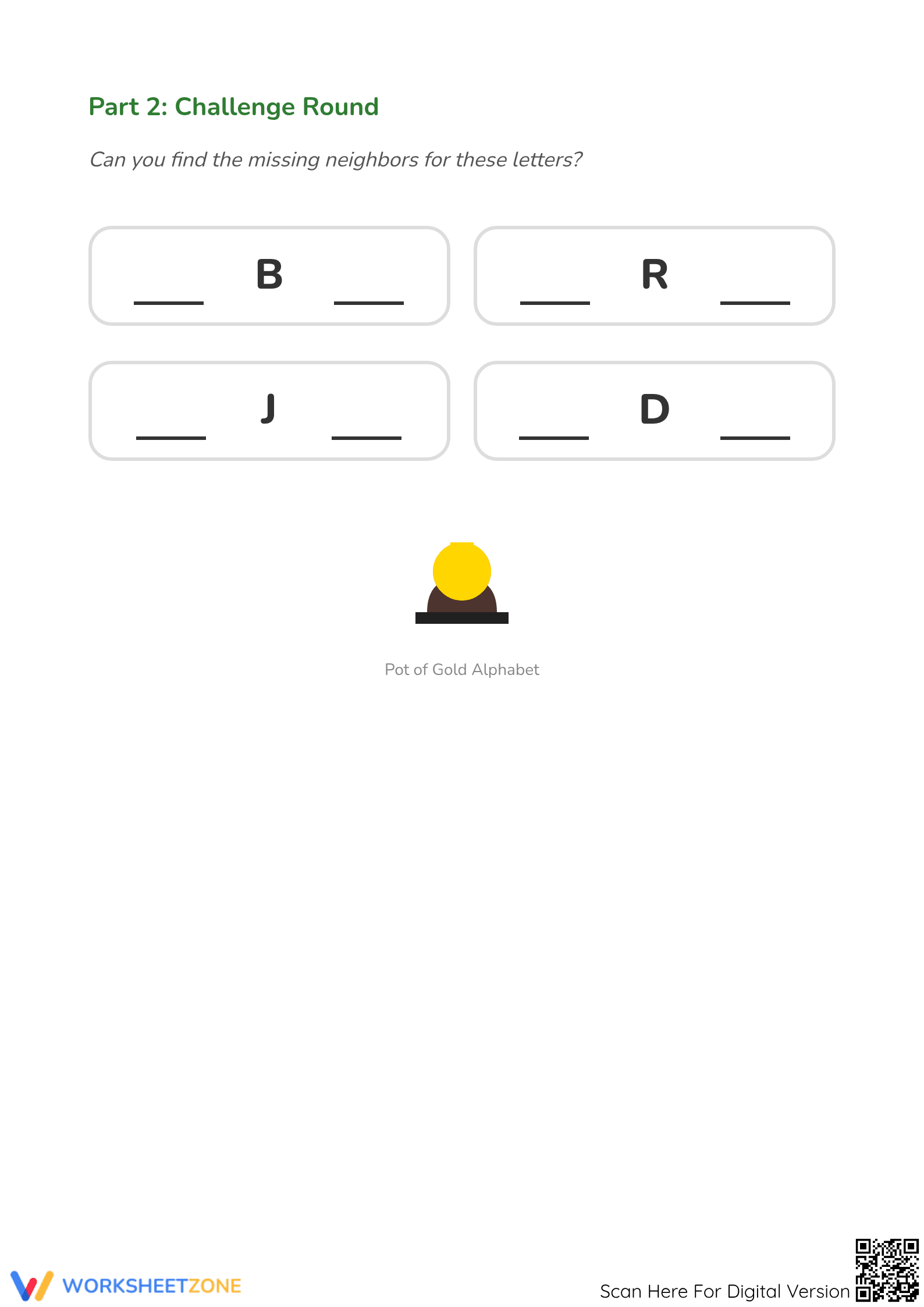
The resource consists of two high-quality PDF pages designed for young learners. The first page features eight uppercase letter prompts, each flanked by two blanks for students to fill in the preceding and succeeding letters. The second page, titled "Challenge Round," offers four additional prompts to reinforce mastery. A complete answer key is provided to facilitate quick grading or self-correction in a classroom setting.
Zero-Prep Workflow
- Print: Select the two pages and print enough copies for your cohort in under 30 seconds.
- Distribute: Hand out the worksheets during your literacy block or as a transition activity.
- Review: Use the included answer key to check for accuracy or project it for a whole-class review.
Total teacher preparation time is under two minutes, making this an ideal resource for busy mornings or unexpected substitute teacher needs.
Standards Alignment
This worksheet aligns with `CCSS.ELA-LITERACY.RF.K.1.D`, which requires students to recognize and name all letters of the alphabet. By requiring students to recall the sequence, it moves beyond simple recognition into active retrieval. Both standard codes can be copied directly into lesson plans, IEP goals, or district curriculum mapping tools.
How to Use It
Use this worksheet as a formative assessment after introducing the alphabet song or an alphabet anchor chart. It works exceptionally well in a small-group literacy center where students can use a reference strip if they get stuck. Observe whether students need to sing the entire alphabet to find the "neighbors" or if they have achieved automaticity with specific letter clusters. This provides a clear window into their phonological development.
Who It's For
This resource is designed for preschool students beginning their literacy journey and kindergarteners needing additional reinforcement. It is also suitable for English Language Learners (ELL) who are familiarizing themselves with the English alphabet structure. Pair this with a tactile alphabet board or sandpaper letters for a multi-sensory experience that supports diverse learning styles.
According to the RAND AIRS 2024 report on early childhood literacy, the ability to manipulate letter sequences is a significant predictor of later decoding success. This worksheet targets alphabetical automaticity, a sub-skill that reduces cognitive load during the reading process. By focusing on "before and after" relationships, students develop a more robust mental model of the English writing system. Research from Fisher & Frey (2014) emphasizes that gradual release of responsibility begins with clear, structured tasks like these, which provide enough scaffolding to ensure student success while demanding active recall. The 12-task format is specifically calibrated to the attention spans of early learners, ensuring that the practice remains engaging without becoming overwhelming. This evidence-based approach ensures that students are not just memorizing a song but are understanding the fixed relationships between characters in the alphabet. Use this CCSS.ELA-LITERACY.RF.K.1.D resource to build a solid foundation for future reading mastery.


