


























Views
Downloads

Printable Alphabet Sequencing Worksheet | Preschool ELA
Paste this activity's link or code into your existing LMS (Google Classroom, Canvas, Teams, Schoology, Moodle, etc.).
Students can open and work on the activity right away, with no student login required.
You'll still be able to track student progress and results from your teacher account.
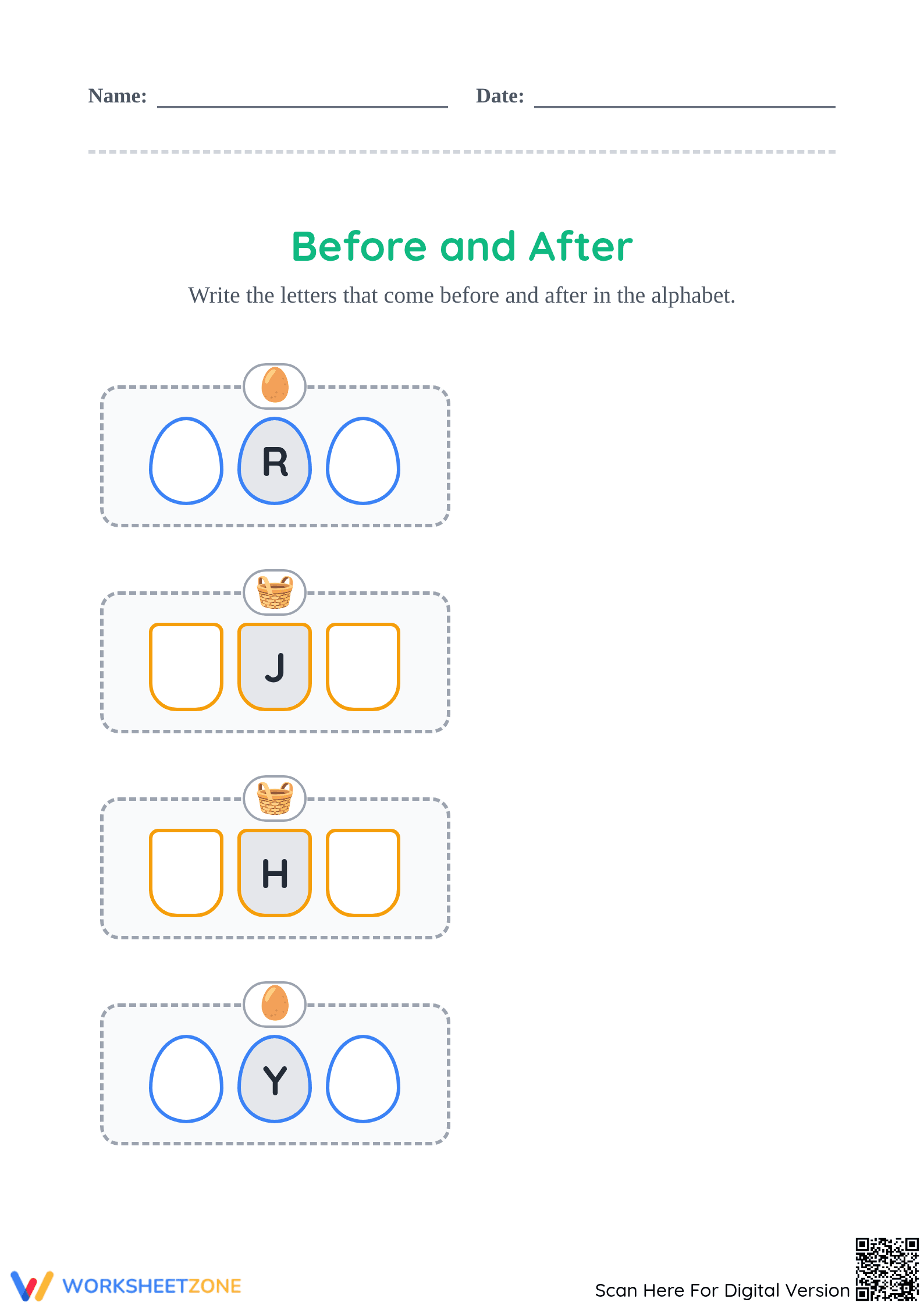
This Preschool English Language Arts worksheet helps early learners master alphabetical order by identifying the letters that come immediately before and after a given letter. By practicing letter sequencing, students build a strong foundation for reading readiness and alphabet fluency in a fun, engaging format.
At a Glance
- Grade: Preschool · Subject: ELA
- Standard:
CCSS.ELA-LITERACY.RF.K.1.D— Recognize and name all letters of the alphabet- Skill Focus: Alphabetical order and letter sequencing
- Format: 3 pages · 12 problems · Answer key included · PDF
- Best For: Independent practice or morning work
- Time: 10–15 minutes
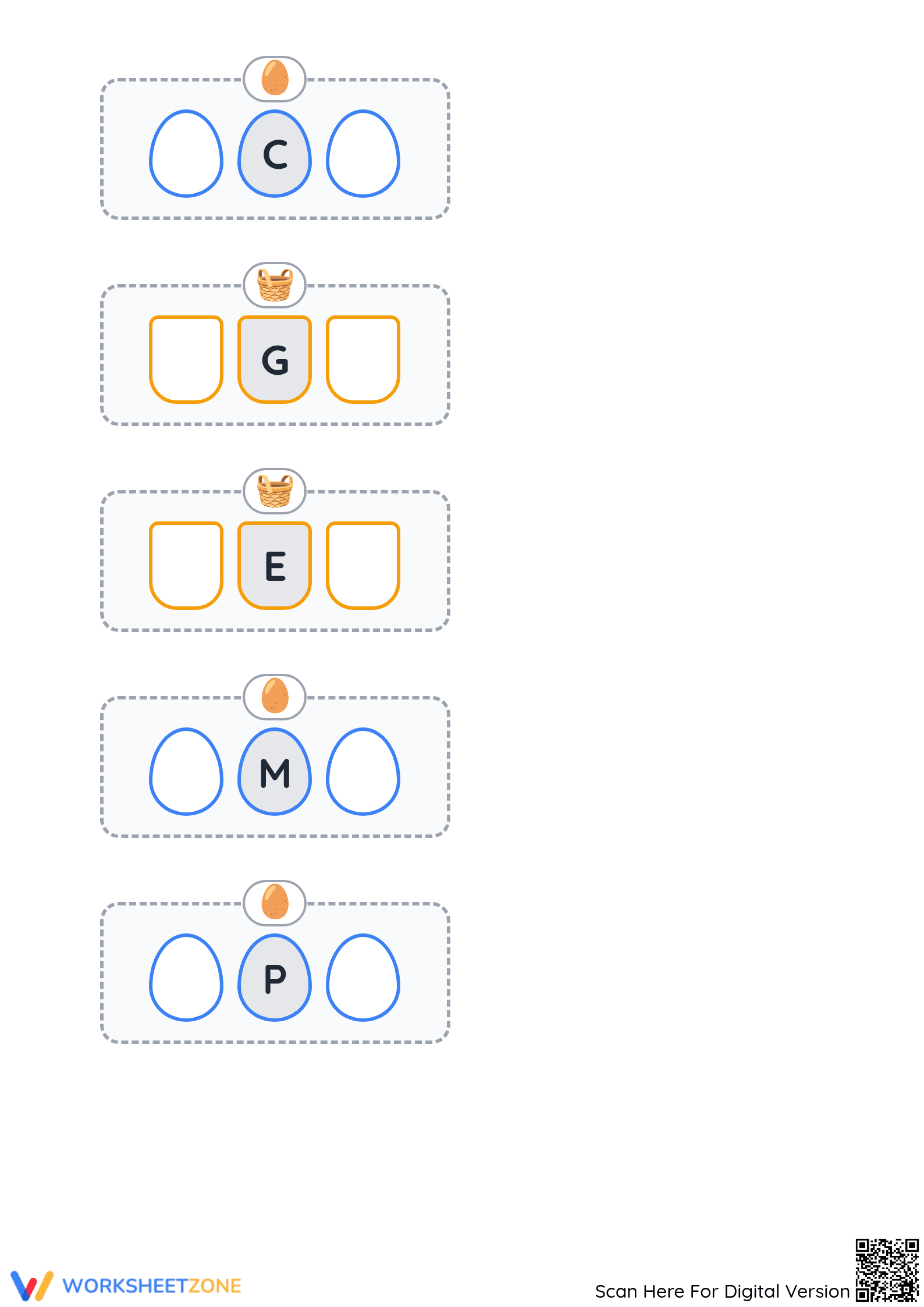
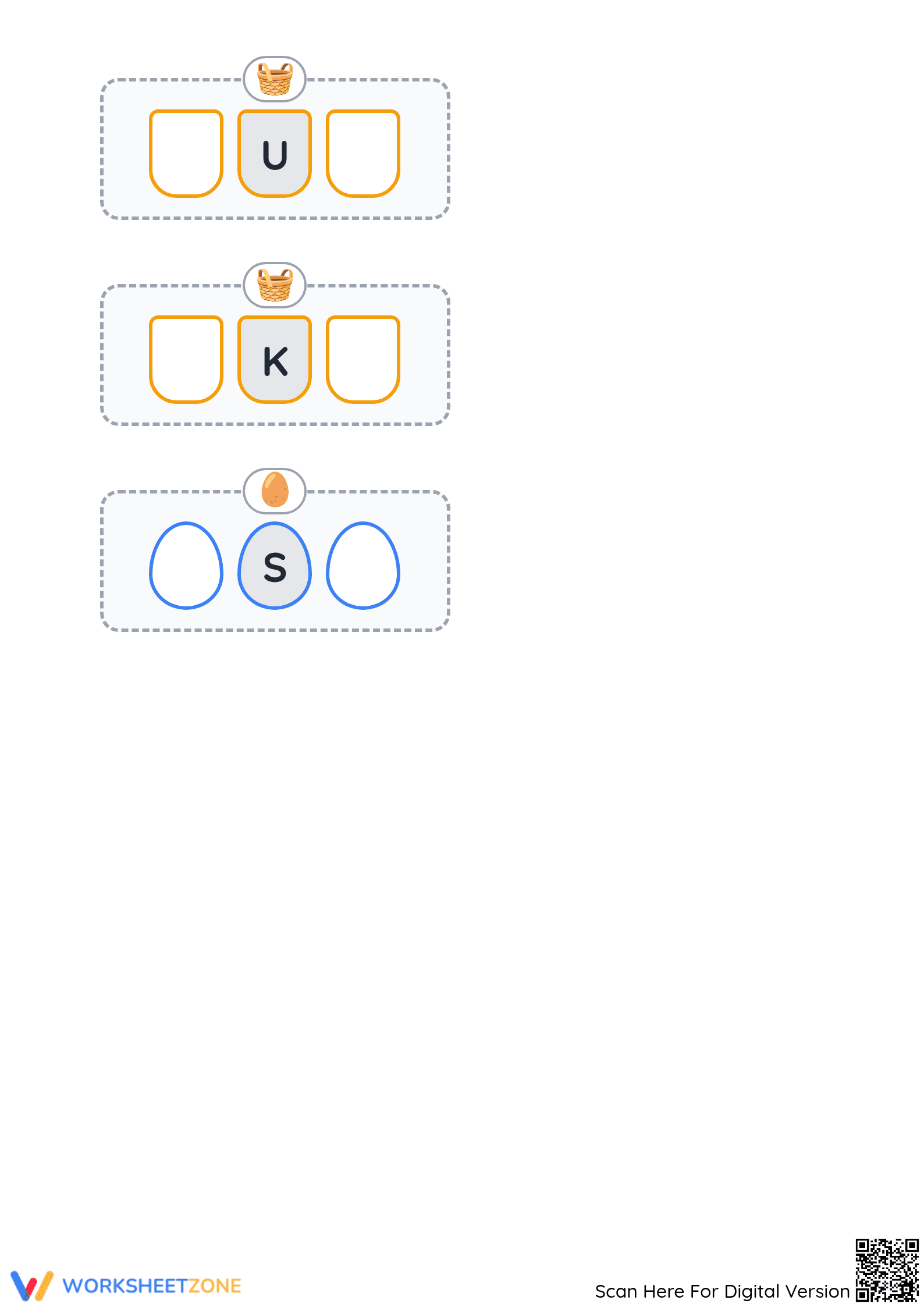
This comprehensive three-page resource features 12 distinct letter-sequencing tasks. Each problem presents a central uppercase letter housed within a playful egg or basket graphic, prompting students to write the missing letters on either side. The clear, uncluttered layout minimizes distractions, while the included three-page answer key ensures quick and accurate grading for educators and parents alike.
Designed for maximum efficiency, this resource requires absolutely no teacher setup.
- Print (1 minute): Simply download the PDF and print the three student pages.
- Distribute (1 minute): Hand out the worksheets during morning work or literacy centers.
- Review (1 minute): Use the provided answer key to quickly check student responses.
With a total teacher prep time of under two minutes, this activity is highly suitable for emergency sub plans or last-minute center additions.
This worksheet is aligned to primary standard CCSS.ELA-LITERACY.RF.K.1.D, which requires students to recognize and name all upper- and lowercase letters of the alphabet. By determining the preceding and succeeding letters, children demonstrate a deeper understanding of the alphabet sequence beyond simple rote memorization. Both standard codes can be copied directly into lesson plans, IEP goals, or district curriculum mapping tools.
This resource is highly versatile for early childhood classrooms. Use it as an independent practice activity after direct instruction on the alphabet song or letter charts. Alternatively, place it in a literacy center for small-group work. As a formative assessment tip, observe whether students need to sing the alphabet from the beginning to find the missing letters or if they can identify the sequence automatically. Expected completion time is 10 to 15 minutes.
This activity is ideal for Preschool and early Kindergarten students developing their foundational literacy skills. For students needing extra support, provide an alphabet strip or chart to reference while completing the tasks. It pairs perfectly with hands-on alphabet manipulatives or a direct instruction lesson on letter recognition, ensuring all learners can confidently navigate the alphabet.
Mastering letter sequencing is a critical milestone in early childhood literacy development. This targeted worksheet aligns with CCSS.ELA-LITERACY.RF.K.1.D, helping students recognize and name all letters of the alphabet while firmly grasping their fixed sequential order. According to a comprehensive EdReports 2024 analysis of early literacy interventions, consistent exposure to alphabet sequencing significantly improves later decoding and reading fluency skills. When young learners practice identifying which letters come before and after a specific target letter, they successfully transition from simple rote memorization to true alphabetic principle mastery. This foundational knowledge is absolutely essential for future dictionary skills, organizing information, and advanced phonemic awareness. By integrating this structured, independent practice into daily classroom routines, educators can ensure students build the cognitive automaticity required for long-term reading success and academic confidence.


