


























Views
Downloads
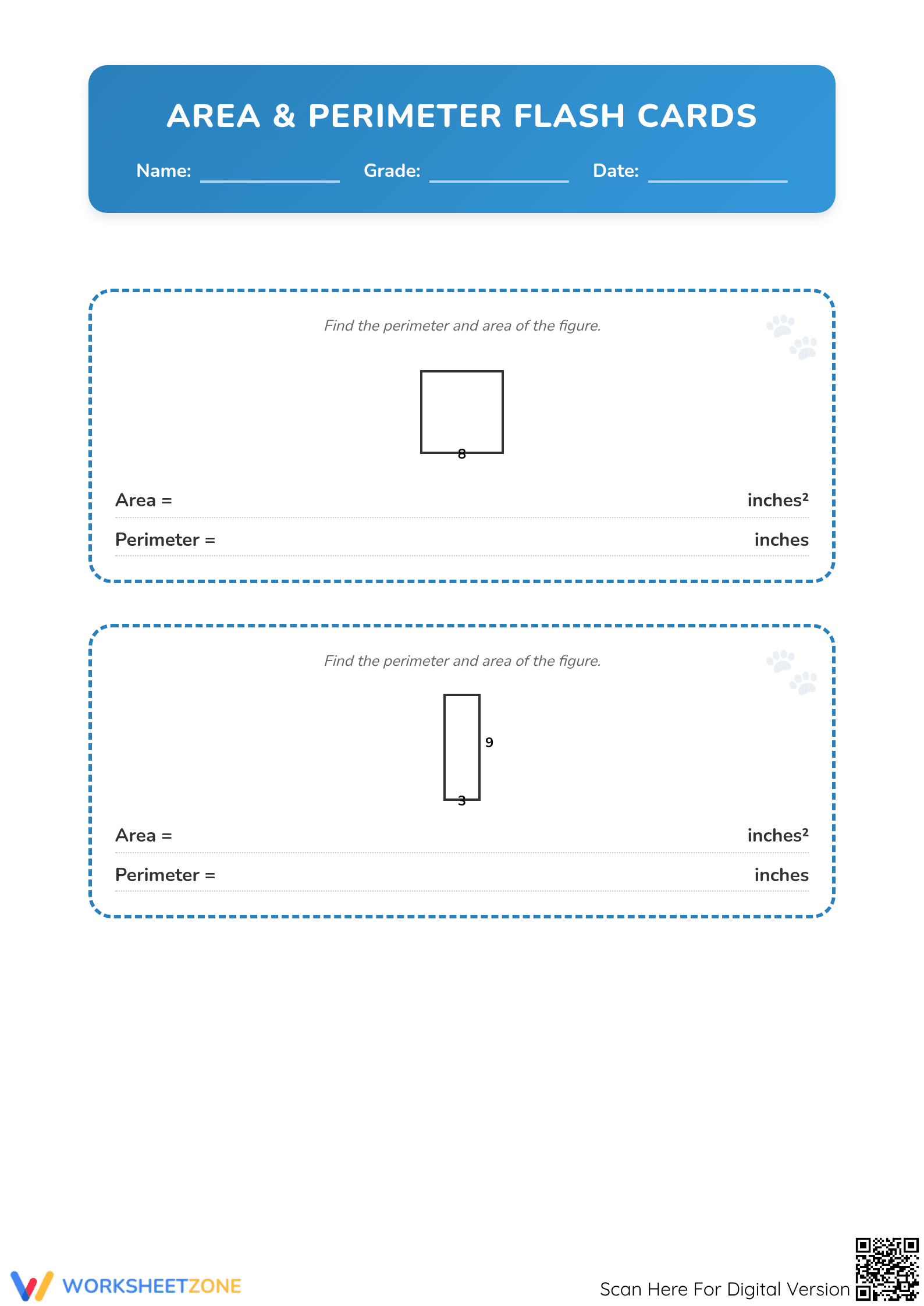
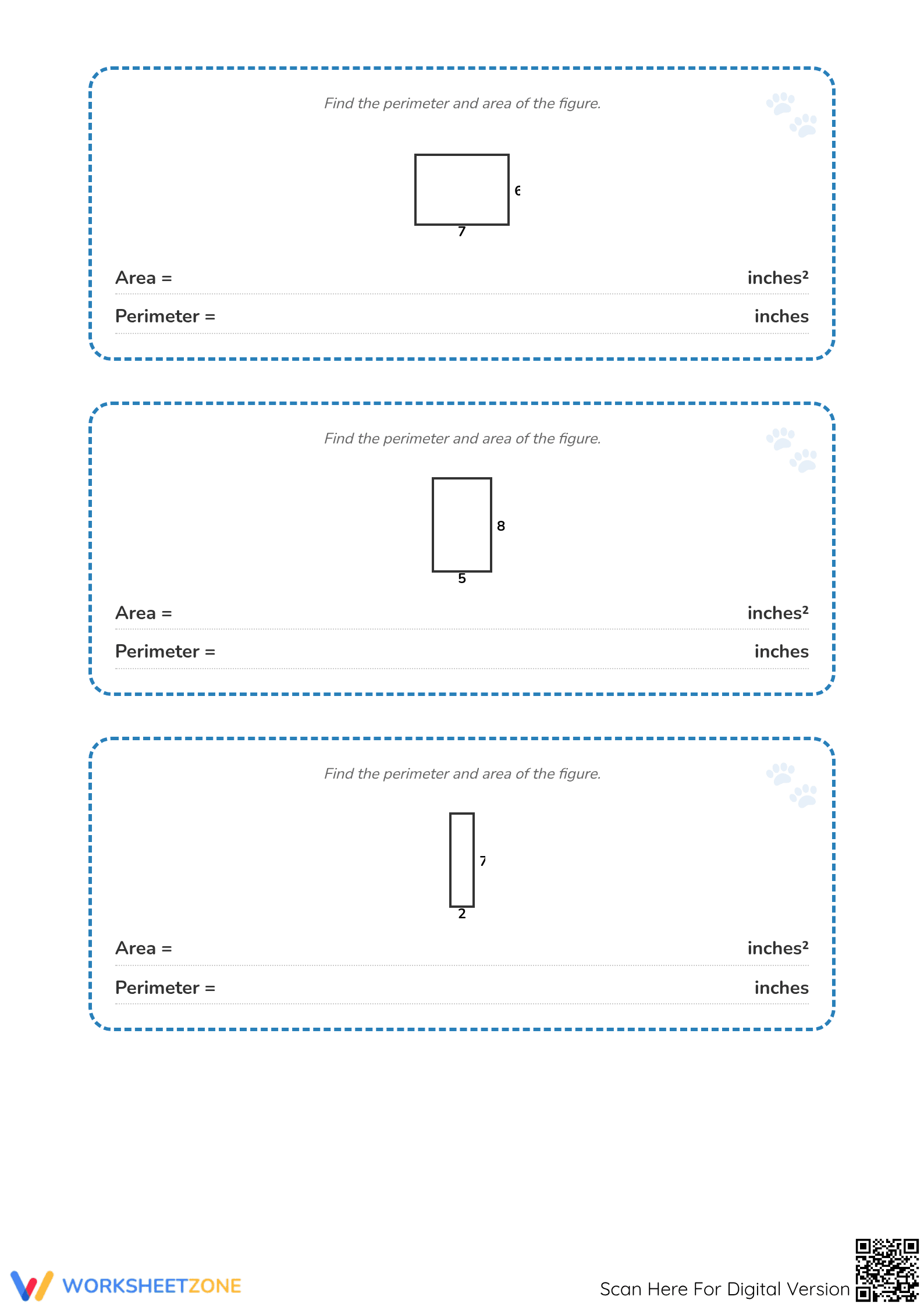
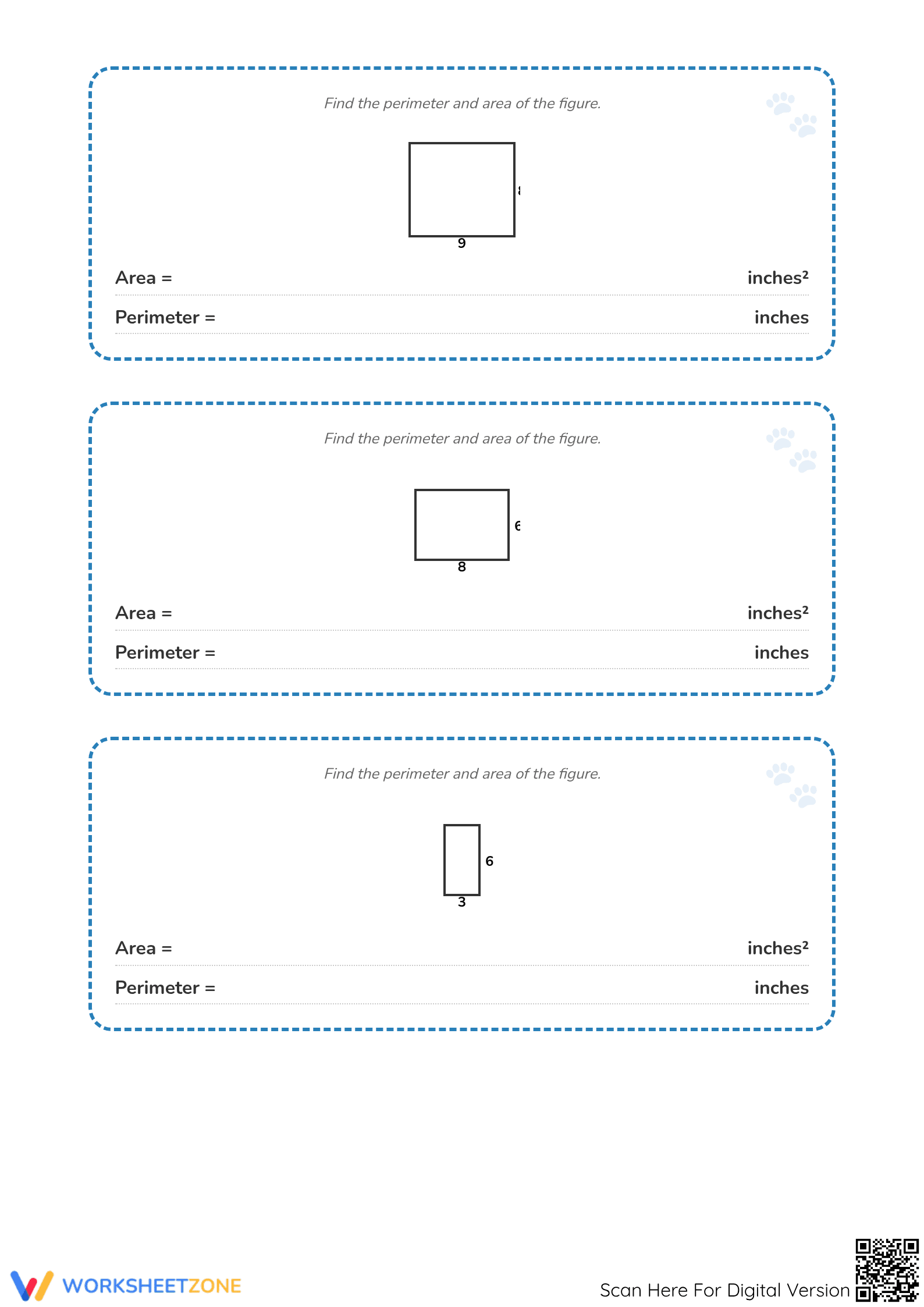
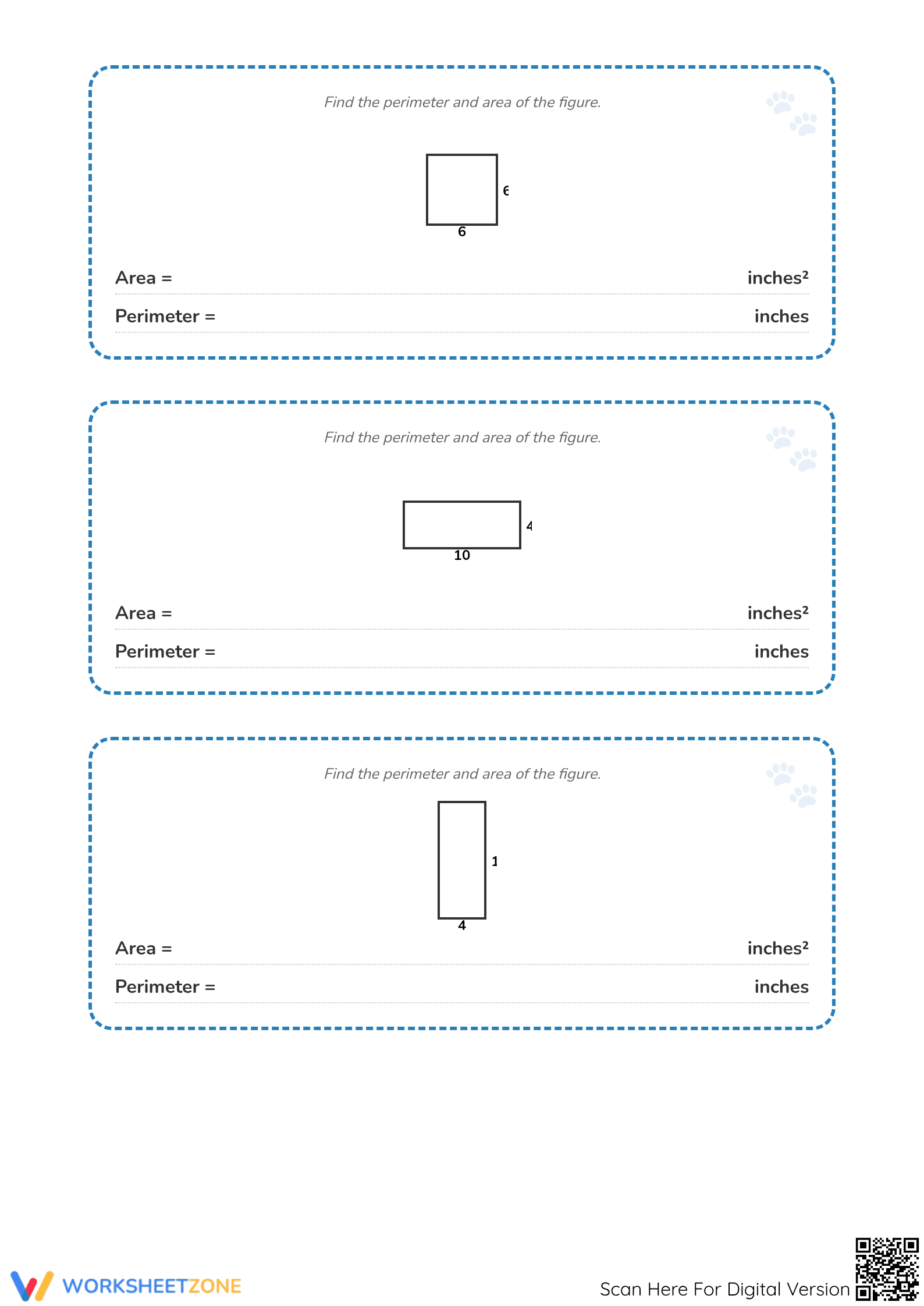

Printable Area and Perimeter Flash Cards | Grade 4-5 Math
Paste this activity's link or code into your existing LMS (Google Classroom, Canvas, Teams, Schoology, Moodle, etc.).
Students can open and work on the activity right away, with no student login required.
You'll still be able to track student progress and results from your teacher account.
This math worksheet provides students with a practical way to master the calculation of area and perimeter for squares and rectangles. Students will analyze various geometric figures to determine their total surface area and boundary length, strengthening their foundational understanding of measurement and geometry. This resource is designed to produce immediate classroom success.
At a Glance
At a Glance
- Grade: 4-5 · Subject: Math
- Standard:
CCSS.MATH.CONTENT.4.MD.A.3— Apply the area and perimeter formulas for rectangles in mathematical and real-world problems- Skill Focus: Calculating geometric area and perimeter of squares and rectangles
- Format: 5 printable pages · 14 unique problems · Comprehensive answer key included · PDF
- Best For: Zero-prep math centers, independent practice, or substitute teacher lesson plans
- Time: 15–25 minutes of focused student work
What's Inside
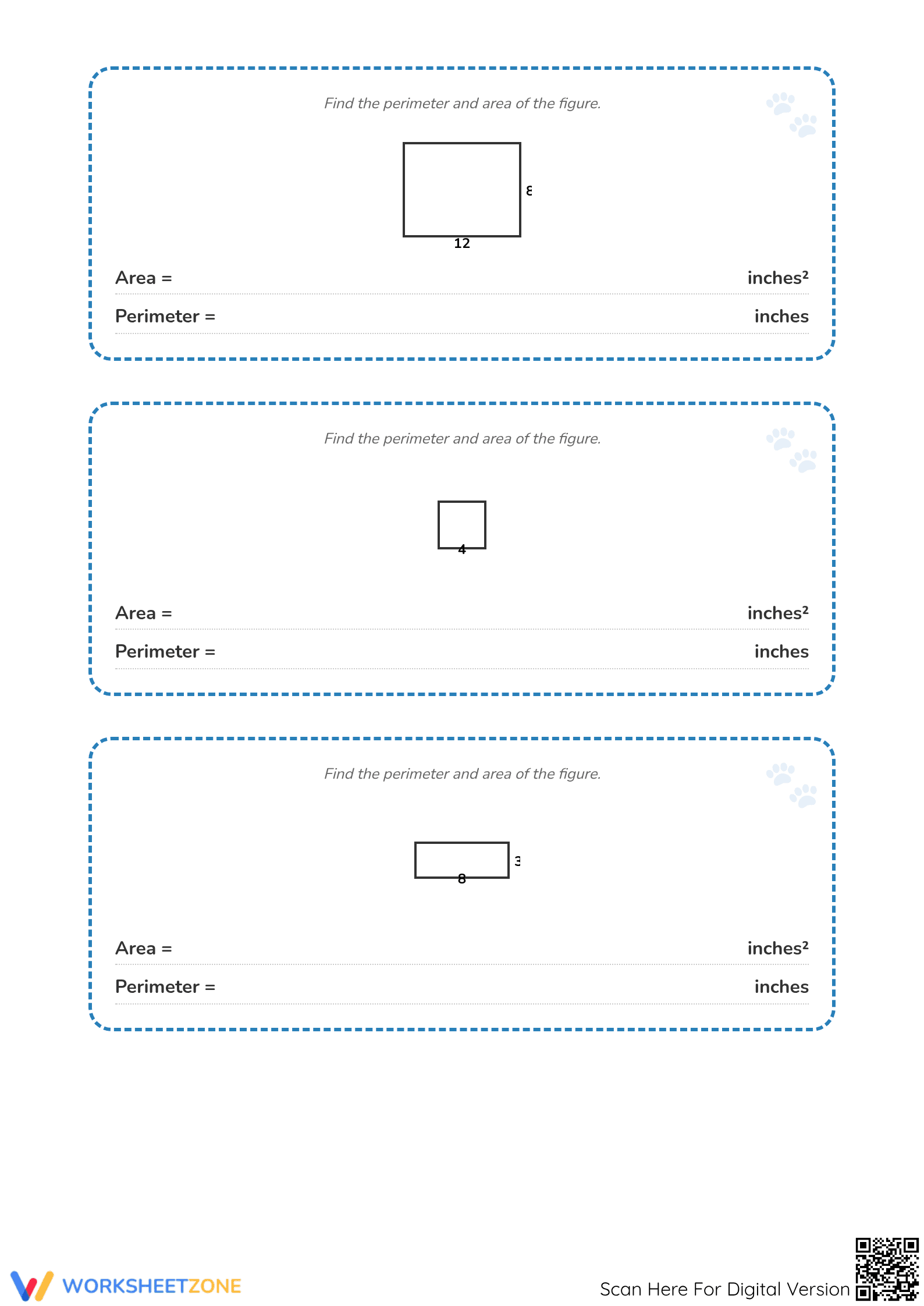
This comprehensive five-page set features 14 distinct flash-card style problems. Each page presents multiple geometric figures—specifically squares and rectangles—with clearly labeled side lengths in inches. Students are provided with dedicated workspace to record both the total area in square inches and the perimeter in linear inches. A complete answer key is included for rapid grading or self-correction.
Zero-Prep Workflow
This resource is optimized for teacher efficiency and ease of use. First, print the five pages of flash cards in seconds. Next, distribute the sheets to students or cut them into individual cards for a hands-on center activity. Finally, review student work using the provided answer key. Total teacher preparation time is less than two minutes, making this an ideal solution for substitute plans or last-minute lesson enhancements.
Standards Alignment
The primary standard addressed is `CCSS.MATH.CONTENT.4.MD.A.3`, which requires students to apply the area and perimeter formulas for rectangles in real-world and mathematical problems. By practicing these calculations across 14 varied figures, students build the fluency needed for complex geometric reasoning. This standard code can be copied directly into lesson plans, IEP goals, or district curriculum mapping tools.
How to Use It
Deploy these flash cards as a formative assessment at the end of a measurement unit to gauge student mastery of formulas. Teachers can observe whether students are correctly identifying when to multiply versus add side lengths. These cards also function effectively as an independent station activity, allowing students to work through the 14 problems at their own pace. Expected completion time is approximately 20 minutes.
Who It's For
This resource is tailored for fourth and fifth-grade students who are developing or reinforcing their understanding of rectilinear area. It is especially useful for students who benefit from visual representations of geometry. Pair these cards with a coordinate plane passage or a measurement anchor chart to provide a well-rounded instructional experience that supports diverse learning needs.
According to the RAND AIRS 2024 report, structured practice with geometric formulas is essential for developing mathematical fluency in middle elementary grades. This worksheet aligns with best practices identified by Fisher & Frey (2014) by providing focused tasks that allow for independent mastery. By requiring students to calculate both area and perimeter for the same figure, the resource prevents the common misconception of conflating these two distinct measurements. National assessments highlight the importance of applying `CCSS.MATH.CONTENT.4.MD.A.3` in varied contexts to ensure long-term retention of spatial concepts. The use of varied dimensions across 14 problems ensures that students encounter a wide range of product and sum combinations, reinforcing basic multiplication and addition facts while teaching high-level geometric principles. This comprehensive approach ensures that learners build a robust mental model of how two-dimensional space is quantified and measured in square and linear units.


