




























Views
Downloads
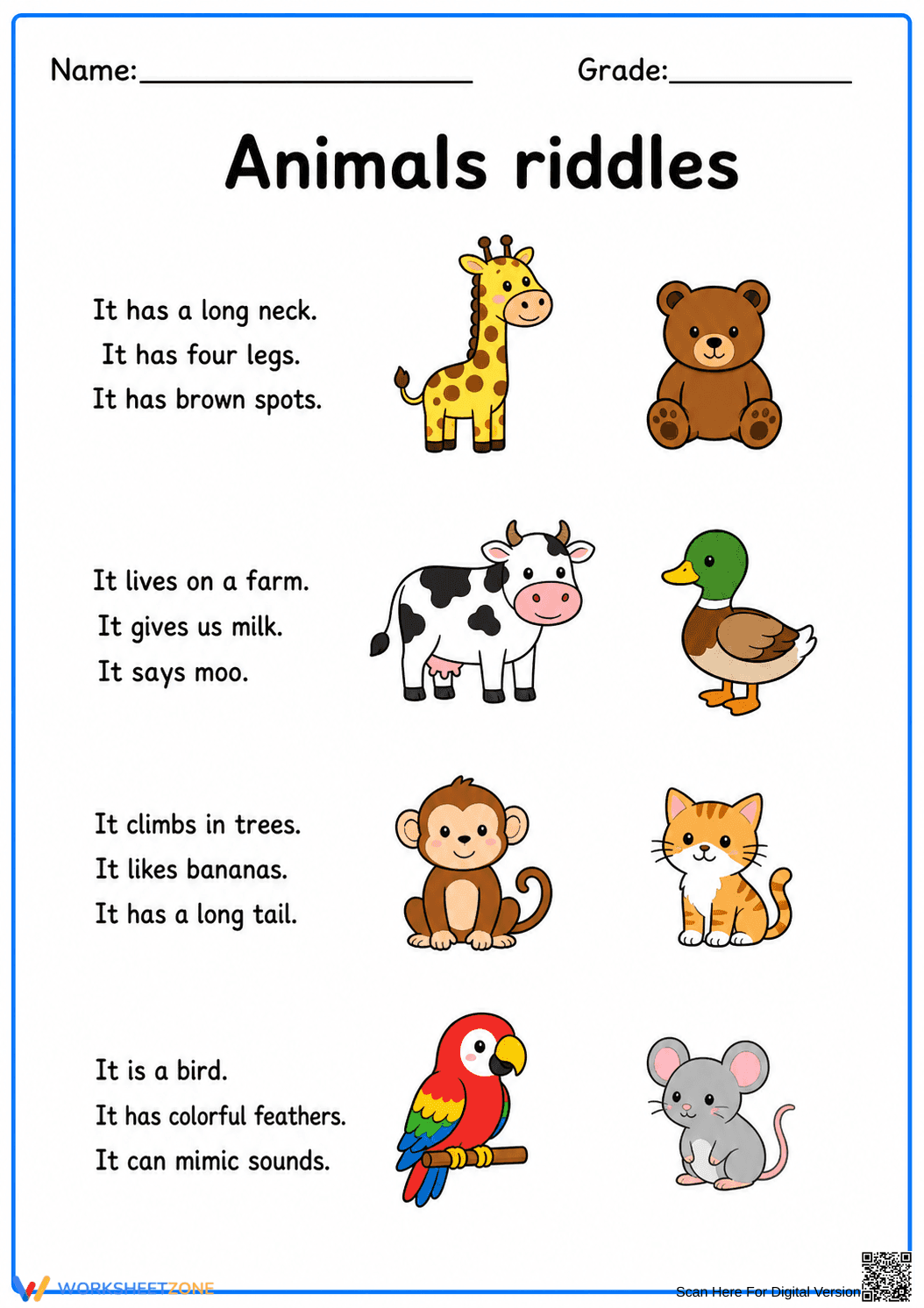

Grade K Animal Riddles — Printable No-Prep Worksheet

Paste this activity's link or code into your existing LMS (Google Classroom, Canvas, Teams, Schoology, Moodle, etc.).
Students can open and work on the activity right away, with no student login required.
You'll still be able to track student progress and results from your teacher account.
This Kindergarten animal riddles worksheet helps early learners identify animals by matching descriptive text to visual clues. Students read simple sentences about physical traits and habitats, then select the correct animal from two picture choices, building foundational reading comprehension and basic life science observation skills.
At a Glance
- Grade: Kindergarten · Subject: Science
- Standard:
K-LS1-1— Observe and describe animal traits and behaviors- Skill Focus: Animal Identification
- Format: 1 page · 4 problems · Answer key included · PDF
- Best For: Independent practice or centers
- Time: 10–15 minutes
This single-page resource features four distinct animal riddles designed specifically for early readers. Each riddle consists of three short, decodable sentences that provide clues about an animal's physical characteristics, diet, or habitat. Beside each text block, students see two animal illustrations and must use the clues to determine the correct match. A complete answer key is provided to ensure quick and accurate grading.
Zero-Prep Workflow
- Print (1 minute): Simply download the PDF and print the desired number of copies. The clear layout requires no special formatting or cutting.
- Distribute (1 minute): Hand out the worksheets during your science block or literacy center rotations. The instructions are intuitive enough for immediate student engagement.
- Review (3 minutes): Go over the answers as a whole class, asking students to point out which specific clue helped them choose the correct animal.
With total teacher prep under two minutes, this is ideal for emergency sub plans.
This worksheet aligns with K-LS1-1, asking students to use observations to describe patterns of what plants and animals need to survive, adapted here to focus on observable animal traits and habitats. It also supports early literacy standards by requiring students to read emergent-reader texts with purpose and understanding. Both standard codes can be copied directly into lesson plans, IEP goals, or district curriculum mapping tools.
Use this worksheet as an independent practice activity after a whole-group lesson on animal characteristics and habitats. It also functions perfectly as a quiet morning work assignment to settle students into the school day. While students are working, teachers can use this as a formative assessment opportunity by observing whether children are relying on the text clues or simply guessing based on the pictures. Expect most kindergarteners to complete the four riddles within 10 to 15 minutes.
This resource is designed primarily for Kindergarten students who are beginning to read independently and are learning basic animal classification. The visual supports make it highly accessible for English Language Learners (ELLs) and students requiring visual accommodations. Pair this worksheet with a read-aloud book about farm or jungle animals to reinforce the vocabulary found in the riddles.
Integrating early literacy with foundational science concepts improves student retention. According to Fisher & Frey (2014), providing students with structured tasks that require them to synthesize textual clues with visual information builds critical thinking skills essential for later academic success. This worksheet specifically targets K-LS1-1, requiring learners to observe and describe animal traits and behaviors through guided reading practice. By asking students to evaluate multiple pieces of evidence—such as an animal's color, leg count, and habitat—before making a conclusion, educators foster early analytical skills. The combination of decodable text and clear visual choices ensures that cognitive load remains focused on the primary learning objective rather than deciphering complex instructions. This approach not only solidifies life science vocabulary but also reinforces reading comprehension strategies in a highly motivating, puzzle-like format.


