


























Views
Downloads

Grade 2 Adjectives — Essential No-Prep Grammar Worksheet
Paste this activity's link or code into your existing LMS (Google Classroom, Canvas, Teams, Schoology, Moodle, etc.).
Students can open and work on the activity right away, with no student login required.
You'll still be able to track student progress and results from your teacher account.
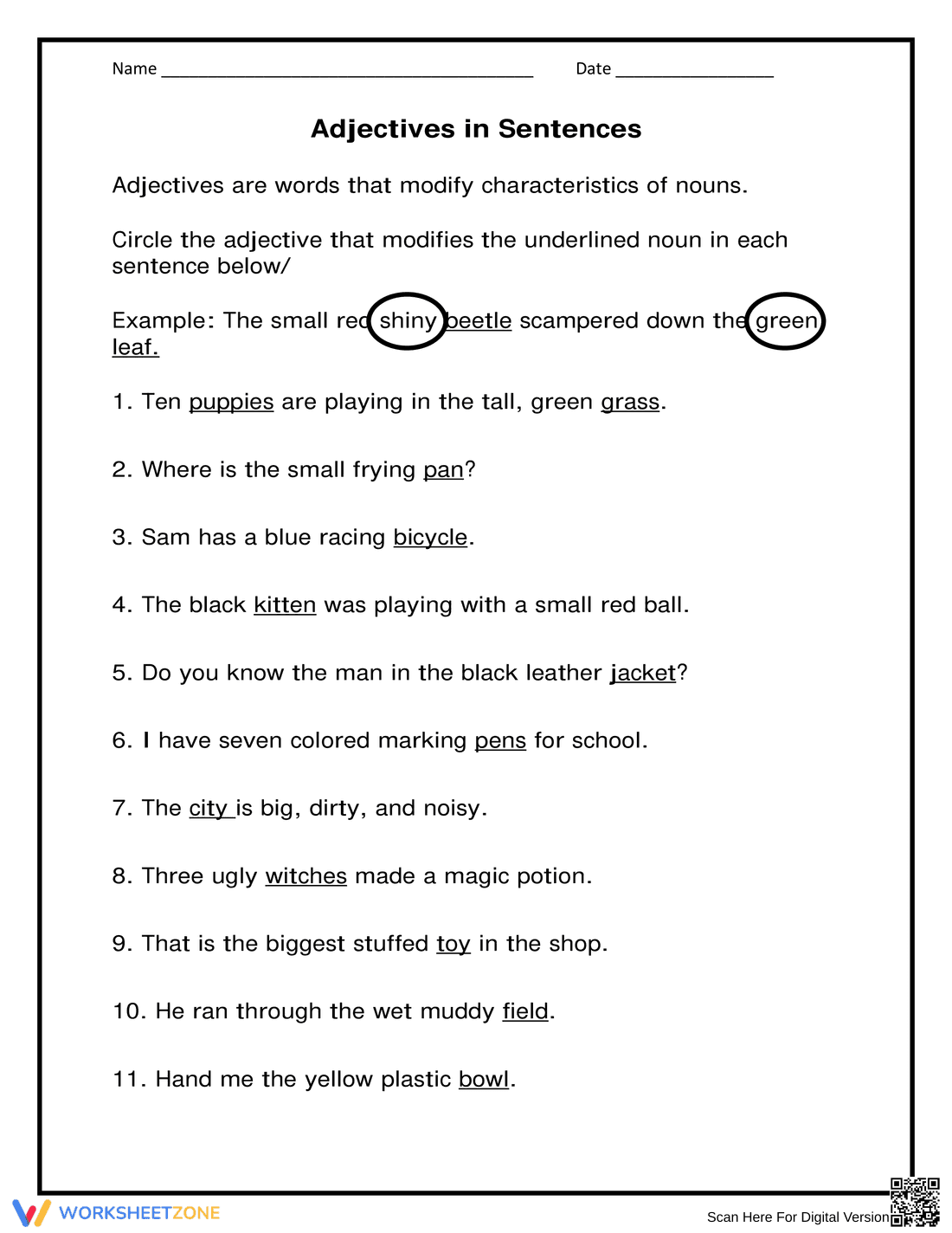
This Grade 2 adjectives worksheet helps students identify words that modify nouns through 11 structured sentences. By focusing on how adjectives describe characteristics like color, size, and material, students build a stronger foundation for descriptive writing and reading comprehension. This activity ensures students can accurately recognize adjectives in context to improve their grammar skills.
At a Glance
- Grade: 2 · Subject: English Language Arts
- Standard:
CCSS.ELA-LITERACY.L.2.1.E— Use adjectives and adverbs to modify nouns and verbs accurately- Skill Focus: Identifying descriptive adjectives
- Format: 1 page · 11 problems · Answer key included · PDF
- Best For: Grammar practice and formative assessment
- Time: 10–15 minutes
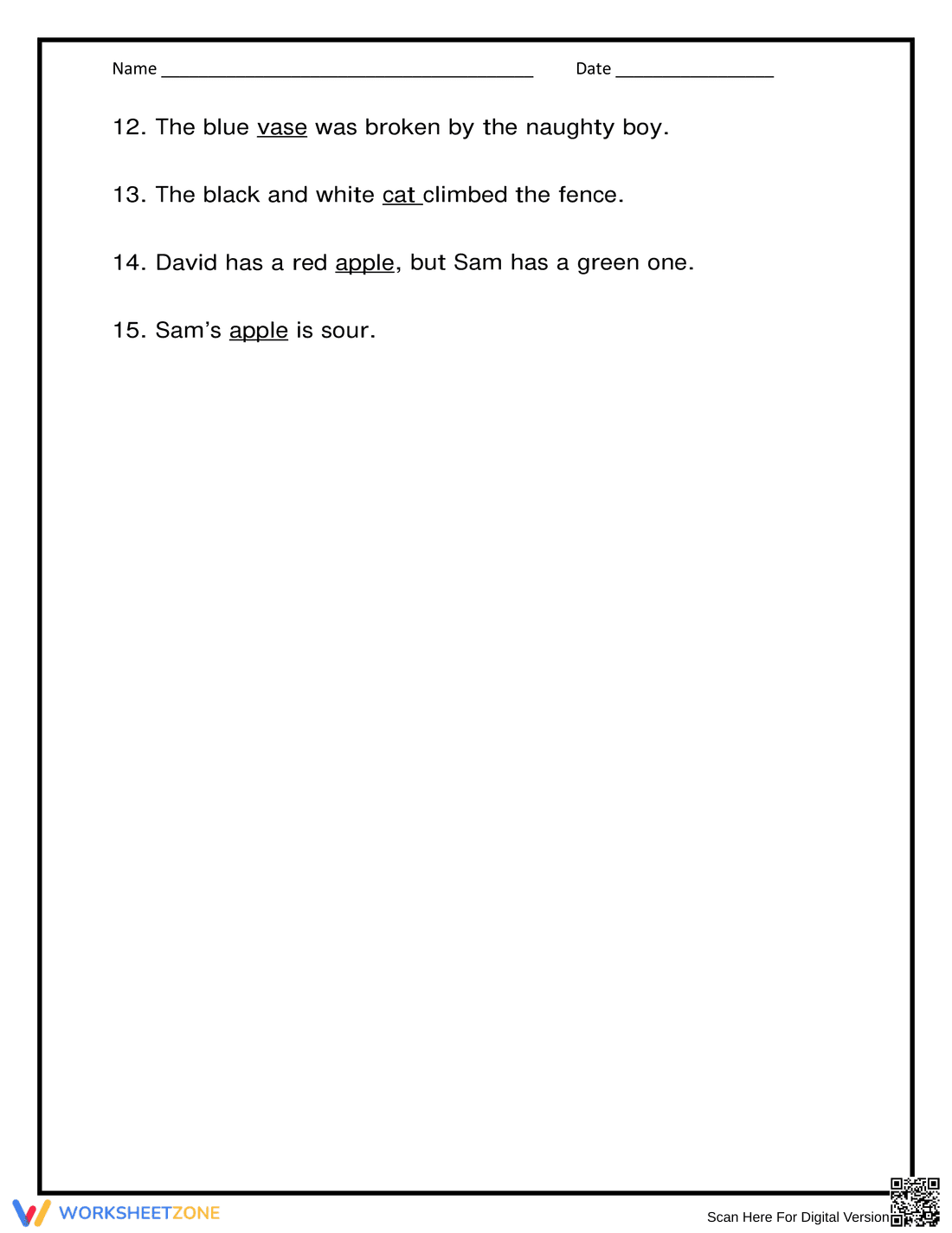
This single-page PDF features 11 practice sentences where students must circle the adjective that modifies a specific underlined noun. It includes a clear example sentence demonstrating the task. The worksheet covers various adjective types, including colors (blue, green), sizes (small, big), and materials (leather, plastic). A full answer key is provided for quick grading or student self-correction.
Zero-Prep Workflow
- Step 1: Print the single-page PDF (less than 30 seconds).
- Step 2: Distribute to students for a morning work activity or quick grammar warm-up (1 minute).
- Step 3: Review as a whole class or use the provided answer key for instant feedback (2 minutes).
This workflow requires less than 2 minutes of total teacher preparation time, making it an ideal choice for busy classrooms or unexpected sub plans.
Standards Alignment
The worksheet aligns with CCSS.ELA-LITERACY.L.2.1.E, which requires students to use adjectives and adverbs and choose between them depending on what is to be modified. Students practice identifying how adjectives function within a sentence structure to provide detail. This standard code can be copied directly into lesson plans, IEP goals, or district curriculum mapping tools.
How to Use It
Assign this worksheet during the independent practice phase of a grammar lesson on descriptive words to gauge individual student mastery. For a formative assessment tip, observe if students struggle with identifying adjectives that follow the noun (e.g., "The city is big..."). It typically takes students 10 to 15 minutes to complete.
Who It's For
Designed for second-grade students learning basic parts of speech, it also serves as an excellent review for third graders or a scaffolded activity for English Language Learners (ELL). It pairs naturally with a descriptive writing passage or an anchor chart listing common sensory adjectives.
Research from Fisher & Frey (2014) emphasizes that scaffolded practice with parts of speech, such as identifying adjectives in context, is critical for developing syntactic awareness. This worksheet directly supports the CCSS.ELA-LITERACY.L.2.1.E standard by providing 11 targeted opportunities for students to recognize how adjectives modify specific nouns. By isolating the descriptive word from the object it describes, students move beyond simple vocabulary recognition toward understanding grammatical relationships within sentences. The inclusion of diverse adjective categories—such as size, color, and material—ensures that learners are exposed to a broad range of descriptive language. This type of structured, zero-prep activity allows teachers to frequently monitor student progress without increasing administrative burden. According to NAEP data, early mastery of basic grammar and descriptive language is a strong predictor of later writing proficiency and reading fluency across content areas.


