


























Views
Downloads
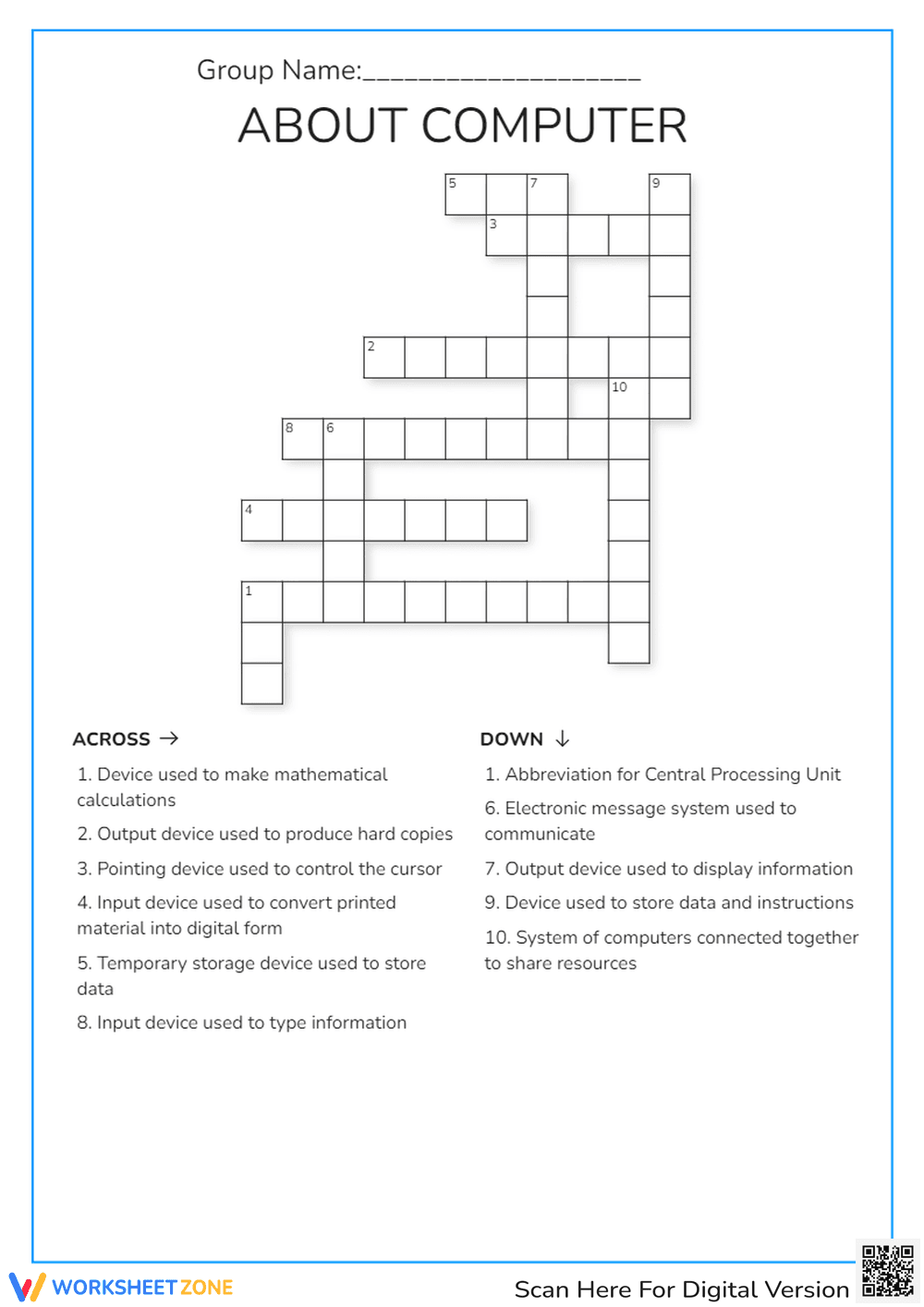

Computer Hardware Crossword | Grade 11 Essential Guide
Paste this activity's link or code into your existing LMS (Google Classroom, Canvas, Teams, Schoology, Moodle, etc.).
Students can open and work on the activity right away, with no student login required.
You'll still be able to track student progress and results from your teacher account.
Computer hardware literacy is foundational for Grade 11 students. This crossword puzzle provides a focused review of essential components, from input devices to internal processing units. By identifying hardware through functional descriptions, students reinforce their technical vocabulary and conceptual understanding of how computing systems operate in professional environments.
At a Glance
- Grade: 11 · Subject: Computer Science
- Standard:
HS-ETS1-1— Analyze technical systems and specify functional criteria for hardware solutions- Skill Focus: Hardware Identification & Terminology
- Format: 1 page · 11 problems · Answer key included · PDF
- Best For: Vocabulary reinforcement and quick formative assessment
- Time: 15–20 minutes
This single-page PDF features a crossword grid containing 11 distinct clues. The clues are divided into "Across" and "Down" sections, targeting hardware like the CPU, RAM, and network systems. The layout is clean, ensuring students focus on the technical definitions. A comprehensive answer key is included for rapid grading.
Zero-Prep Workflow
- Print: Generate the single-page PDF for your class in under 30 seconds.
- Distribute: Hand out the worksheets as a bell-ringer or transition activity (1 minute).
- Review: Use the provided key to address misconceptions about hardware functions (5 minutes).
This total prep time of under two minutes makes it an ideal emergency sub plan.
Standards Alignment
This resource aligns with `HS-ETS1-1`, emphasizing the analysis of technical systems. By mastering the vocabulary of computer components, students are better equipped to describe the constraints of digital tools. This standard code can be copied directly into lesson plans, IEP goals, or district curriculum mapping tools to document alignment with national frameworks.
How to Use It
Use this worksheet as a formative assessment after a lecture to gauge student retention. It also serves as an individual activity for early finishers. Teachers should observe whether students can distinguish between input and output devices without aids, providing a clear indicator of who may need additional support with hardware classifications.
Who It's For
This activity is tailored for Grade 11 students in Computer Science or Engineering courses. It is effective for English Language Learners (ELLs) who benefit from structured context to build academic vocabulary. Pair this worksheet with a physical hardware demonstration to create a comprehensive multi-modal learning experience.
According to the RAND AIRS 2024 report on technical literacy, the use of gamified vocabulary reinforcement, such as crossword puzzles, significantly improves long-term retention of complex terminology in high school computer science curricula. This Grade 11 worksheet aligns with the HS-ETS1-1 standard by requiring students to analyze the functional requirements of various hardware components, including the Central Processing Unit (CPU), input-output devices, and storage systems. By translating technical definitions into specific hardware terms, students demonstrate a mastery of the physical layers of computing. Research from Fisher & Frey (2014) suggests that structured word-play activities serve as effective cognitive scaffolds for secondary learners, bridging the gap between abstract concepts and concrete technical application. This resource provides a 15-minute high-leverage activity that can be integrated into broader units on systems architecture or digital citizenship, ensuring that students possess the precise vocabulary necessary for advanced technical communication and problem-solving in modern engineering contexts.


