


























Views
Downloads

Essential Integers Order of Operations Worksheet | Grade 7
Paste this activity's link or code into your existing LMS (Google Classroom, Canvas, Teams, Schoology, Moodle, etc.).
Students can open and work on the activity right away, with no student login required.
You'll still be able to track student progress and results from your teacher account.
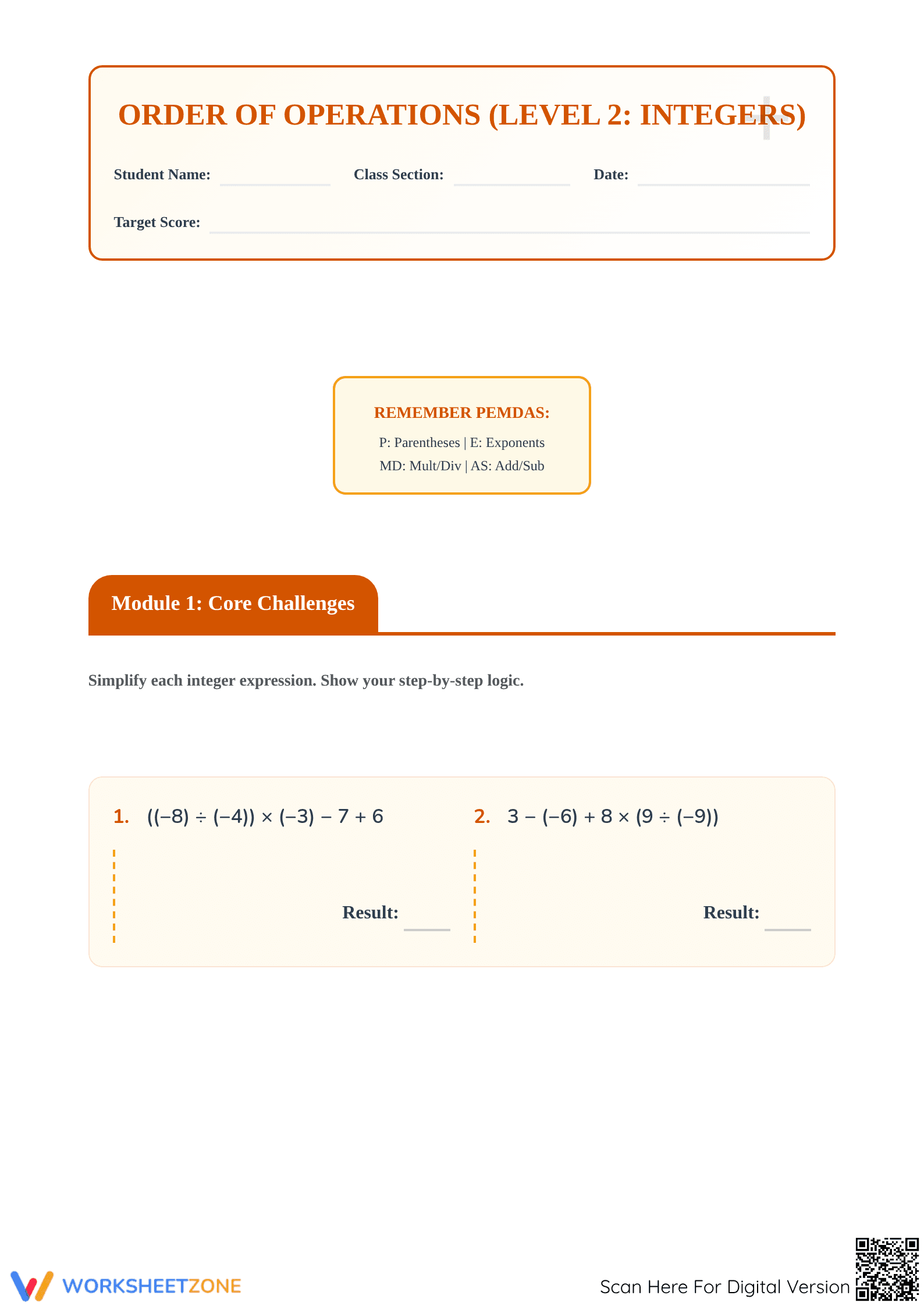
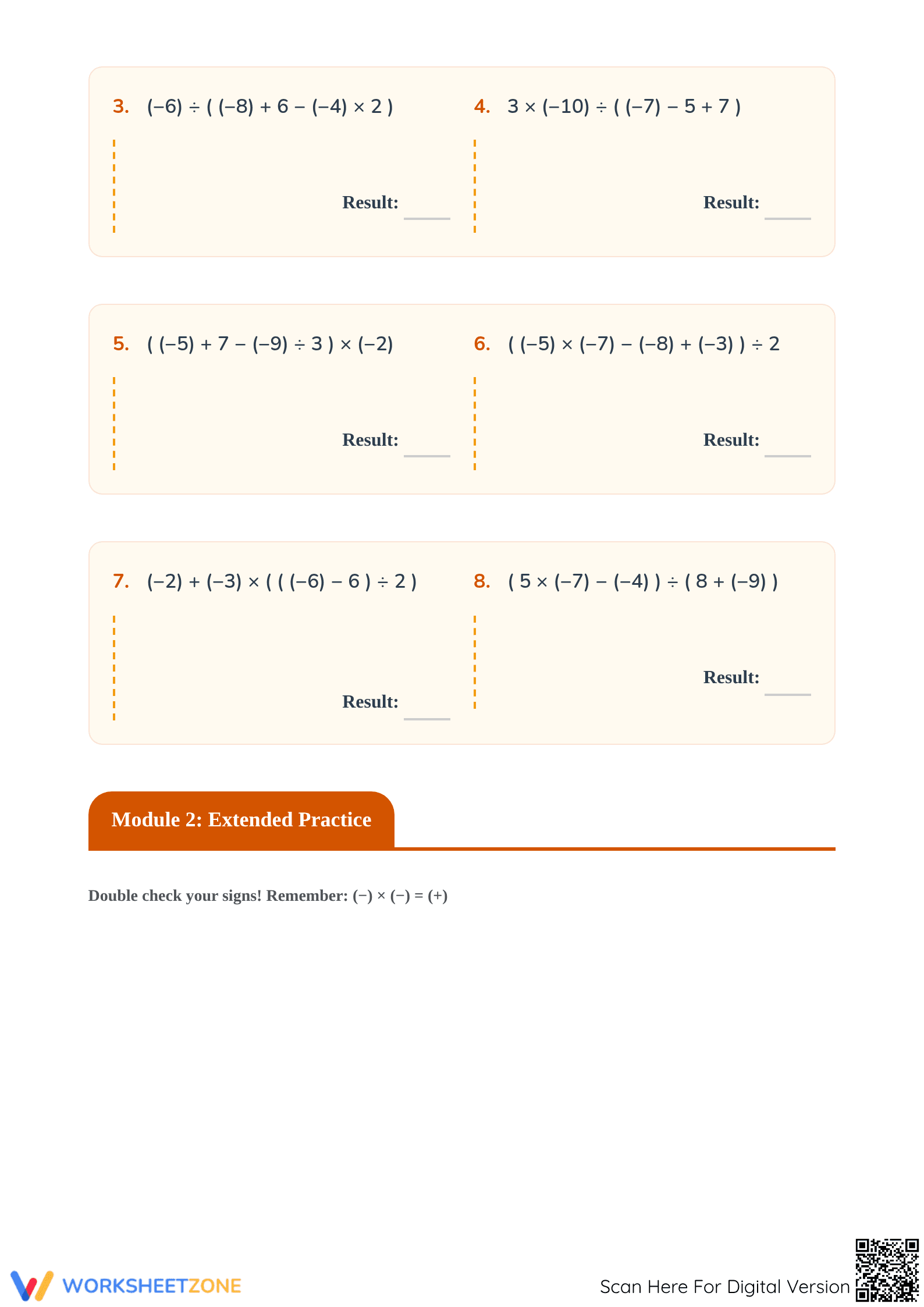
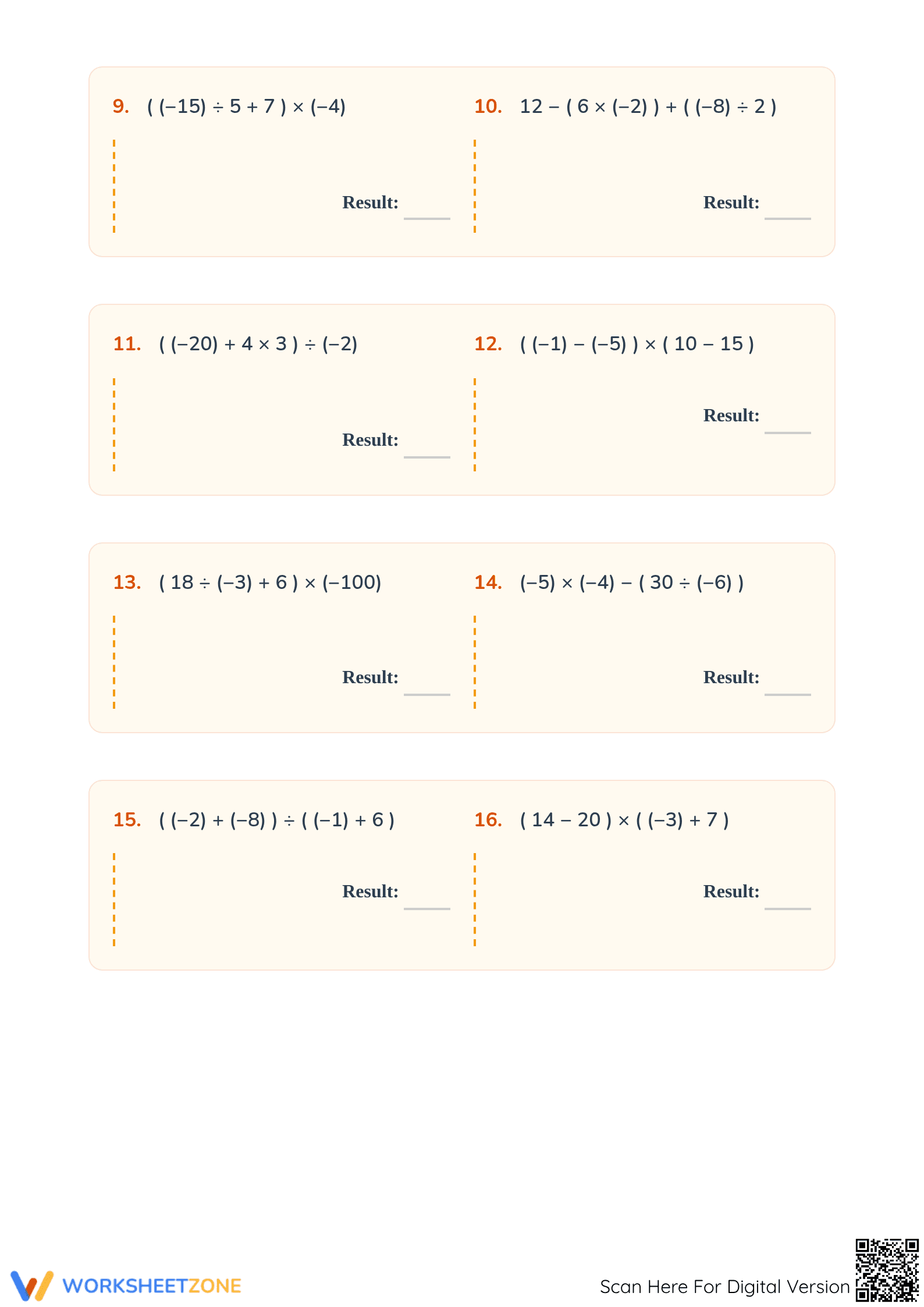
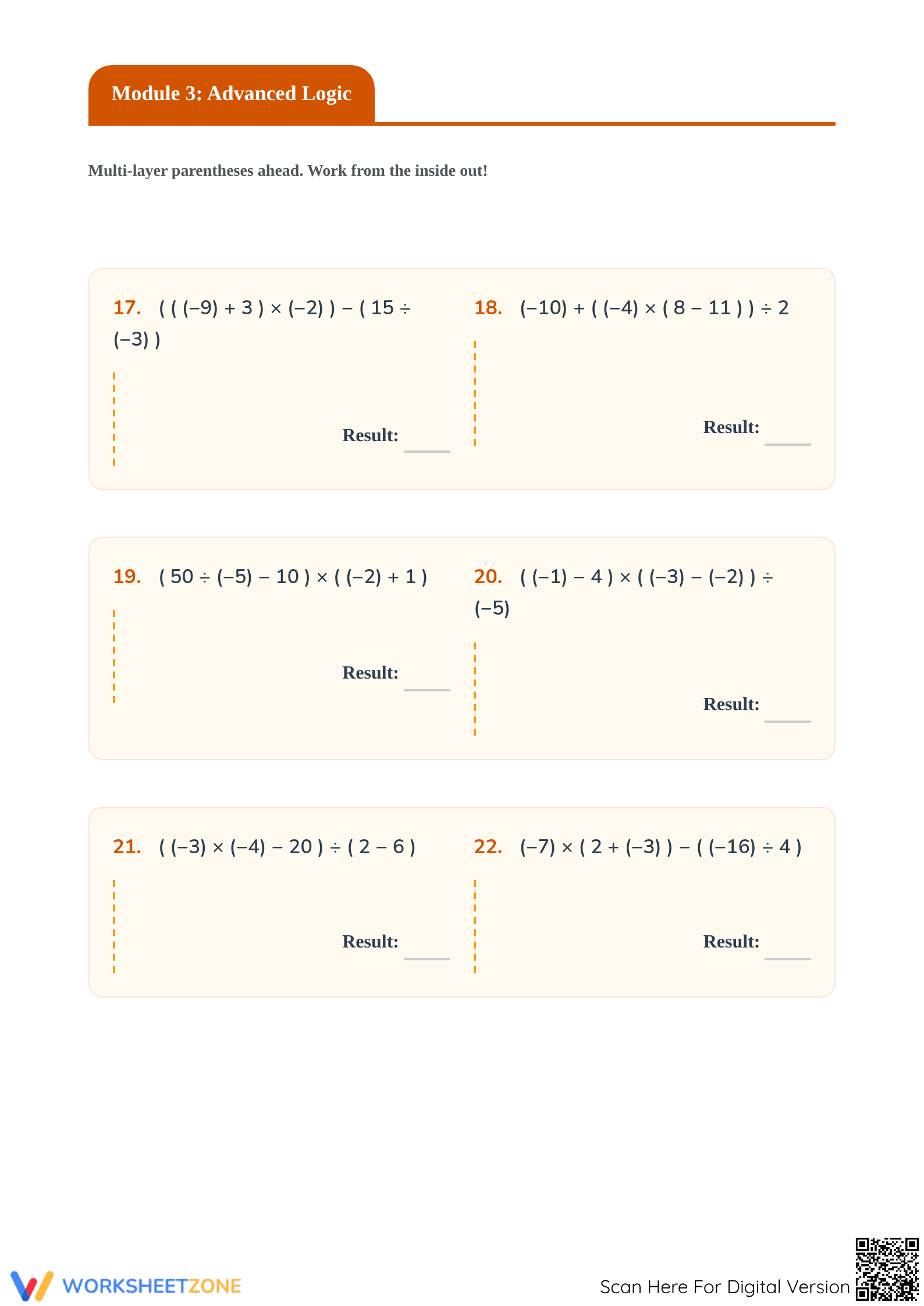
Mastering the order of operations with integers is a foundational requirement for algebra success. This 5-page worksheet provides students with 26 rigorous problems to build accuracy with PEMDAS and negative numbers. By isolating integer operations within multi-step expressions, students develop the procedural fluency needed for higher-level mathematics.
At a Glance
- Grade: 7 · Subject: Math
- Standard:
CCSS.MATH.CONTENT.7.NS.A.3— Solve multi-step problems with rational numbers including positive and negative integers- Skill Focus: Order of Operations (PEMDAS)
- Format: 5 pages · 26 problems · Answer key included · PDF
- Best For: Homework, independent practice, or sub plans
- Time: 30–45 minutes
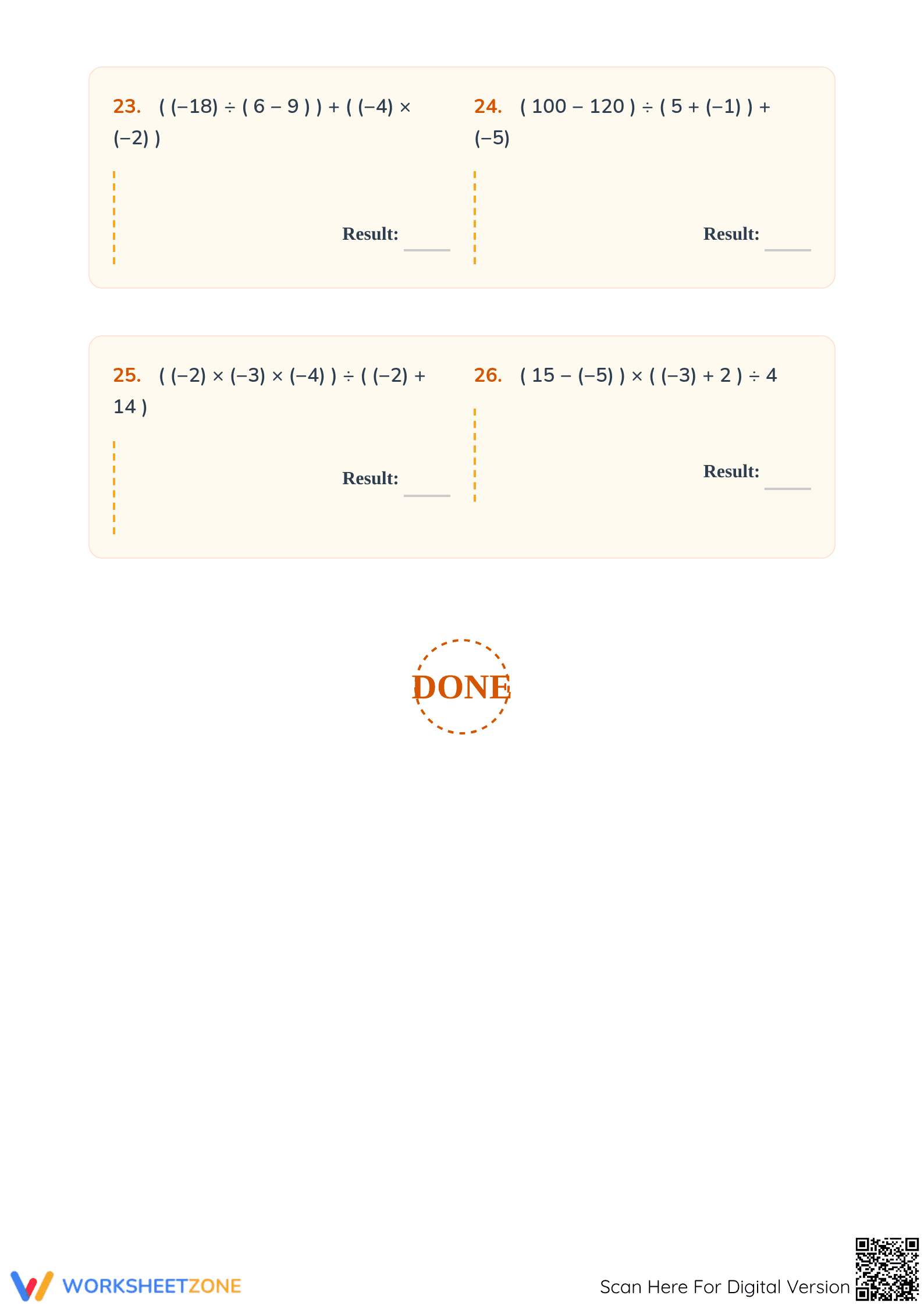
This resource contains five high-quality pages organized into three logical modules. Module 1 focuses on core challenges with two-step logic, while Module 2 expands to extended practice with more complex operations. Module 3 introduces advanced logic featuring multi-layer parentheses to challenge even the most proficient learners. A detailed answer key is included to facilitate quick grading and student self-assessment.
Zero-Prep Workflow
Designed for the busy educator, this worksheet requires less than two minutes of preparation. First, print the desired number of copies (1 minute). Second, distribute the materials to students as an independent practice set or a quiet assessment (30 seconds). Third, utilize the included answer key to review results or allow students to self-correct their work (30 seconds). This streamlined process makes it an ideal resource for emergency sub plans or last-minute instructional needs.
Standards Alignment
This worksheet aligns to CCSS.MATH.CONTENT.7.NS.A.3: Solve mathematical problems involving the four operations with rational numbers. The focus on integers adheres to PEMDAS rules, ensuring relevance to state testing. The standard code can be copied directly into lesson plans, IEP goals, or curriculum mapping tools.
How to Use It
Use this worksheet as a summative assessment after direct instruction on PEMDAS and integer rules. Educators should observe students during Module 2 to identify common sign errors or difficulties with nested parentheses. The expected completion time ranges from 30 to 45 minutes, making it suitable for a full class period or a focused homework assignment.
Who It's For
This resource is intended for Grade 7 students mastering rational number operations, though it serves as excellent enrichment for Grade 6 or review for Grade 8. It is particularly effective for students requiring structured repetition to internalize the order of operations. Pair this worksheet with an anchor chart displaying PEMDAS rules for maximum student support during independent work.
Effective mathematics instruction requires structured practice that moves students from conceptual understanding to procedural fluency. This worksheet aligns with CCSS.MATH.CONTENT.7.NS.A.3, focusing on the critical skill of solving multi-step mathematical problems involving integers through the order of operations. According to Fisher & Frey (2014), the gradual release of responsibility model is most effective when students are provided with high-quality, scaffolded tasks that increase in complexity. This resource embodies that principle by organizing 26 integer problems into three distinct modules: Core Challenges, Extended Practice, and Advanced Logic. By utilizing these tiered challenges, educators can ensure students master the PEMDAS sequence while managing negative signs and multi-layer parentheses. This systematic approach reduces cognitive load and prevents the common errors associated with integer arithmetic. Providing students with a full answer key allows for immediate self-correction, a key component of formative assessment that drives long-term retention of mathematical standards.


