


























Views
Downloads
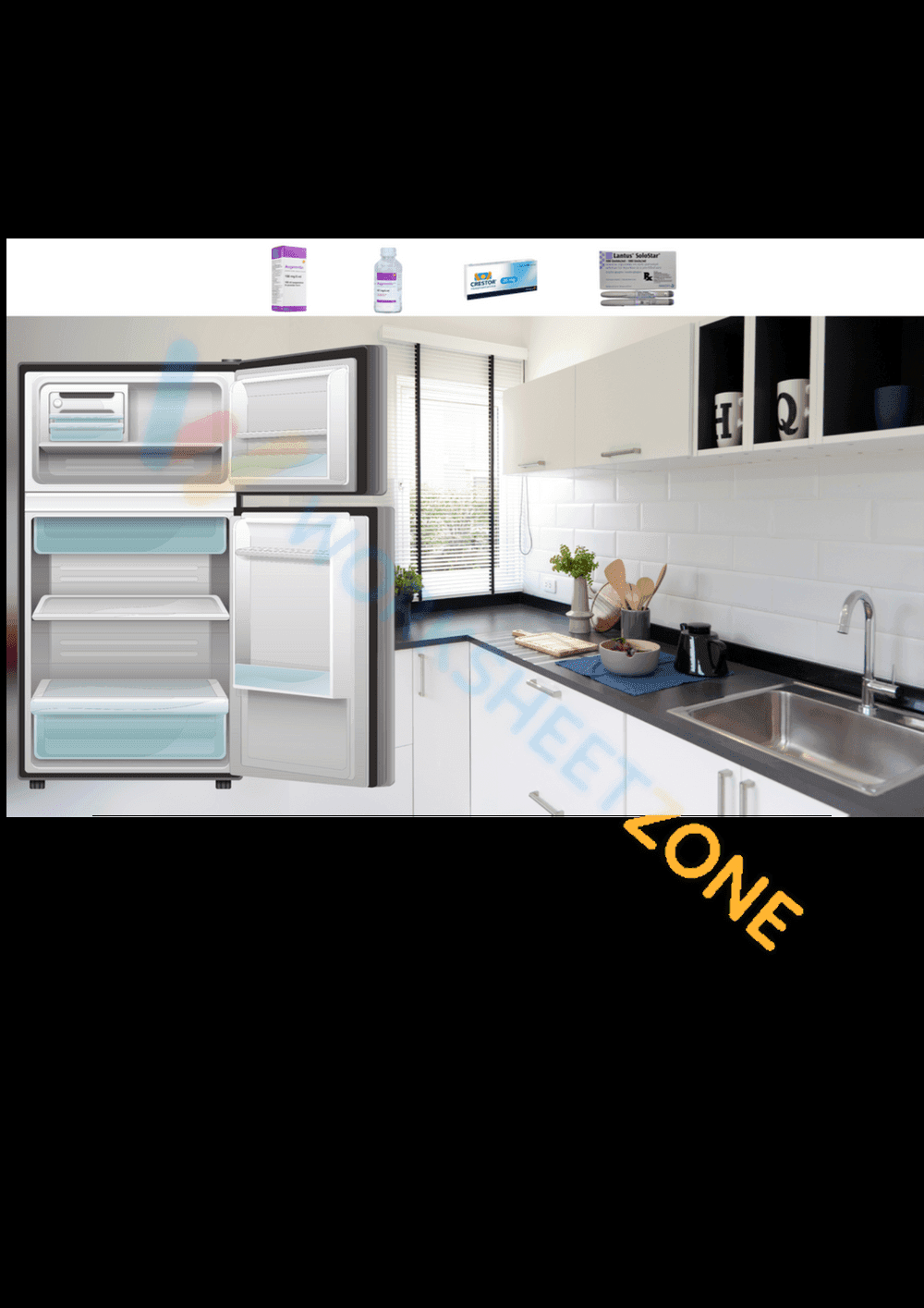

Printable Medication Storage Worksheet | Grade 10 Health
Paste this activity's link or code into your existing LMS (Google Classroom, Canvas, Teams, Schoology, Moodle, etc.).
Students can open and work on the activity right away, with no student login required.
You'll still be able to track student progress and results from your teacher account.
This printable life skills and health worksheet teaches students how to properly store common medications by reading labels and identifying correct environments. Students practice critical daily living skills by sorting four distinct medical products into a refrigerator or room-temperature cabinets, ensuring safety at home.
At a Glance
- Grade: 10 · Subject: Health
- Standard:
CCSS.ELA-LITERACY.RST.9-10.4— Determine the meaning of domain-specific words and symbols- Skill Focus: Medication Storage
- Format: 1 page · 4 problems · Answer key included · PDF
- Best For: Life skills and vocational training
- Time: 10–15 minutes
Inside this resource, educators will find a highly visual, single-page sorting activity featuring a realistic kitchen environment. The page includes four distinct medication types, such as insulin pens and oral tablets, requiring students to determine the appropriate storage location. A complete answer key is provided to ensure accurate grading. The layout relies on clear visual cues to support diverse learners.
Zero-Prep Workflow
This resource is designed for immediate classroom implementation with minimal teacher setup.
- Print (1 minute): Simply download the PDF and print copies for your class. The high-contrast images reproduce well in both color and grayscale.
- Distribute (1 minute): Hand out the activity as a bell-ringer or independent practice station. No additional materials or cutting are required.
- Review (3 minutes): Use the included answer key to quickly check student work or project it on the board for self-correction.
Total teacher prep time is under two minutes, making this an ideal activity for emergency sub plans.
Standards Alignment
This activity aligns with CCSS.ELA-LITERACY.RST.9-10.4, requiring students to determine the meaning of symbols and domain-specific words in a technical context. By interpreting medication packaging, students apply technical reading skills to real-world scenarios. Both standard codes can be copied directly into lesson plans, IEP goals, or district curriculum mapping tools.
How to Use It
This worksheet serves as an excellent independent practice activity after direct instruction on medication safety and household hazards. Teachers can assign it as a quick formative assessment to verify if students understand the difference between refrigerated and room-temperature storage requirements. As an observation tip, watch how students analyze the insulin pen packaging; this often prompts valuable questions about temperature sensitivity. Expected completion time ranges from 10 to 15 minutes.
Who It's For
This resource is primarily designed for high school health students, transition programs, and special education life skills classes. The visual nature of the sorting task provides built-in differentiation for English Language Learners and students who benefit from reduced text complexity. It pairs perfectly with a direct instruction lesson on reading prescription labels or a household safety anchor chart.
Mastering daily living skills, such as interpreting technical packaging, is a critical component of adolescent transition planning. This resource targets CCSS.ELA-LITERACY.RST.9-10.4, helping students determine the meaning of domain-specific words and symbols to safely manage personal health. According to EdReports 2024, integrating functional, real-world tasks into technical reading instruction significantly improves long-term retention and practical application among high school learners. By requiring students to analyze medication types and assign them to appropriate storage environments, this activity bridges the gap between classroom literacy and essential life skills. Educators can rely on this evidence-based approach to build student independence, ensuring they are prepared to navigate household safety routines with confidence.


