


























Views
Downloads
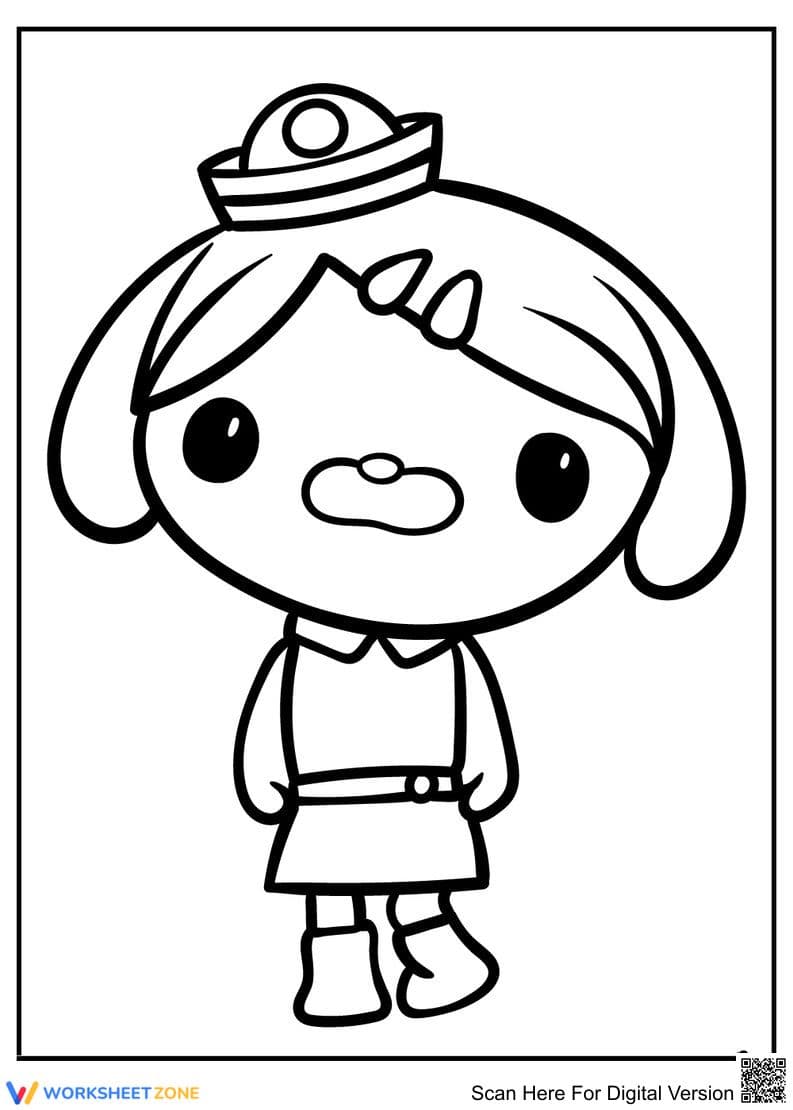

Printable Dashi Coloring Page: Octonauts Art
Paste this activity's link or code into your existing LMS (Google Classroom, Canvas, Teams, Schoology, Moodle, etc.).
Students can open and work on the activity right away, with no student login required.
You'll still be able to track student progress and results from your teacher account.
This printable coloring sheet helps early learners develop essential fine motor control and pencil grip through creative expression. Students color the popular character Dashi from the Octonauts, reinforcing hand-eye coordination and spatial awareness. This activity provides a simple, engaging way to support pre-writing skills in preschool and kindergarten classrooms.
At a Glance
- Grade: Preschool · Kindergarten
- Standard:
CCSS.ELA-LITERACY.SL.K.5— Add drawings or visual displays to descriptions to provide additional detail- Skill Focus: Fine motor control and color application
- Format: 1 page · 1 coloring task · No answer key · PDF
- Best For: Morning work and fine motor practice
- Time: 15–20 minutes
This resource features a clean, high-quality black-and-white illustration of Dashi, the beloved photographer dog from the Octonauts series. The single-page layout is designed with bold, thick outlines that help young children practice coloring within the lines. There are no complex instructions or distracting elements, making it immediately accessible for early childhood learners who are still developing their grip and focus.
Zero-Prep Classroom Workflow
This activity requires minimal teacher preparation and can be integrated into your daily routine in under 2 minutes. First, print the single-page PDF for your class, which takes about 30 seconds. Second, distribute the sheets along with crayons, taking less than 1 minute. Finally, review student progress during the activity. This simple workflow makes the sheet an excellent option for emergency sub plans or quiet morning work.
Standards Alignment
This coloring activity aligns with the Common Core State Standard CCSS.ELA-LITERACY.SL.K.5, which encourages students to create drawings or visual displays to support descriptions and express ideas. By coloring a familiar character, students practice visual representation and detail recognition. Both standard codes can be copied directly into lesson plans, IEP goals, or district curriculum mapping tools.
How to Use It
Use this worksheet during transition times or as a quiet-down activity after active play. For a formative assessment, observe how students hold their coloring tools and note their ability to control their strokes within the defined borders. This activity typically takes 15 to 20 minutes to complete, depending on the child's developmental level and focus.
Who It's For
This sheet is designed for preschool and kindergarten students who are building foundational motor skills. It serves as an excellent resource for occupational therapy sessions, early intervention programs, or English language learners practicing vocabulary related to colors and characters. Pair this coloring page with an interactive reading of an ocean-themed book or a short discussion about marine life to extend the learning experience.
Early childhood research emphasizes the critical role of coloring in developing the hand strength and bilateral coordination required for early writing tasks. According to the Fisher & Frey (2014) framework, structured visual tasks like coloring familiar characters help bridge the gap between play and academic focus. Engaging with simple, high-interest illustrations allows young learners to practice pencil grip and spatial planning in a low-stakes environment. This printable resource aligns with CCSS.ELA-LITERACY.SL.K.5 by encouraging visual expression. By integrating these fine motor exercises into daily routines, educators support the physical development necessary for subsequent handwriting mastery. The clear boundaries of the Dashi illustration provide a scaffolded guide for children to refine their motor precision, making it a valuable tool for early childhood classrooms.


