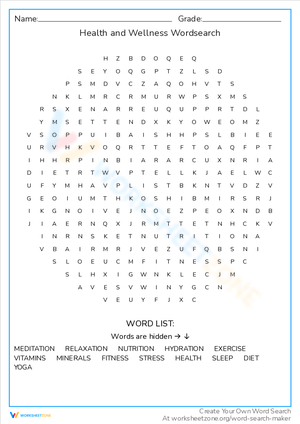
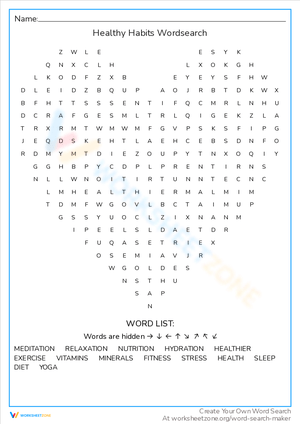
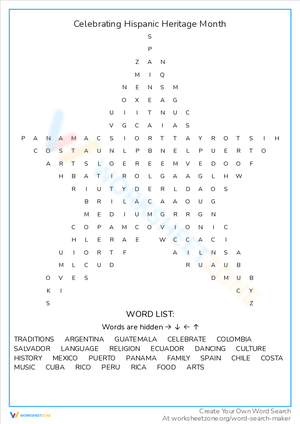
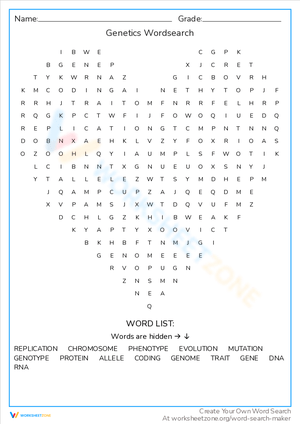
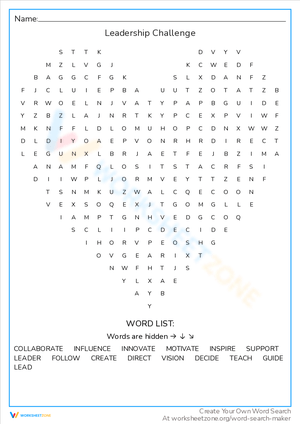
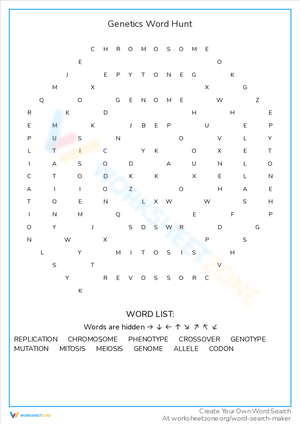
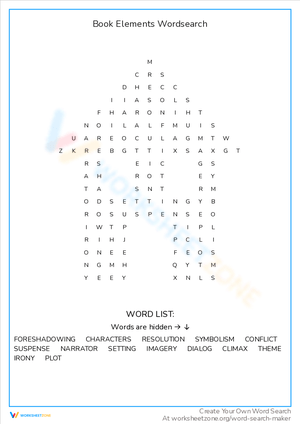
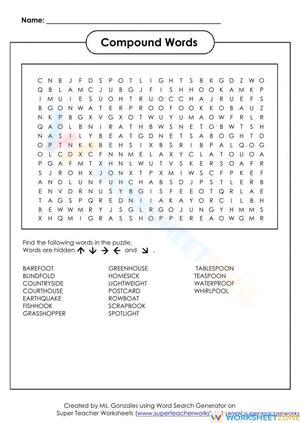
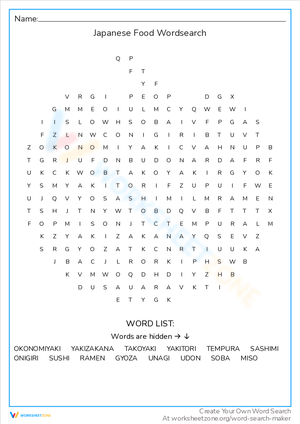
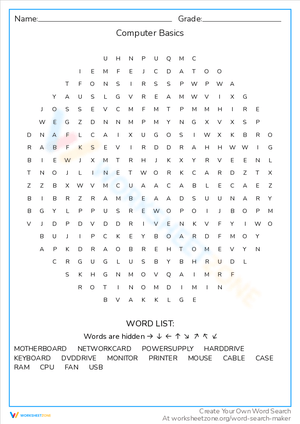
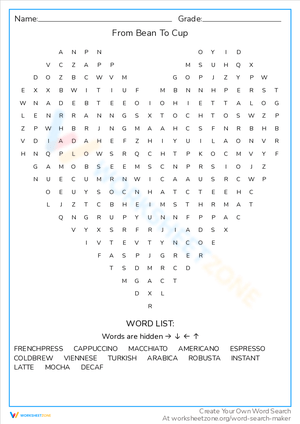
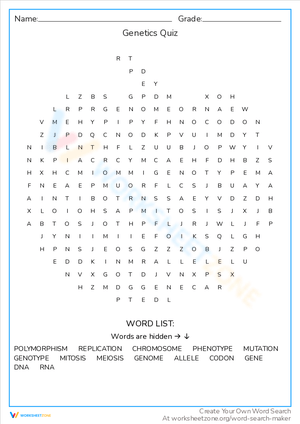
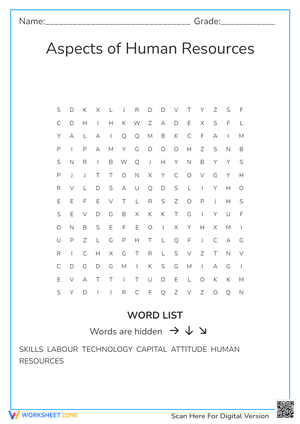
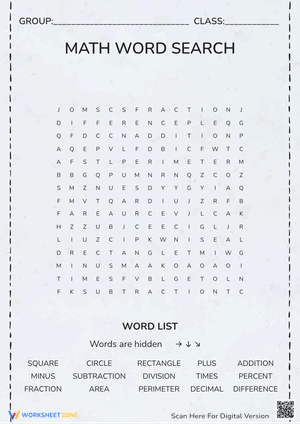
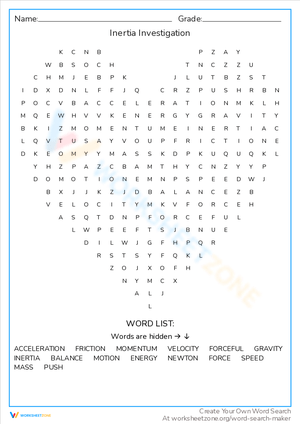
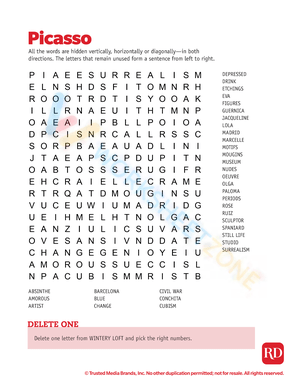
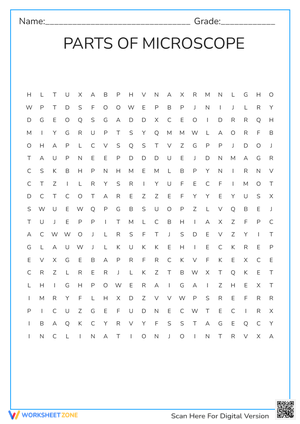
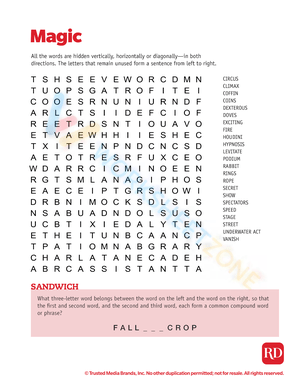
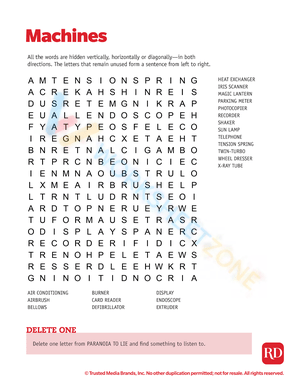
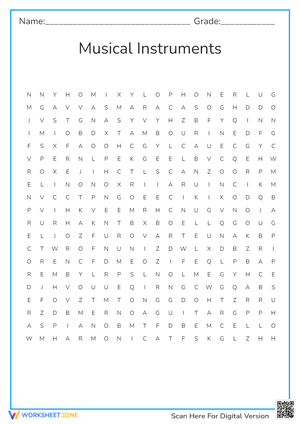
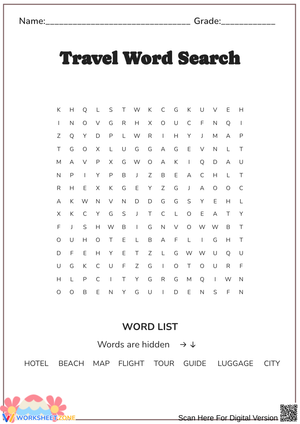
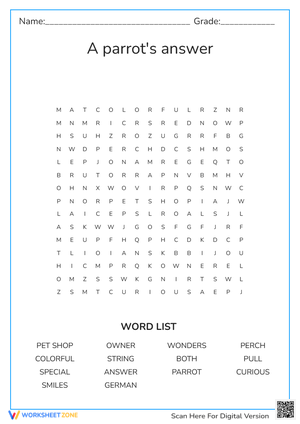
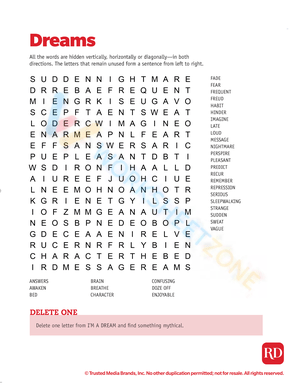
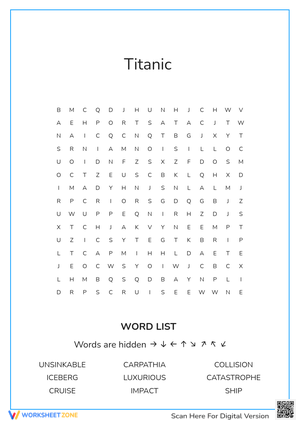
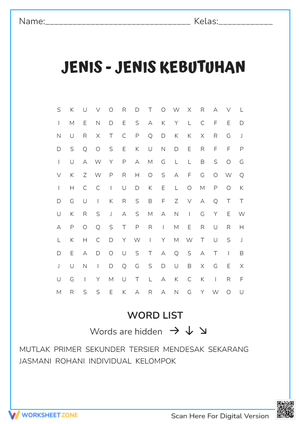
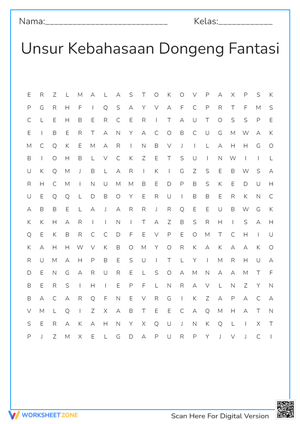
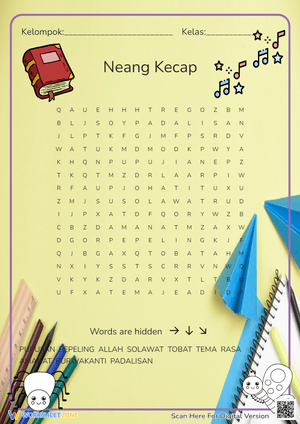
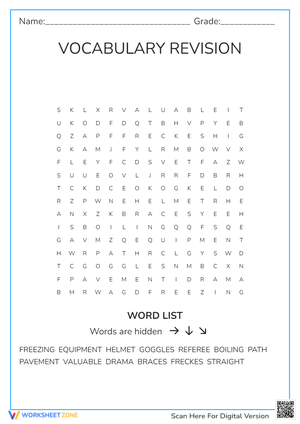
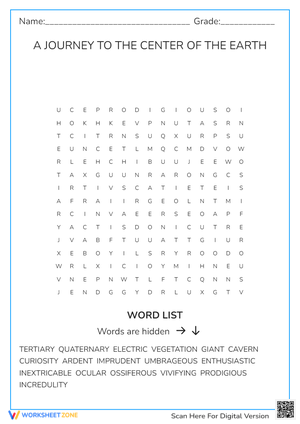
These printable word search for middle school give teachers a vocabulary reinforcement tool that earns its place in weekly lesson plans — not because it keeps students quiet, but because repeated visual exposure to domain-specific terms genuinely supports spelling retention and orthographic mapping. The set targets grades 6–8 with grid complexity and vocabulary drawn from science, social studies, ELA, and math, with each worksheet standing alone so teachers can pull exactly what matches the current unit.
The Specific Skills Each Worksheet Builds
Every worksheet in the set asks students to do more than scan a grid. They hold a multi-syllabic academic term in working memory — electromagnetic, bicameral, protagonist — while filtering out surrounding letters, tracking diagonally, and accounting for backward placements. That visual discrimination work, sustained across a 15x20 grid, is substantively different from the 10x10 left-to-right puzzles designed for third grade.
The vocabulary range across the set includes:
- Science: unit-specific terms like photosynthesis, mitosis, and sedimentary, where correct spelling is graded in lab reports
- Social studies: geographic names, historical figures, and government terminology students encounter in primary source documents
- ELA: literary terms, grammatical vocabulary, and key character or setting names introduced before a novel unit begins
- Math: the language of geometry, algebraic expressions, and data analysis that trips students up when they hit word problems
Why This Format Holds Up Instructionally at Grades 6–8
Middle schoolers are managing vocabulary loads across five or six content areas simultaneously. A student on a Tuesday might encounter covalent bond in science, filibuster in social studies, and soliloquy in ELA — all in the same school day. Repeated low-stakes exposure to the visual structure of those words, before students are required to write them correctly under pressure, measurably reduces the spelling errors that show up on unit assessments.
The format also exploits a principle worth naming: spaced retrieval. When a student uses a word search to preview vocabulary on Monday, encounters those same terms in a reading on Wednesday, and revisits them through discussion on Friday, the spacing between exposures consolidates the word's form in long-term memory. A single worksheet won't do that work alone, but as one deliberate exposure point in a planned sequence, it carries real instructional weight.
Frequent Student Behaviors Worth Watching and Correcting
The most common error isn't a wrong answer — it's a wrong search strategy. Many 6th graders approach the grid top-to-bottom, left-to-right, ignoring diagonal and backward placements entirely. They'll circle something, declare they're done, and hand in a worksheet missing six words. This tells you less about their vocabulary knowledge and more about their persistence and willingness to approach a problem from a non-obvious angle — which is worth a brief whole-class conversation before the first puzzle goes out.
A subtler issue: students can locate a word in the grid and still misspell it from memory two minutes later. That gap matters. A simple follow-up task — cover the grid, write the found words without looking, then check — makes the orthographic benefit explicit rather than assumed. Teachers who skip that step often wonder why word searches don't seem to transfer to spelling accuracy on assessments. The transfer doesn't happen automatically; it requires the additional retrieval step.
Fitting These Worksheets Into Your Weekly Schedule
The printable word search for middle school work best when they occupy a defined, predictable slot rather than appearing randomly as filler. Bell ringer use is the most consistent: a puzzle on the desk as students enter resets the room quickly after passing-period chaos, and the self-explanatory format means even a substitute can administer it without losing three minutes to directions. Early finisher folders are the second most valuable placement — a subject-organized folder of these worksheets prevents the behavioral drift that happens when fast workers sit with nothing to do while the teacher is still conferencing with struggling students.
One implementation detail that changes the academic value significantly: require students to write a one-sentence definition for each found term on the back before turning the worksheet in. That single addition moves the task from visual scanning to active vocabulary processing and gives teachers a quick formative read on what students actually understand versus what they can only locate by shape.
Adjusting the Set Across a Range of Student Readiness Levels
For students who need additional support, pair printable word search for middle school with a reference sheet listing definitions beside each vocabulary term. They're still doing the visual discrimination work, but they're cross-referencing meaning as they go rather than treating the words as arbitrary letter strings. For advanced students, remove the word bank entirely and replace it with a set of content clues — students must supply the correct term from memory, then find it in the grid. That sequence, recall before recognition, substantially increases cognitive demand without requiring a separate resource.
Students who move quickly through standard puzzles respond well to a hidden-message layer: after completing the word search, they collect the unused letters and read them in order to decode a review question or vocabulary definition. That bonus task keeps fast finishers engaged without making peers who needed the full time feel behind.
Frequently Asked Questions
Are these appropriate for 8th graders, or will they find the format too easy?
Eighth graders push back on anything that reads as elementary. The grid complexity here — 15x20 or larger, with diagonal, backward, and intersecting placements — and the academic vocabulary weight address that directly. Pairing the puzzle with a follow-up writing task eliminates the "this is baby stuff" response almost entirely, because students quickly discover that writing accurate definitions for fifteen content-area terms is not a trivial exercise.
Can a word search serve a purpose at the start of a unit, before vocabulary has been introduced?
Distributing printable word search for middle school at the start of a unit gives students visual familiarity with upcoming terms before they encounter them in dense text. The pre-exposure doesn't replace direct vocabulary instruction, but it reduces the cognitive load students experience when a word like photosynthesis appears for the first time mid-lesson — the shape of the word is already partially familiar, which frees attention for meaning-making rather than decoding.
How long does a typical worksheet take to complete?
At the 6th–8th grade level, a 15x20 grid with 15–20 words typically takes 10–18 minutes depending on grid density and individual pacing. Some students finish in 8 minutes; others are still working at 20. That range is exactly why the follow-up task and the early finisher folder both matter as planning decisions — the worksheet alone doesn't account for that variance, but a two-part structure does.












 Interactive Worksheet Maker
 Quiz Maker
 Word Search Maker
 Crossword Puzzle Maker
 Word Scramble Generator
 Sentence Scramble Generator
 Handwriting Worksheet Generator
 Name Tracing Generator
 Fill In The Blank Generator