


























0
Views
0
Downloads

0.0
0
Save
0 Likes
Sound Loud or Soft Worksheet
0 Views
0 Downloads
Paste this activity's link or code into your existing LMS (Google Classroom, Canvas, Teams, Schoology, Moodle, etc.).
Students can open and work on the activity right away, with no student login required.
You'll still be able to track student progress and results from your teacher account.
Information
Description
What It Is:
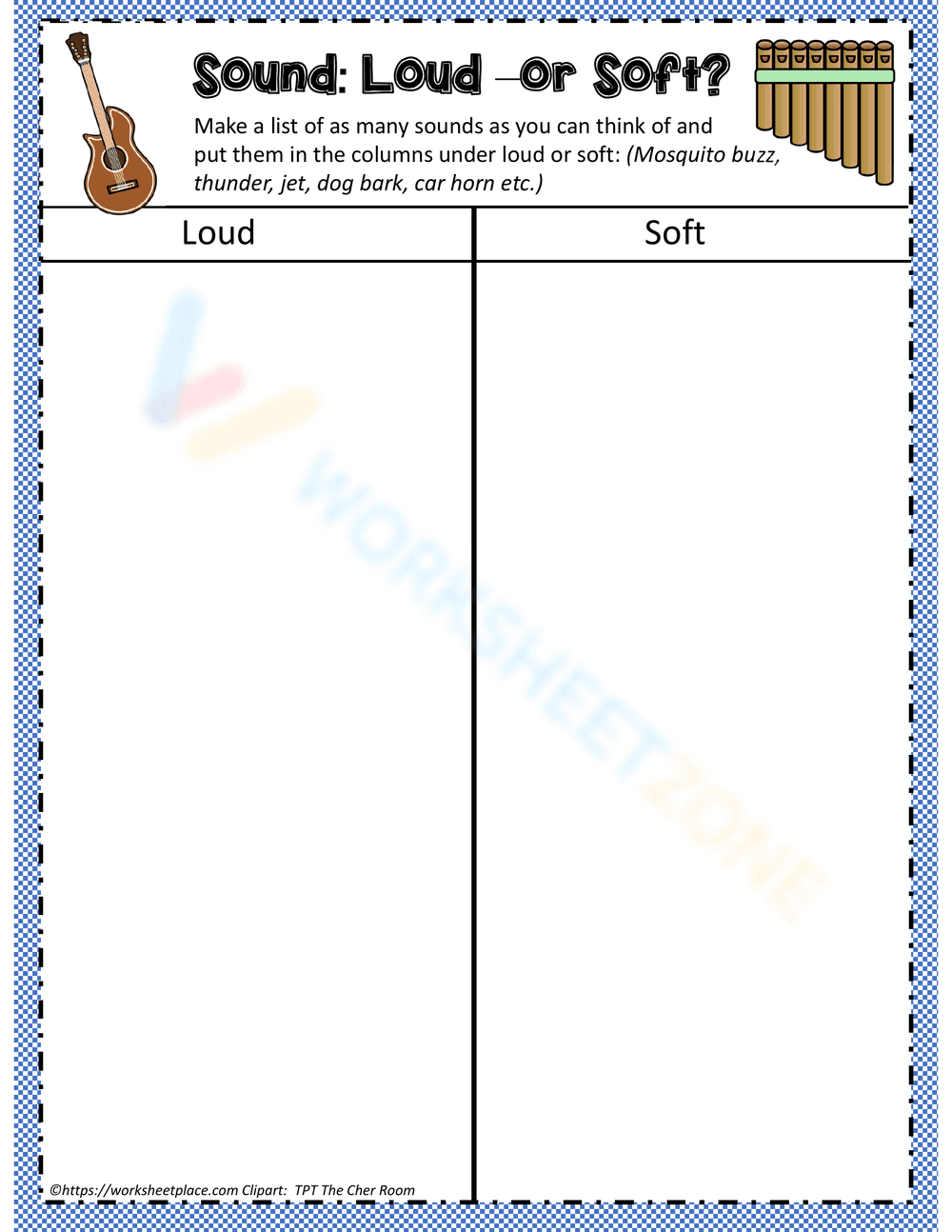
This is a worksheet titled 'Sound: Loud or Soft?' It features two columns, one labeled 'Loud' and the other 'Soft.' The worksheet instructs the user to list sounds under the appropriate column based on whether they are loud or soft. Examples provided include mosquito buzz, thunder, jet, dog bark, and car horn. There are images of a guitar and pan pipes at the top of the worksheet.
Grade Level Suitability:
This worksheet is suitable for grades 1-3. The concepts of loud and soft sounds are basic and easily understood by this age group. The activity of listing sounds is appropriate for their vocabulary and comprehension levels.
Why Use It:
This worksheet helps students develop their auditory discrimination skills by differentiating between loud and soft sounds. It encourages them to think critically about the sounds they hear in their environment and categorize them. It also promotes vocabulary development and writing skills.
How to Use It:
Provide students with the worksheet and explain the difference between loud and soft sounds. Have them brainstorm a list of sounds and then write each sound in the appropriate column. You can also play different sounds for them to identify and categorize.
Target Users:
This worksheet is ideal for elementary school students, particularly those in grades 1-3. It is also useful for students with auditory processing difficulties who need extra practice with sound discrimination. It can also be used for ESL students to build vocabulary around sounds.
This is a worksheet titled 'Sound: Loud or Soft?' It features two columns, one labeled 'Loud' and the other 'Soft.' The worksheet instructs the user to list sounds under the appropriate column based on whether they are loud or soft. Examples provided include mosquito buzz, thunder, jet, dog bark, and car horn. There are images of a guitar and pan pipes at the top of the worksheet.
Grade Level Suitability:
This worksheet is suitable for grades 1-3. The concepts of loud and soft sounds are basic and easily understood by this age group. The activity of listing sounds is appropriate for their vocabulary and comprehension levels.
Why Use It:
This worksheet helps students develop their auditory discrimination skills by differentiating between loud and soft sounds. It encourages them to think critically about the sounds they hear in their environment and categorize them. It also promotes vocabulary development and writing skills.
How to Use It:
Provide students with the worksheet and explain the difference between loud and soft sounds. Have them brainstorm a list of sounds and then write each sound in the appropriate column. You can also play different sounds for them to identify and categorize.
Target Users:
This worksheet is ideal for elementary school students, particularly those in grades 1-3. It is also useful for students with auditory processing difficulties who need extra practice with sound discrimination. It can also be used for ESL students to build vocabulary around sounds.


