


























0
Views
0
Downloads

0.0
0
Save
0 Likes
Science Fun Worksheet for 3rd Graders
0 Views
0 Downloads
Paste this activity's link or code into your existing LMS (Google Classroom, Canvas, Teams, Schoology, Moodle, etc.).
Students can open and work on the activity right away, with no student login required.
You'll still be able to track student progress and results from your teacher account.
Information
Description
What It Is:
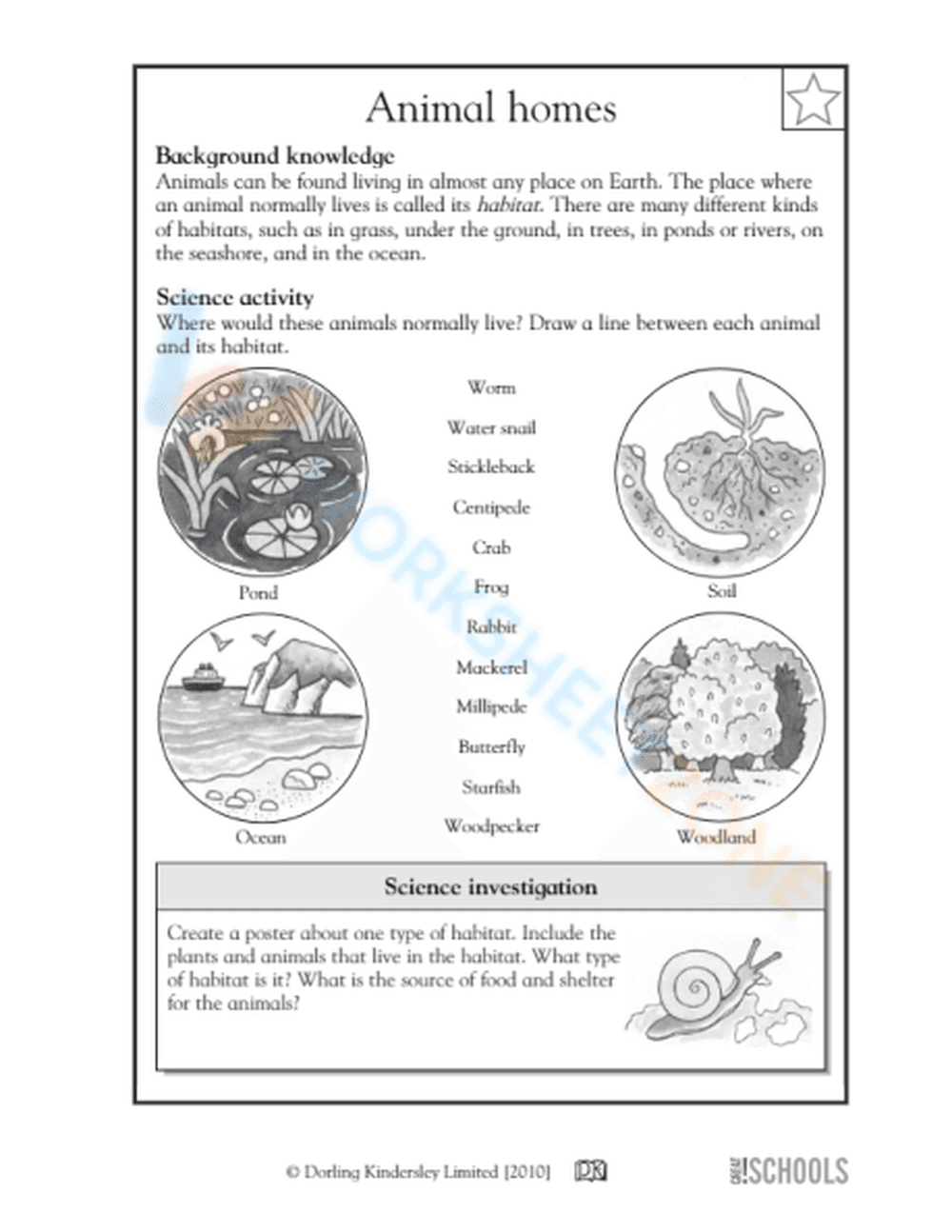
This is a science worksheet titled 'Animal Homes'. It includes background knowledge about animal habitats. The main activity involves matching animals (worms, water snail, stickleback, centipede, crab, frog, rabbit, mackerel, millipede, butterfly, starfish, woodpecker) to their corresponding habitats (pond, soil, ocean, woodland) by drawing lines. There is also a science investigation section that asks students to create a poster about one type of habitat, including plants and animals and their food and shelter sources.
Grade Level Suitability:
This worksheet is suitable for grades 2-4. The matching activity is relatively simple and reinforces basic understanding of animal habitats. The poster activity encourages research and creative thinking, making it appropriate for this age range.
Why Use It:
This worksheet helps students learn about different animal habitats and the animals that live in them. It reinforces the concept of habitat and encourages critical thinking about the relationship between animals and their environment. The poster activity promotes deeper understanding and research skills.
How to Use It:
First, read the background information about animal habitats. Then, match each animal to its habitat by drawing a line from the animal's name to the correct habitat illustration. Finally, choose one habitat and create a poster, including the plants and animals that live there, and describing their food and shelter sources.
Target Users:
This worksheet is targeted towards elementary school students, specifically those in grades 2-4, who are learning about animal habitats and ecosystems in their science curriculum. It can be used by teachers in the classroom or by parents for homeschooling.
This is a science worksheet titled 'Animal Homes'. It includes background knowledge about animal habitats. The main activity involves matching animals (worms, water snail, stickleback, centipede, crab, frog, rabbit, mackerel, millipede, butterfly, starfish, woodpecker) to their corresponding habitats (pond, soil, ocean, woodland) by drawing lines. There is also a science investigation section that asks students to create a poster about one type of habitat, including plants and animals and their food and shelter sources.
Grade Level Suitability:
This worksheet is suitable for grades 2-4. The matching activity is relatively simple and reinforces basic understanding of animal habitats. The poster activity encourages research and creative thinking, making it appropriate for this age range.
Why Use It:
This worksheet helps students learn about different animal habitats and the animals that live in them. It reinforces the concept of habitat and encourages critical thinking about the relationship between animals and their environment. The poster activity promotes deeper understanding and research skills.
How to Use It:
First, read the background information about animal habitats. Then, match each animal to its habitat by drawing a line from the animal's name to the correct habitat illustration. Finally, choose one habitat and create a poster, including the plants and animals that live there, and describing their food and shelter sources.
Target Users:
This worksheet is targeted towards elementary school students, specifically those in grades 2-4, who are learning about animal habitats and ecosystems in their science curriculum. It can be used by teachers in the classroom or by parents for homeschooling.


