


























This lesson teaches students about basic geometric constructions. Students will:
- identify points, lines, rays, and angles.
- classify angles (acute, right, and obtuse) according to their "size" in relation to a right angle.
- identify parallel and perpendicular lines.
- How do spatial relationships, such as shape and dimension, help to create, construct, model, and portray real-world scenarios or solve problems?
- How may geometric properties and theorems be applied to describe, model, and analyze problems?
- How can patterns be used to describe relationships in mathematical situations?
- How might recognizing repetition or regularity help to solve problems more efficiently?
- How might using geometric shape features help with mathematical reasoning and problem solving?
- Acute Angle: An angle measuring less than 90˚.
- Acute Triangle: A triangle made up of 3 acute angles.
- Angle: A geometric figure formed by two rays that share a common endpoint.
- Line: A straight path that extends infinitely in both directions.
- Line Segment: A straight path with a finite length.
- Obtuse Angle: An angle measuring more than 90˚.
- Obtuse Triangle: A triangle made up of 1 obtuse angle and 2 acute angles.
- Point: A specific location in a geometric plane with no shape, size, or dimension.
- Ray: A straight path that begins at an endpoint and extends infinitely in 1 direction.
- Right Angle: An angle measuring exactly 90˚.
- Right Triangle: A triangle with 1 right angle and 2 acute angles.
- two lengths of rope, heavy string, paper streamers, etc., each about 10 feet long
- several copies of Arrowheads and Points (M-4-5-1_Arrowheads and Points)
- one copy of Checklist (M-4-5-1_Checklist and KEY) for each student
- one copy of the Lesson 1 Exit Ticket (M-4-5-1_Lesson 1 Exit Ticket and KEY) for each student
- one copy of Student Checklist (M-4-5-1_Student Checklist) for each student
- Assess student comprehension levels using the Checklist (M-4-5-1_Checklist and KEY) in Activity 2.
- Evaluate students' vocabulary knowledge by matching their drawings to their partner's "requirements" in Activity 3.
- Use the Lesson 1 Exit Ticket (M-4-5-1_Lesson 1 Exit Ticket and KEY) to evaluate students' understanding of geometry vocabulary.
Scaffolding, Metacognition, Modeling, and Explicit Instruction
W: Students will study about the fundamentals of geometry, including as points, lines, line segments, and rays. Students will learn about angles and the definitions of parallel and perpendicular.
H: Students are immediately engaged through the use of hands-on manipulatives such as ropes/streamers. Students get to see geometry demonstrated by their classmates.
E: Students learn about basic geometric ideas through physical activity and real-life applications. After being introduced to the concepts and words, students recognize them in figures provided by the teacher before practicing developing and drawing their own figures.
R: Students learn basic geometric principles through examples and definitions. They then improve their understanding of the concepts as they see geometric figures that incorporate several of these fundamental parts. Finally, they will examine and modify their understanding of such figures by creating alternative figures with the same elements.
E: Evaluate student understanding using checklists from activities 2 and 3.
T: Use the Extension suggestions to tailor the lesson to meet the needs of the students. The Routine section includes ideas for reviewing lesson concepts throughout the year. The Small Group section provides additional learning or practice opportunities for those who may benefit from them. The Expansion section describes learning options for students who are ready for a challenge that goes beyond the requirements of the standard.
O: The lesson starts with an instructor explaining geometric principles, followed by volunteers "constructing" them. Then, students are given the opportunity to work independently to cement their comprehension of the ideas before collaborating with a classmate on the third exercise.
Activity 1
Make several copies of the Arrowheads and Points (M-4-5-1_Arrowheads and Points). These will be distributed to student volunteers throughout the exercise.
Draw a point on the board that is large enough for students to see. "In geometry, when talking about shapes, this dot is called a point. Points play an important role in many aspects of geometry. What does a point look like?" Students will probably notice that a point resembles a period or a dot. "A period, like at the end of a sentence, is the perfect way to think about a point—a very small dot."
Choose two volunteers to come to the front of the classroom and hold a piece of paper with a point. "[Student names] will be our points for a short while. So imagine they're small dots. We're going to use these lengths of rope and our points to demonstrate what we can make using points." Hand each point one end of the rope and instruct them to stretch it out until it is tight.
"This represents a line segment." Write the term line segment on the whiteboard. "A line segment is part of a straight line, like the rope, that goes between two points, like our volunteers." Draw a line segment on the board, making sure to highlight the points at both ends. Have the two volunteers each take one step closer to one another.
"Is this a line segment?" Discuss how it is not a line segment since the rope connecting the two places is not straight.
Ask students if they are familiar with the word segment. Discuss how the word segment translates to "part" or "part of." "So, if this is a line segment, it's only part of a line. A line is straight, just like a line segment, but it continues in both directions indefinitely. It does not stop at any point along the road." Hand each of the two volunteers an arrow and instruct them to hold it over their respective ends of the rope.
Draw a line on the board and label it line, making sure to include arrows at each end. "We draw arrows on the end of a line to show that it keeps going in both directions."
"So far, we have points and lines that extend indefinitely in both directions, as well as line segments that stop at both ends. What about something that goes on indefinitely in one direction?" Instruct one of the volunteers to lower the arrowhead and replace it with a point. "We call this a ray." Write the word ray on the board and then draw a ray.
"What does the word ray mean or where have you heard the word ray before?" Point out that rays from the sun begin at a specific point—the sun—and continue to travel through space indefinitely (as long as they do not collide with anything). Also, show out that the sun's rays are straight.
Hand the end of another length of rope to the student representing the ray's point. Then, have a (ideally taller) volunteer come up and hold the other end higher than the first ray, creating an angle visible to the class. The second volunteer will also need an arrowhead.
"We now have two rays. They both begin at the same position and form a 'v' shape when they meet. Does anyone know what we name it when two rays begin in the same place?" Discuss the term angle. Write this on the board and then draw a geometric interpretation of the angle. "There are angles all around us." Point out angles in the corners of the room, patterns on shirts, and other items in the classroom.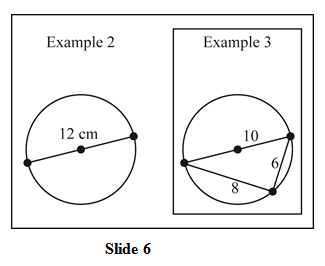
"Angles come in various shapes. The ones in the corner of the room differ from those constructed by our volunteers out of rope. Our volunteers constructed a rather skinny angle, with the two rays close together. We call this type of angle acute. The term acute simply refers to a narrow angle with rays that are close together." Write the term acute on the board, then draw an example of a clearly acute angle.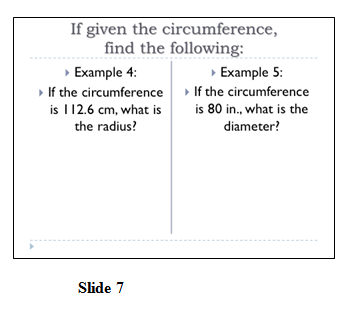
Depending on the height of the third volunteer, the end of the second ray may be used to indicate a right angle. Take the end and gradually increase the angle measurement, instructing the class to keep repeating the term acute as the angle rises in size. When you're standing directly behind the vertex of the two rays, the class should come to an end. "It is no longer an acute angle! It is now a right angle. The two rays form a nice, square corner. Unlike acute angles, which can be any kind of slender angle, a right angle always resembles a nice, square corner."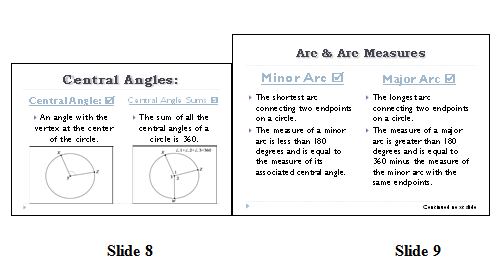
Begin to go beyond the vertex to form an obtuse angle. As soon as you move beyond the vertex, tell the class, "And when we have an angle that is wider or bigger than a right angle, we call it obtuse."
Return the second ray to the volunteer, and write and draw both the right angle and obtuse angle on the board. Allow the volunteer to continue moving to produce wider and wider obtuse angles until they are close to displaying a straight angle, at which point they can stop.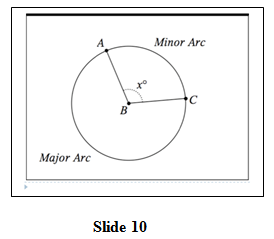
"So, an angle is just two rays that start at the same point and come in three types: acute, which are skinny; right, which make a square corner; and obtuse, which are bigger than right angles."
Recruit four new volunteers. Make sure the first few volunteers get a chance to write anything on the board before continuing.
Have two volunteers sit or kneel on the floor, each holding one end of a rope (with arrowheads) to make a line.
"What do we call this when it keeps going forever in each direction?" (a line)
Have the other two volunteers stand behind one of the first two volunteers, each holding the second rope (with arrowheads) to make another line. Help them make it parallel to the first by allowing them to raise or lower the "ends" of the line.
"Now we've got two lines. Do these two lines cross one another?" (no) Remind students that the two lines go indefinitely in both directions, according to what the arrowheads indicate, so they must use their imaginations. Students should still conclude that they will not cross another. "These lines are called parallel." Write the word parallel on the board, then draw two parallel lines. "Any lines that would never cross, no matter how long they are, are called parallel."
Now, direct the two standing students. Have one kneel behind the lower of the two lines, while the other holds the rope straight up. (Depending on the height, you may need to hold the rope straight up.) "Are these lines parallel?" (no) "Why not?" (Because they cross each other.)
"When they cross, what kind of angles do we get?" Point out the two angles created by the intersection of the two lines. "Do we get acute, right, or obtuse angles?" (right) "When two lines cross and they make right angles, we call the lines perpendicular." Write the term and create a diagram on the board.
Instruct the standing student to "rotate" the upper line. It should still meet the lower line, just not at the right angle. "Are these lines parallel?" (no) "Why not?" (Because they cross each other.) "Are they perpendicular?" (no) "Why not?" (Because they do not make right angles where they cross.)
Point out one of the angles and ask them to describe it. Then ask them to describe the other angle.
Depending on class engagement and time, continue to manipulate the two lines to create various geometrical figures and quiz students on what each model represents.
Activity 2
Give each student one copy of the Checklist (M-4-5-1_Checklist and KEY).
"For this task, I will draw a figure on the board. Your task is to determine which geometric attributes make up each figure. We will do the first figure together."
On the board, draw two perpendicular lines. Make the point at the intersection clear, and include arrowheads at the ends of the lines. Label it Figure 1.
"Refer to the row on your checklist for Figure 1. The first column for each figure is labeled Point (at the top of the page). So, the first box indicates whether or not Figure 1 contains a point. Is there a point in Figure 1? (yes) Indicate the point. “Then enter the letter 'Y' in the box for ‘Yes.’ Is there a line?" (yes) “So you’ll put the letter ‘Y’ in the box to stand for ‘Yes’.”
"Is there a line segment?" (No, a line segment connects two points, but the diagram does not contain two points.) Talk about why not? A line segment connects two points, yet there are no two points in the diagram. "Then put the letter 'N' in the box for 'No'."
Continue through the rest of the row. Take note that there is a ray. Students may not identify it at first, but consider the part of one of the lines in the diagram that extends outward from the point of intersection. (The first row should be: Y, Y, N, Y, N, Y, N, N, Y.)
Create a second figure that is a polygon. Write the word polygon on the board below the figure. "Figure 2 shows an example of a polygon. A polygon is a closed figure. The sides have no gaps or spaces, and are all straight line segments. A vertex is a point that exists anywhere two line segments intersect." Write the term vertex on the board, then go over the checklist for Figure 2 with students.
Provide extra figures based on how students performed on the first two. Figures can be made out of parallel and perpendicular lines, triangles, rectangles, and other plane geometry figures. Figures should be chosen in order of increasing difficulty.
Activity 3
Have students works in pairs. Give each students a copy of the Student Checklist (M-4-5-1_Student Checklist).
"First, each of you will draw your own Figure 1 on another piece of paper without showing it to your partner. Then, using the image you just made, fill in the blank row for Figure 1. Finally, you will present your checklist to your partner. They'll be able to see, for example, that your figure contains a point, a line segment, and possibly a ray, and they'll have to construct a figure that includes those elements."
Students shouldn't expect their Figure 1, for example, and their partner's Figure 1 to be identical. (You can let students figure it out as they go, but many students might expect the figures to be identical and believe they've made a mistake if their drawings don't match their partner's.) Encourage students to begin with simple figures until they have gained experience, and then progress to models with additional details.
Allow students to work through up to 9 figures if time permits.
Extension:
Use the following strategies to tailor the lesson to meet students’ needs.
Routine: Throughout the year, when students learn about geometric shapes (triangles, squares, etc.), use and emphasize accurate language. For example, "A square is a shape composed of four points (vertices) connected by two sets of parallel line segments. "There are four right angles."
During the school year, when time permits, students can play the geometry vocabulary matching game at the following website:
http://www.learninggamesforkids.com/math_games/5th-grade-math/geometry-terms-5th/matchit-geometry-terms-5th.html
Small Group: Students who could benefit from more practice can be divided into smaller groups. Have students in each group collaborate to design a big figure (on a piece of butcher paper, for example), and then label all of the geometric components that make up the figure. The figures can be as artistic and diverse as the students like.
Expansion: Students who are ready to go beyond the standard criteria can learn about estimating angle measurements, congruence, and similarity, as well as the names of many geometric forms.
Students can practice a more advanced geometry vocabulary with the game at the following website:
http://www.aplusmath.com/cgi-bin/games/geopicture
Individual students can access instructional and testing resources at the following website:
http://www.geometry.uconn.edu/6th%20grade%20geometry/IrregularPolygons.htm

Points, Lines, and Angles Practice
This is an educational worksheet titled 'Points, Lines, and Angles (M-4-5-1)' from WorksheetZone. It includes objectives focused on basic geometric constructions, such as identifying points, lines, rays, and angles; classifying angles (acute, right, and obtuse); and identifying parallel and perpendicular lines. It also provides lesson core questions to stimulate critical thinking and a vocabulary section defining terms like acute angle, acute triangle, angle, line, line segment, obtuse angle, obtuse triangle, point, ray, right angle, and right triangle.
Grade Level Suitability:
This worksheet appears suitable for grades 4-5. The concepts of points, lines, angles, and basic geometric shapes are typically introduced around this grade level. The vocabulary and core questions are designed to challenge students at this stage of mathematical development.
Why Use It:
This worksheet can be used to introduce or reinforce basic geometric concepts. It helps students develop their understanding of points, lines, and angles, as well as their ability to classify angles and identify parallel and perpendicular lines. The core questions promote critical thinking and problem-solving skills. The vocabulary section provides a reference for key terms.
How to Use It:
Begin by reviewing the objectives and vocabulary with students. Discuss the definitions and examples of points, lines, angles, and different types of angles and triangles. Use the lesson core questions to guide classroom discussions and encourage students to think critically about geometric concepts and their applications. This worksheet appears to be a reference sheet, rather than having problems to solve.
Target Users:
This worksheet is designed for elementary school students in grades 4-5 who are learning about basic geometric concepts. It can also be used by teachers as a teaching aid or as a review tool. Homeschooling parents could also find this resource useful.


