Students are introduced to the partial-products algorithm for calculating the product of factors. They will:
- connect the array concept to the partial-products approach of multiplication.
- identify and apply alternate strategies for solving multiplication issues (partial products and rectangular models).
- What makes a tool and/or strategy suitable for a certain task?
- How can mathematics help to quantify, compare, depict, and model numbers?
- Equivalence: The relationship between expressions which have an equal value.
- Multiple: The product of a given number and a whole number.
- Factor: A number that can be multiplied by a whole number to produce a given number.
- Multiplication Match activity (M-4-2-3_Multiplication Match)
- Exit Ticket and Exit Ticket KEY (M-4-2-3_Exit Ticket and KEY)
- base-ten blocks
- glue or tape
- Use the Multiplication Match resource to determine how well students understand the different methods and algorithms for solving multiplication problems.
- Observe students during the partner activity as they investigate the relevant problem set to identify any misconceptions about multiplication.
- Use the Exit Ticket to evaluate students' understanding of single-digit by double-digit multiplication.
Scaffolding, Active Engagement, Modeling, and Explicit Instruction
W: The lecture will focus on the partial-products multiplication method. This method teaches multidigit multiplication while focusing on place value.
H: The Multiplication Match activity will engage students by requiring them to match various representations of the same calculation.
E: Demonstrate the partial-products approach using student input, explaining each step. Then ask students to solve another problem by breaking down the numbers. Help students understand the relationship between the array approach and the partial products method, which both use base-ten decomposition.
R: Allow students to discuss their thought processes on how to approach multidigit multiplication problems. Lead a class discussion about several approaches to breaking down multidigit multiplication problems.
E: To assess student comprehension, teachers can use observation, the Exit Ticket, or offer problem sets.
T: The Extension section provides additional lesson ideas and adjustments, such as an explanation and sample of the lattice method of multiplication. Some students may find this strategy easier to manage.
O: The lesson teaches students about different methods for solving two-digit multiplication problems. The partial-products method highlights place value and builds on previous teachings about decomposing, or breaking down, base-ten components. It is a visual method in which all multiplication is completed before addition occurs.
“There are various ways and number sentences for solving a multiplication problem. To begin our lesson today, I'm going to hand each of you a strip of paper.”
Share the Multiplication Match resource (M-4-2-3_Multiplication Match).
“Your task will be to identify students whose strips indicate the same multiplication problem as yours. The equations will be written in many ways, including repeated addition, break-apart equations, and arrays. When you meet someone who has the same multiplication problems as you, stick with them.”
Once the students have been divided into groups, ensure that everyone is properly matched. Encourage students to share the strategy illustrated on their strips of paper. While students explain the strategy indicated on their strips, display the related equations on the overhead so that all students may see them. Give each group a piece of construction paper and ask them to attach equivalent equation strips to it. To underline the fact that all of the equations are equal, write the words "is the same as" between each one. These visuals may be referenced throughout the unit.
Consider the question: "What are the various ways to solve 23 × 45? Consider the activity we just finished. Are some techniques more reasonable to use than others? Why?" Encourage students to express their ideas with one another before engaging in a class discussion. Encourage students to consider using the break-apart method: 23 (20 + 3) and 45 (40 + 5) to find the product.
“Next, we'll learn another multiplication procedure known as the partial-products method. The partial-products approach is an alternative to the standard multidigit multiplication method. I'll demonstrate the partial-products method using the 23 × 45 product from our previous discussion.”
Model the following procedure for students to understand how the partial-products approach works.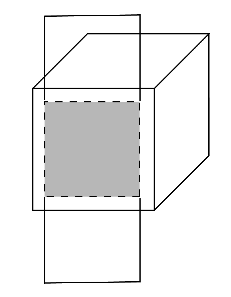
Students should have a good understanding of place value after learning multiplication with tens; this method is an extension. After students understand that 23 can be broken down into 20 + 3, and 45 can be broken down into 40 + 5, the multiplication process may begin. Use the think-aloud method as students complete each step to ensure they understand the reasons behind each one.
"First, multiply the top tens value by the bottom tens value (20 × 40 = 800). Next, multiply the tens value on top by the ones value on the bottom (20 × 5 = 100). Then, multiply the ones value on top by the tens number on the bottom (3 × 40 = 120). Then, multiply the one value on top by the one value on the bottom (3 × 5 = 15). The product (23 × 45) is calculated by adding the numbers (800 + 100 + 120 + 15 = 1,035)."
Allow students to practice the partial-products method using extra multiplication examples. Here's an example with both a two-digit and a one-digit factor:
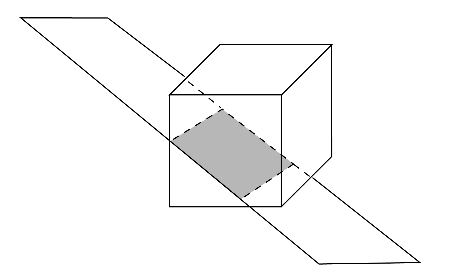
Present the following problem.
Four girls competed in a relay race. Each girl raced her racing section in exactly 12 seconds. The winning time for the race was 45 seconds. Do you believe the girls won the race? Why, or why not?
Encourage students to address the problem in several methods (base-ten blocks, drawings, arrays, and number sentences). Ask students to share their problem-solving skills. Post the various strategies for other students to view. Connect the number sentences to the appropriate solutions. To explain the breakdown of parts to compute the product, students can draw a rectangular array or use base-ten blocks. The correct number phrase is: 12 × 4 = (10 × 4) + (2 × 4).
Present a related problem set like the one below:
2 × 7 = ___
50 ×7 = ___
52 × 7 = ___
"Can the two equations on the board help us solve the multiplication problem (52 × 7)? If so, how?" Help students understand that the sum of these products (2 × 7 and 50 × 7) equals 364 (14 + 350), which is also the product of 52 × 7. Discuss the advantages of approaching the problem this way (easier to calculate products in our thoughts, reminders of place values, etc.). "Consider the concept of 52 × 7: 52 groups of 7 objects each. We can divide the 52 groups into 50 groups of 7 objects and two groups of 7 objects."
A rectangular array can be utilized to demonstrate the previously mentioned problem.
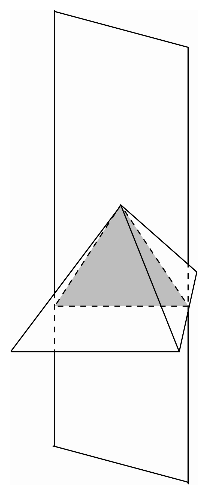
Write the number sentence as 52 × 7 = (2 × 7) + (50 × 7). Encourage students to discuss how it doesn't matter whether we multiply 50 × 7 or 2 × 7 first. Continue to develop this idea, emphasizing the various qualities.
Allow pairs of students to continue exploring other relevant problem sets*. Observe and listen to student discussions. When required, intervene and use a think-aloud method to demonstrate how the issue sets are related. Examples of linked issue sets could include:
*Additional printable problem sets are available at this Web site:
After students have shared their thought processes, ask, “Can you summarize the ideas you need to keep in mind as you consider different ways to break apart a multiplication problem?”
Ask students to examine this related problem set:
23 × 10 = ____
23 × 1 = ____
23 × 9 = ____
"How can you use 23 × 10 and 23 × 1 to calculate the product of 23 × 9? Would using 23 × 9 and 23 × 1 assist determine 23 × 10?" (23×10 - 23×1 = 23×9) Have students share their thinking processes. Compare these processes to the previous examples. Use a picture (rectangle) or the concept of equal groups to clarify their reasoning.
Then, working with a partner, students should create a problem set similar to those presented. Have students think about several methods to break down a multiplication problem. Then, request partners to switch their related problem sets and determine the relationship between them. Students can share feedback with one another. Observe student interactions and provide verbal prompting as needed.
Before the end of class, offer students the Exit Ticket (M-4-2-3_Exit Ticket and KEY) to show their proficiency. Collect tickets from students on their way out the door. This simple activity will assist determine which students require further practice to master the skill.
Extension:
Routine: Entrance tickets can be used to refresh students' knowledge of the partial-products approach. Alternatively, a problem could be posted on the board using a think-pair-share method to help students focus on the partial-product method.
Expansion: Students who have mastered the partial-products approach of multiplication with two-digit integers can now use three-digit numbers. They should document their work and explain why they took each step.
Alternative Method: Students who have mastered the partial-products method might try the lattice method of multiplication. This alternate multiplication algorithm presents the partial products in a graphic format that emphasizes place value.
The lattice is built up with diagonals to represent place value. The lattice structure is dictated by the number of digits present in each factor. For example, 61 × 3 has a lattice with two boxes (2 by 1), 234 × 9 has a lattice with three boxes (3 by 1), and 897 × 398 has a lattice with nine boxes (3 by 3). Consider the example above. After creating the lattice, calculate and place the partial products in the appropriate boxes: 3 × 4 = 12, 3 × 9 = 27, 8 × 4 = 32, and 8 × 9 = 72. Then, beginning from the right, add diagonally. The ones place is 7, the tens place is 2 + 2 + 2 = 6, the hundreds place is 1 + 2 + 7 = 10, and the thousands place is 1 + 3 = 4. The total number of places is 4,067 (83 × 49). This algorithm is similar to the partial product method. It also performs all of the multiplication first, then adds the partial products at the end to calculate the product of the original multiplication problem. Once students have demonstrated understanding of the lattice approach for multiplication with two-digit numbers, have them work with three-digit values.
Technology Connection: This game allows students to practice multiplication with one and two digit numbers. They get immediate feedback. http://www.kidport.com/grade4/Math/NumberSense/G4-M-NS-Mult100.htm

Partial Products (M-4-2-3)
Students are introduced to the partial-products algorithm for calculating the product of factors. They will:
- connect the array concept to the partial-products approach of multiplication.
- identify and apply alternate strategies for solving multiplication issues (partial products and rectangular models).