


























Views
Downloads
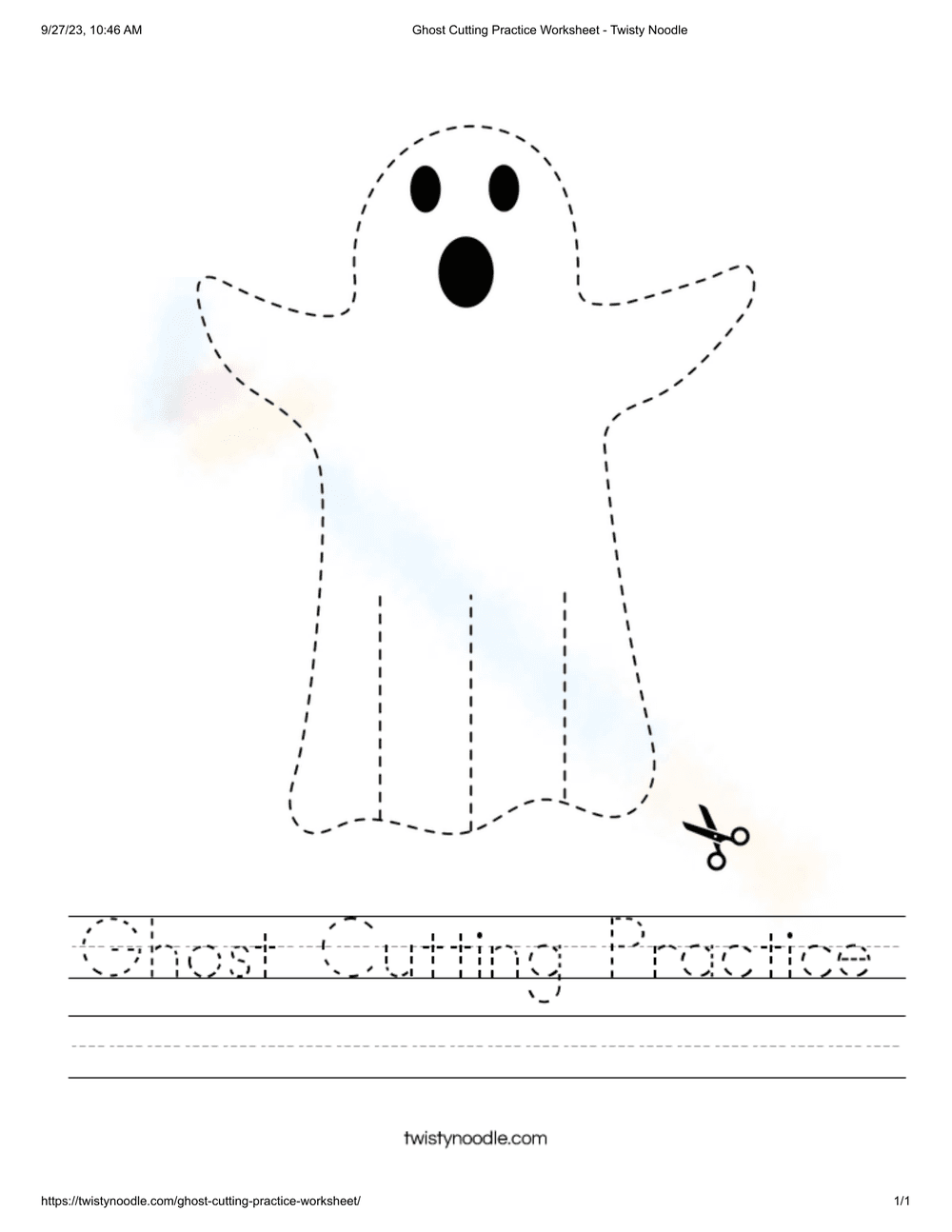

Ghost Cutting Practice Worksheet | Grade K-1 Essential
Paste this activity's link or code into your existing LMS (Google Classroom, Canvas, Teams, Schoology, Moodle, etc.).
Students can open and work on the activity right away, with no student login required.
You'll still be able to track student progress and results from your teacher account.
This Grade K-1 fine motor worksheet provides a festive and engaging way for students to practice essential scissor control and letter formation. By combining holiday-themed imagery with structured tracing tasks, students develop the hand-eye coordination necessary for successful writing and craft activities. This resource ensures that early learners remain focused while mastering foundational physical skills.
At a Glance
- Grade: Kindergarten · Subject: ELA / Fine Motor
- Standard:
CCSS.ELA-LITERACY.L.K.1.A— Print many upper- and lowercase letters and develop hand-eye coordination- Skill Focus: Scissor control and letter tracing
- Format: 1 page · 5 tasks · Visual guide included · PDF
- Best For: Halloween centers and morning work
- Time: 10–15 minutes
This resource features a large, high-contrast ghost illustration designed for easy visibility. It includes three vertical dashed lines for fringe-cutting practice, a full perimeter outline for shape-cutting, and a dedicated tracing line at the bottom. The text "Ghost Cutting Practice" is presented in a clear, dashed font to support letter formation and word recognition without overwhelming young learners.
The zero-prep workflow for this Halloween resource is designed for maximum efficiency. First, print the single-page PDF (30 seconds). Second, distribute the sheets along with safety scissors and pencils to your small groups or whole class (1 minute). Third, provide a quick visual demonstration of the cutting path and tracing direction (30 seconds). Total teacher preparation time is under 2 minutes, making this an ideal solution for busy October mornings or unexpected substitute teacher plans.
This worksheet aligns with `CCSS.ELA-LITERACY.L.K.1.A`, which requires students to print many upper- and lowercase letters. While primarily a fine motor activity, the inclusion of the tracing sentence supports early literacy by familiarizing students with letter shapes and word boundaries. Both standard codes can be copied directly into lesson plans, IEP goals, or district curriculum mapping tools.
Use this worksheet during your Halloween-themed literacy centers or as a quiet morning work activity. It serves as an excellent formative assessment tool; observe students' scissor grip and their ability to stay on the dashed lines to identify those needing additional occupational therapy support. Most Kindergarten students will complete the tracing and cutting in approximately 12 minutes, while Grade 1 students may finish in under 10 minutes.
This activity is designed for Preschool, Kindergarten, and Grade 1 students who are developing their pincer grasp and bilateral coordination. It pairs naturally with Halloween picture books or anchor charts about seasonal vocabulary. For students needing more support, consider highlighting the dashed lines with a yellow marker before they begin.
According to Fisher & Frey (2014), fine motor development is a critical precursor to literacy acquisition. This ghost-themed worksheet targets CCSS.ELA-LITERACY.L.K.1.A by integrating letter tracing with scissor movements. Research indicates that students engaging in structured "cut and trace" activities demonstrate higher levels of visual-motor integration, foundational for legible handwriting. By providing a clear visual path, this resource reduces cognitive load, allowing Kindergarten learners to focus on tool manipulation. The phrase "Ghost Cutting Practice" ensures students reinforce letter-sound recognition and word spacing. This dual-purpose approach aligns with pedagogical standards emphasizing physical development within the core ELA curriculum. Using these 5 specific tasks, educators can effectively bridge the gap between physical coordination and academic readiness in early childhood settings.


