


























1 / 8
0
Views
0
Downloads



0.0
0
Save
0 Likes
Share
Master Gas Laws: Boyle's, Charles's, Gay-Lussac's
0 Views
0 Downloads
Paste this activity's link or code into your existing LMS (Google Classroom, Canvas, Teams, Schoology, Moodle, etc.).
Students can open and work on the activity right away, with no student login required.
You'll still be able to track student progress and results from your teacher account.
Information
Description
What It Is:
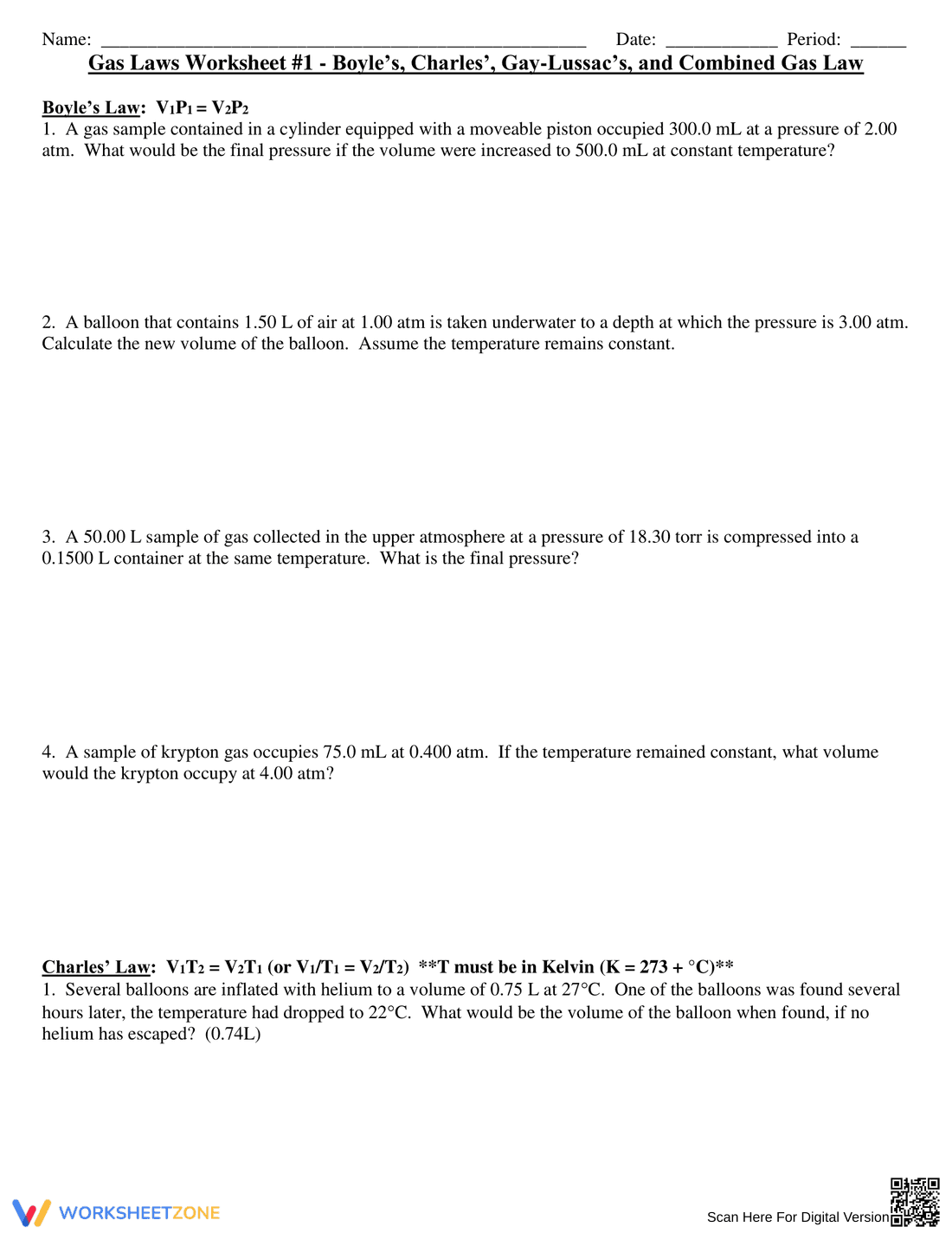
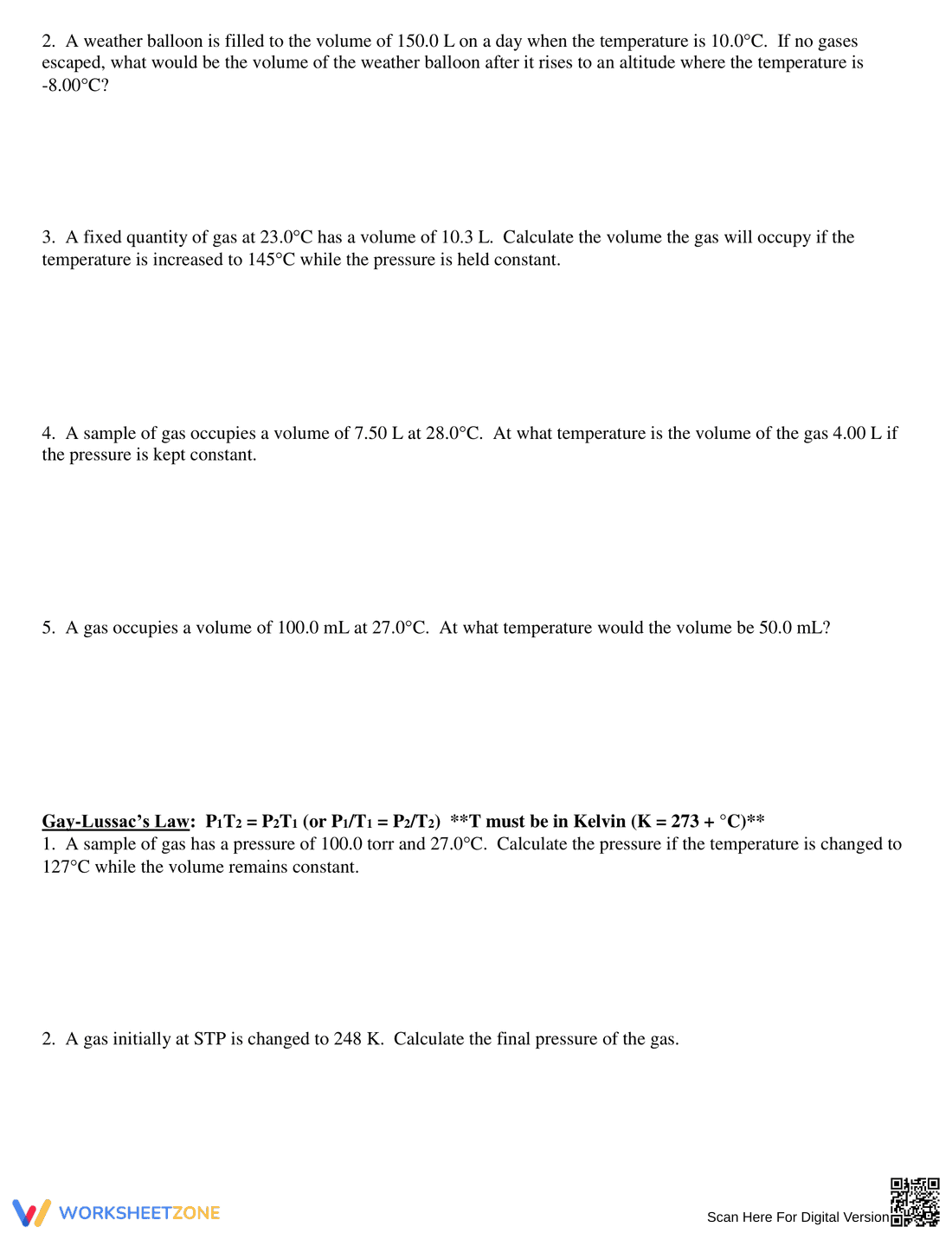
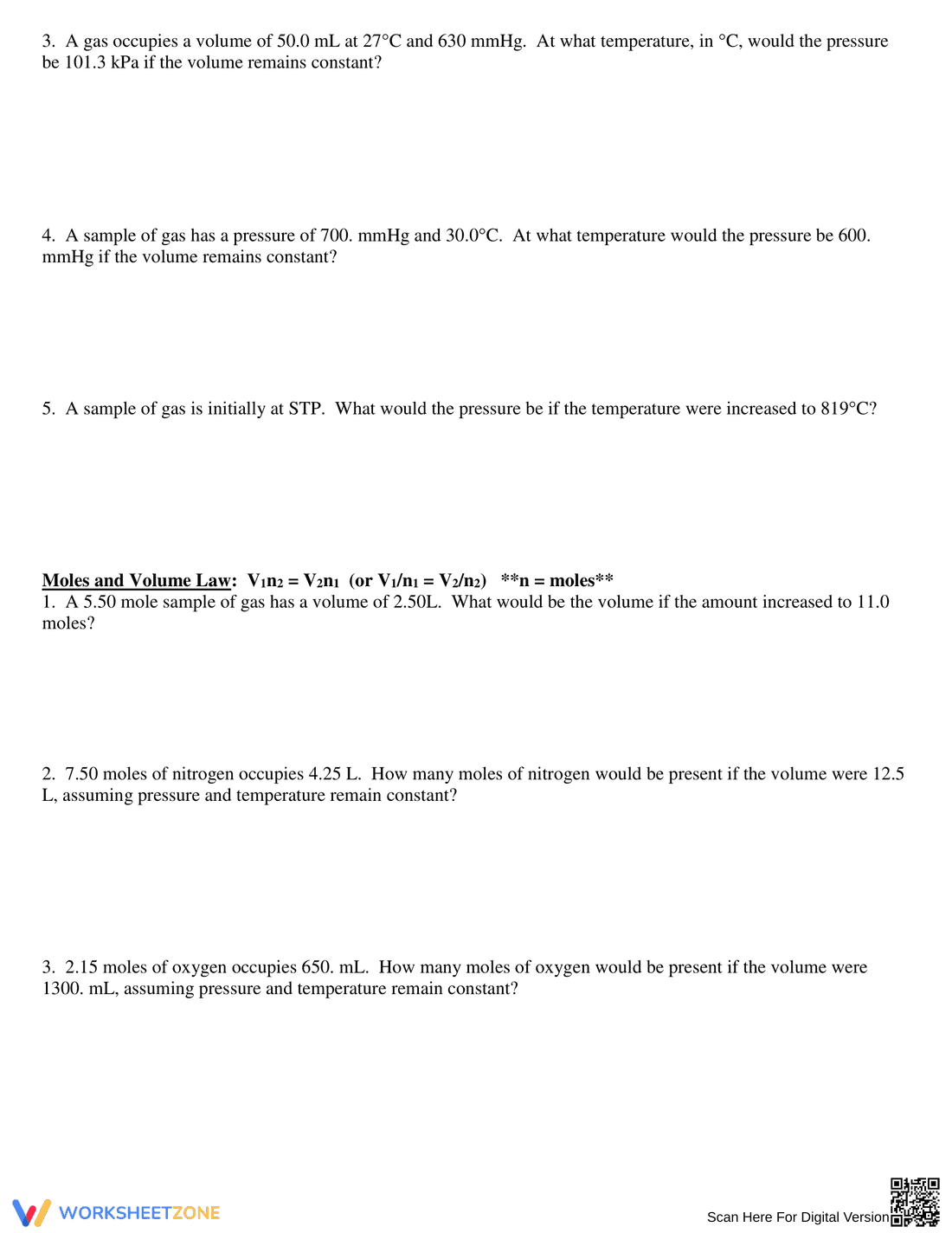
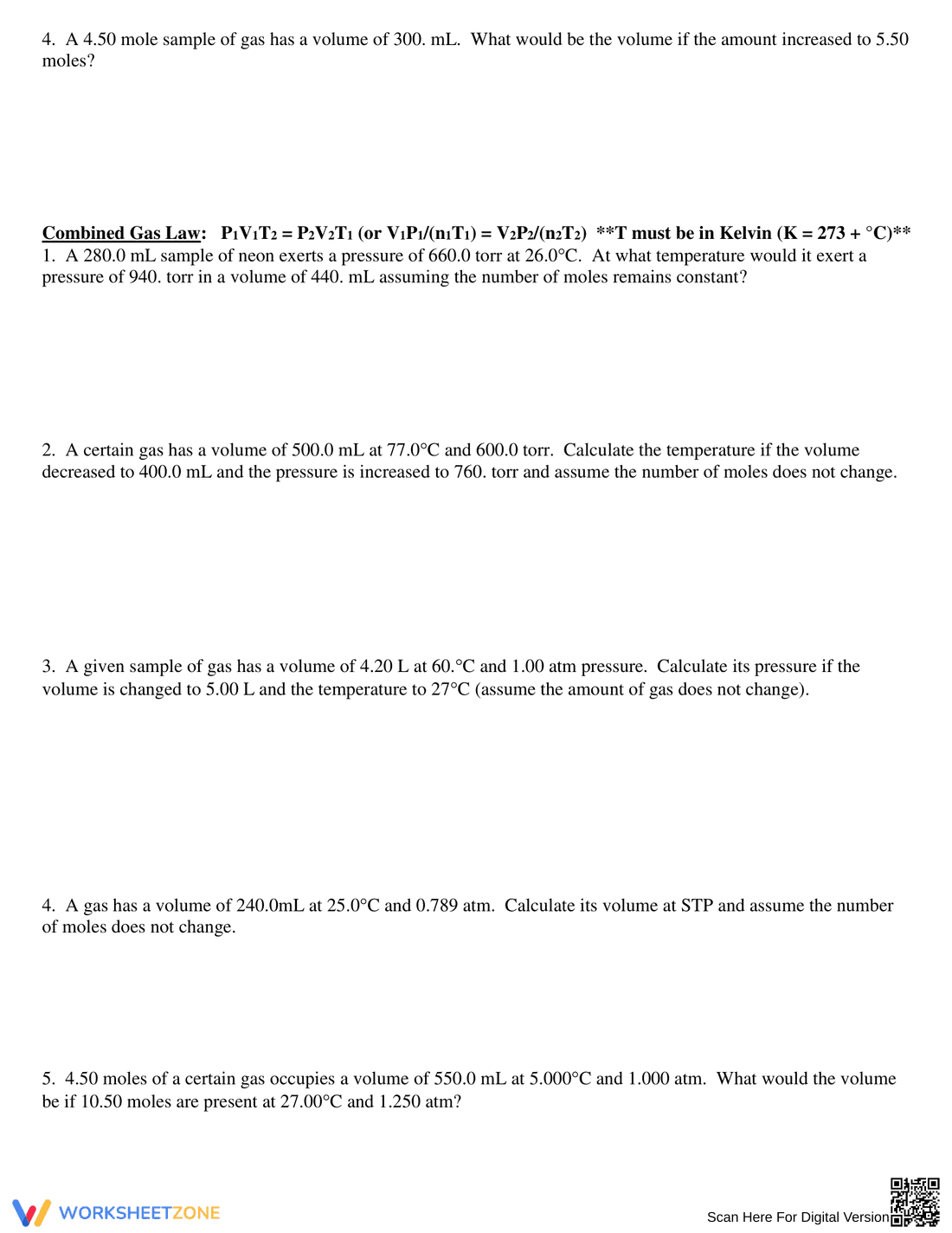
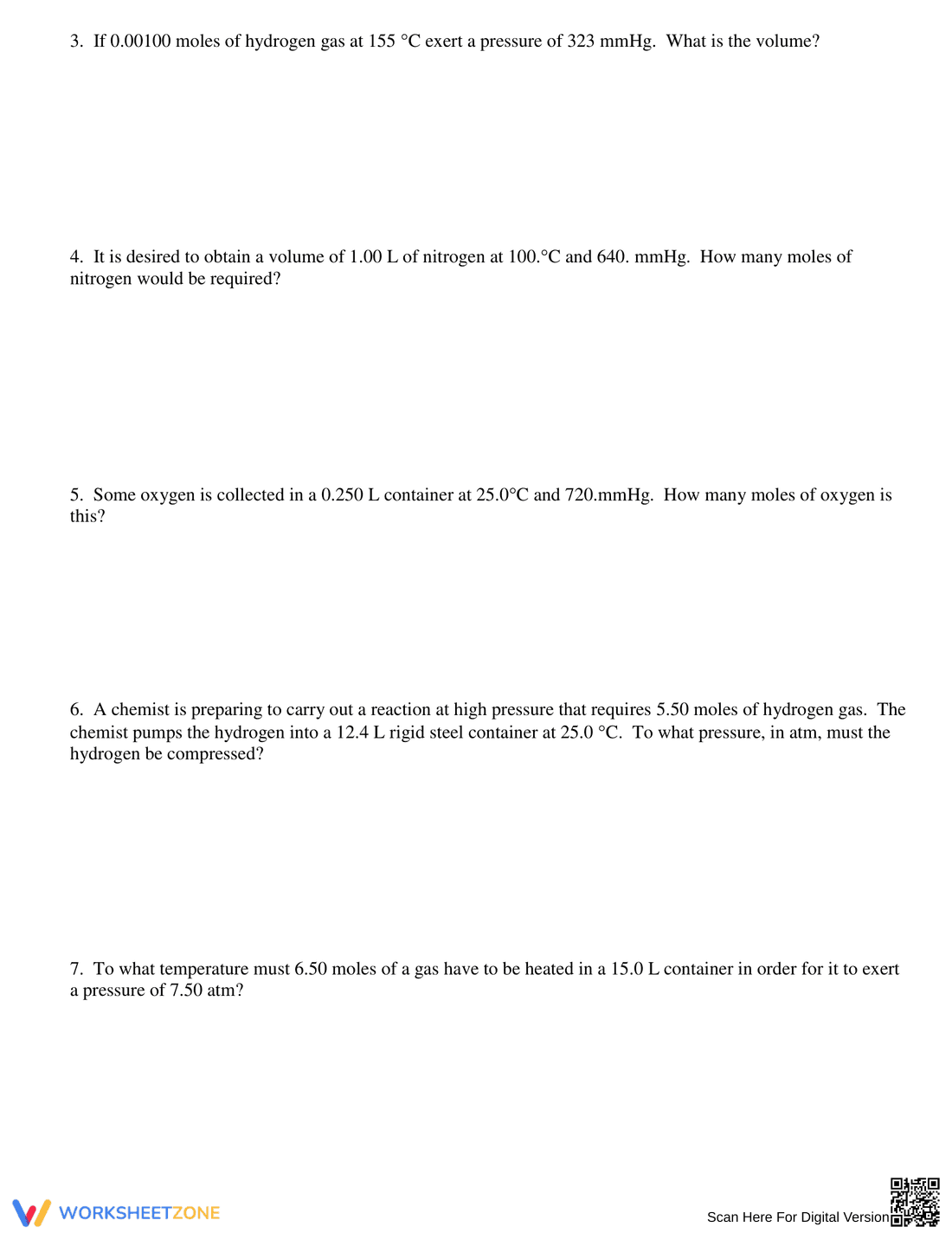
This is a gas laws worksheet focusing on Boyle's Law and Charles's Law. It contains word problems requiring calculations using the formulas V1P1=V2P2 and V1/T1 = V2/T2. Problems involve calculating pressure and volume changes under constant temperature conditions, and volume changes under constant pressure conditions. The worksheet includes example problems using atmospheres, liters, milliliters, torr, and degrees Celsius, with a reminder to convert Celsius to Kelvin for Charles's Law problems.
Grade Level Suitability:
This worksheet is suitable for high school students, specifically grades 11-12, studying chemistry or physics. The problems require understanding of gas laws, unit conversions, and algebraic manipulation, which are typically covered in these grade levels.
Why Use It:
This worksheet provides practice applying Boyle's and Charles's Gas Laws to solve quantitative problems. It reinforces understanding of the relationships between pressure, volume, and temperature of gases. It also helps students develop problem-solving skills in a scientific context and reinforces the importance of unit conversions.
How to Use It:
Students should first review the formulas for Boyle's and Charles's Laws. Then, they should carefully read each word problem, identify the given variables, and determine which formula to apply. Students need to convert Celsius to Kelvin when applying Charles's Law. Finally, they should solve for the unknown variable and express the answer with appropriate units.
Target Users:
The target users are high school students enrolled in chemistry or physics courses. It is also suitable for students reviewing gas laws as part of test preparation. Teachers can use it as an in-class activity, homework assignment, or quiz.
This is a gas laws worksheet focusing on Boyle's Law and Charles's Law. It contains word problems requiring calculations using the formulas V1P1=V2P2 and V1/T1 = V2/T2. Problems involve calculating pressure and volume changes under constant temperature conditions, and volume changes under constant pressure conditions. The worksheet includes example problems using atmospheres, liters, milliliters, torr, and degrees Celsius, with a reminder to convert Celsius to Kelvin for Charles's Law problems.
Grade Level Suitability:
This worksheet is suitable for high school students, specifically grades 11-12, studying chemistry or physics. The problems require understanding of gas laws, unit conversions, and algebraic manipulation, which are typically covered in these grade levels.
Why Use It:
This worksheet provides practice applying Boyle's and Charles's Gas Laws to solve quantitative problems. It reinforces understanding of the relationships between pressure, volume, and temperature of gases. It also helps students develop problem-solving skills in a scientific context and reinforces the importance of unit conversions.
How to Use It:
Students should first review the formulas for Boyle's and Charles's Laws. Then, they should carefully read each word problem, identify the given variables, and determine which formula to apply. Students need to convert Celsius to Kelvin when applying Charles's Law. Finally, they should solve for the unknown variable and express the answer with appropriate units.
Target Users:
The target users are high school students enrolled in chemistry or physics courses. It is also suitable for students reviewing gas laws as part of test preparation. Teachers can use it as an in-class activity, homework assignment, or quiz.


