


























Views
Downloads

Easter Counting Worksheet | Grade K Printable Math
Paste this activity's link or code into your existing LMS (Google Classroom, Canvas, Teams, Schoology, Moodle, etc.).
Students can open and work on the activity right away, with no student login required.
You'll still be able to track student progress and results from your teacher account.
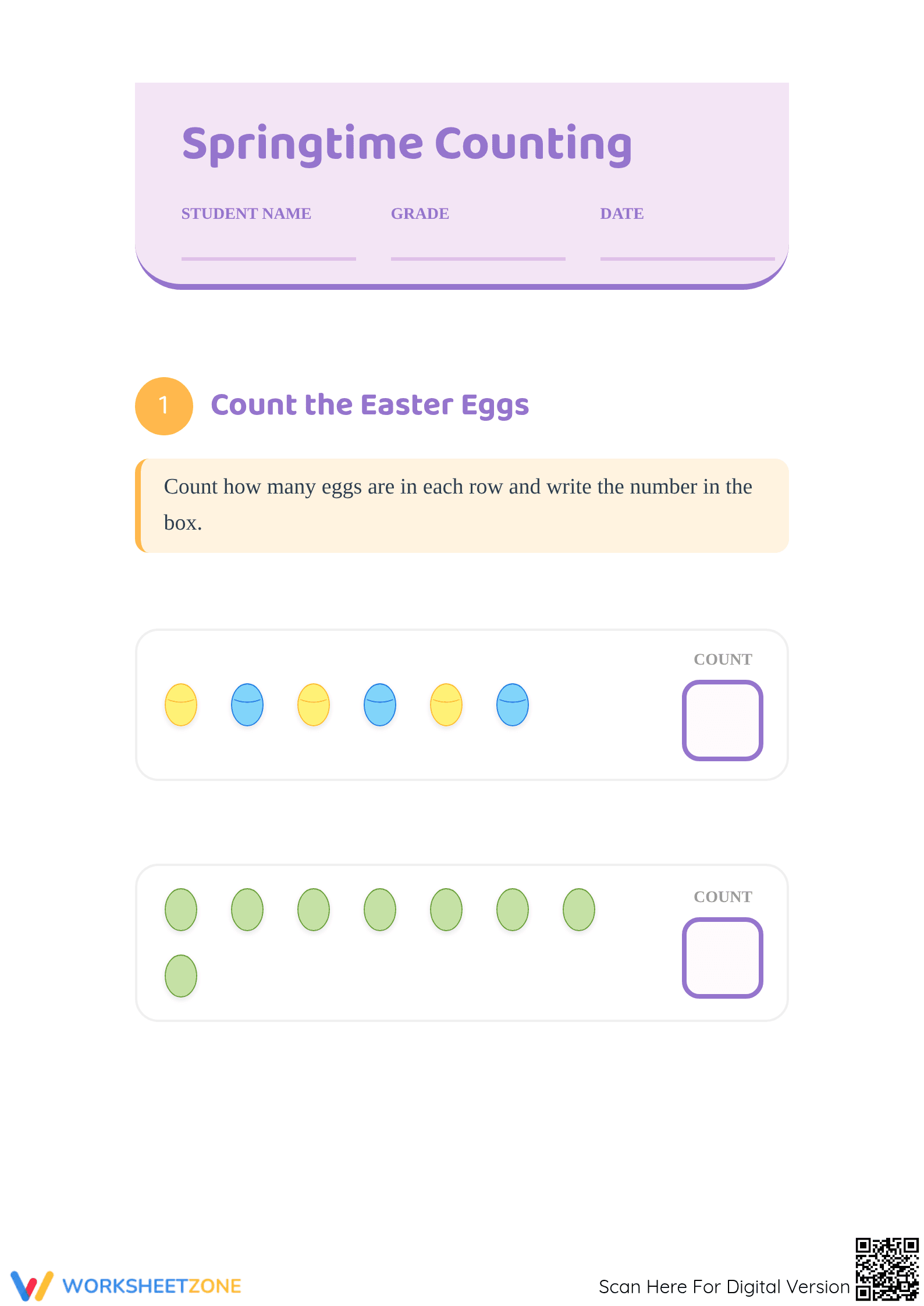
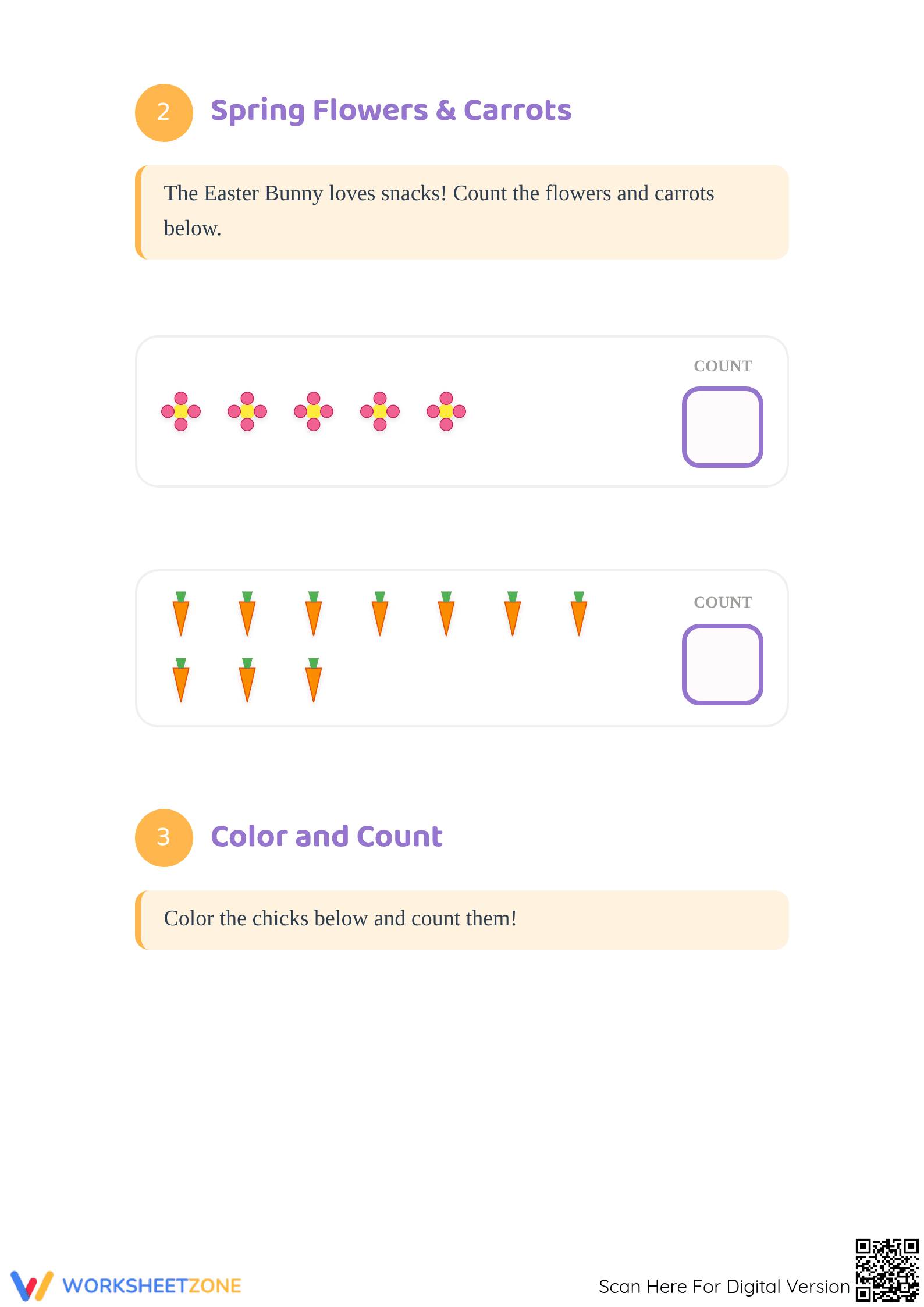
This Kindergarten math worksheet helps students practice one-to-one correspondence and cardinality by counting festive spring objects. Children will count Easter eggs, flowers, carrots, and chicks, writing the correct numeral for each group. This engaging, themed activity reinforces foundational number sense and counting skills up to ten.
At a Glance
- Grade: Kindergarten · Subject: Math
- Standard:
CCSS.MATH.CONTENT.K.CC.B.5— Count to answer how many objects are in a group- Skill Focus: Counting and Cardinality
- Format: 3 pages · 5 problems · Answer key included · PDF
- Best For: Independent practice or morning work
- Time: 10–15 minutes
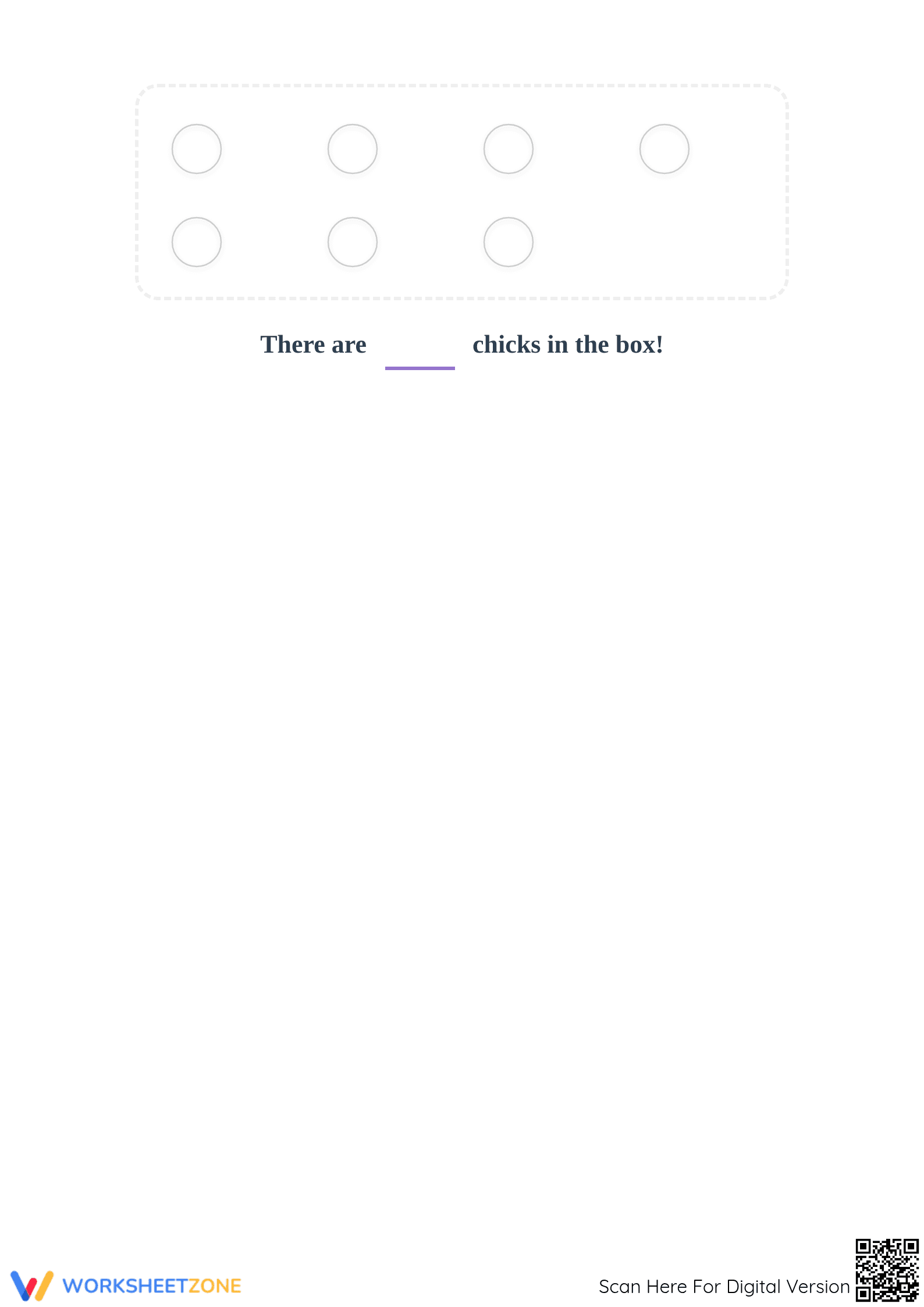
This three-page printable includes five distinct counting tasks featuring cheerful spring and Easter themes. Students will count rows of colorful eggs, spring flowers, and carrots, recording their answers in the provided boxes. The final activity invites children to color a group of chicks before counting them and writing the total number in a sentence frame. A complete answer key is provided for quick grading.
Zero-Prep Workflow
Designed for immediate classroom use with minimal preparation:
- Print (1 minute): Print the three-page PDF. The clear design ensures high-quality printing.
- Distribute (1 minute): Hand out during math centers or morning work.
- Review (3 minutes): Use the included answer key to quickly check student work.
With under two minutes of total teacher prep time, this is an excellent addition to any spring lesson or sub plan.
Standards Alignment
This worksheet is aligned to CCSS.MATH.CONTENT.K.CC.B.5, which requires students to count to answer "how many?" questions about as many as 20 things arranged in a line, a rectangular array, or a circle. It also supports number writing practice as students record their counted totals. Both standard codes can be copied directly into lesson plans, IEP goals, or district curriculum mapping tools.
How to Use It
This counting activity works perfectly as an independent math center during the weeks leading up to Easter. Teachers can introduce the worksheet after direct instruction on one-to-one correspondence, using the first problem as a guided example. As a formative assessment observation tip, watch to see if students physically touch or cross out each object as they count, which indicates their developing tracking skills. Most kindergarteners will complete this activity within 10 to 15 minutes.
Who It's For
This resource is primarily designed for Kindergarten students developing early number sense, but it also serves as a helpful review for first graders who need extra practice with counting and numeral writing. For students who need additional differentiation, provide physical manipulatives like mini erasers or counting bears to place over the printed objects before writing the number. This worksheet pairs naturally with spring-themed read-alouds or hands-on counting lessons.
Developing strong counting and cardinality skills is a critical milestone in early childhood mathematics. According to a recent EdReports 2024 analysis of foundational math curricula, providing students with thematic, visually engaging counting tasks significantly improves their engagement and retention of one-to-one correspondence principles. This worksheet directly supports CCSS.MATH.CONTENT.K.CC.B.5 by asking students to count to answer how many objects are in a group. By integrating familiar seasonal objects like eggs and flowers, the activity reduces cognitive load and allows young learners to focus entirely on the mathematical process of counting and recording numerals. Regular practice with structured visual arrays helps solidify the concept that the last number name said tells the total quantity, building a necessary foundation for future addition and subtraction operations in later grades.


