


























Views
Plays

Consonant Digraphs Worksheet | Essential Grade 1 Phonics
Paste this activity's link or code into your existing LMS (Google Classroom, Canvas, Teams, Schoology, Moodle, etc.).
Students can open and work on the activity right away, with no student login required.
You'll still be able to track student progress and results from your teacher account.
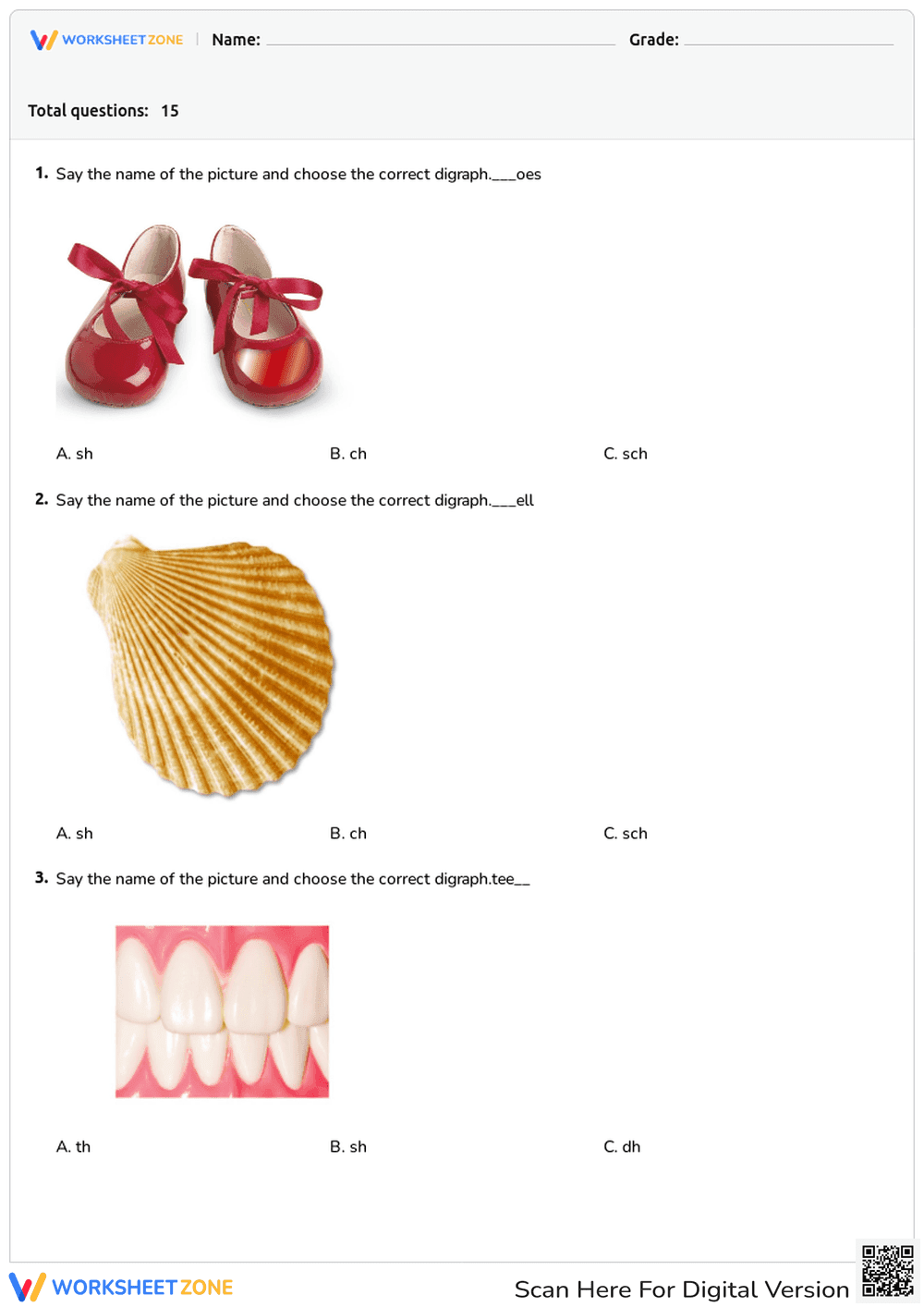
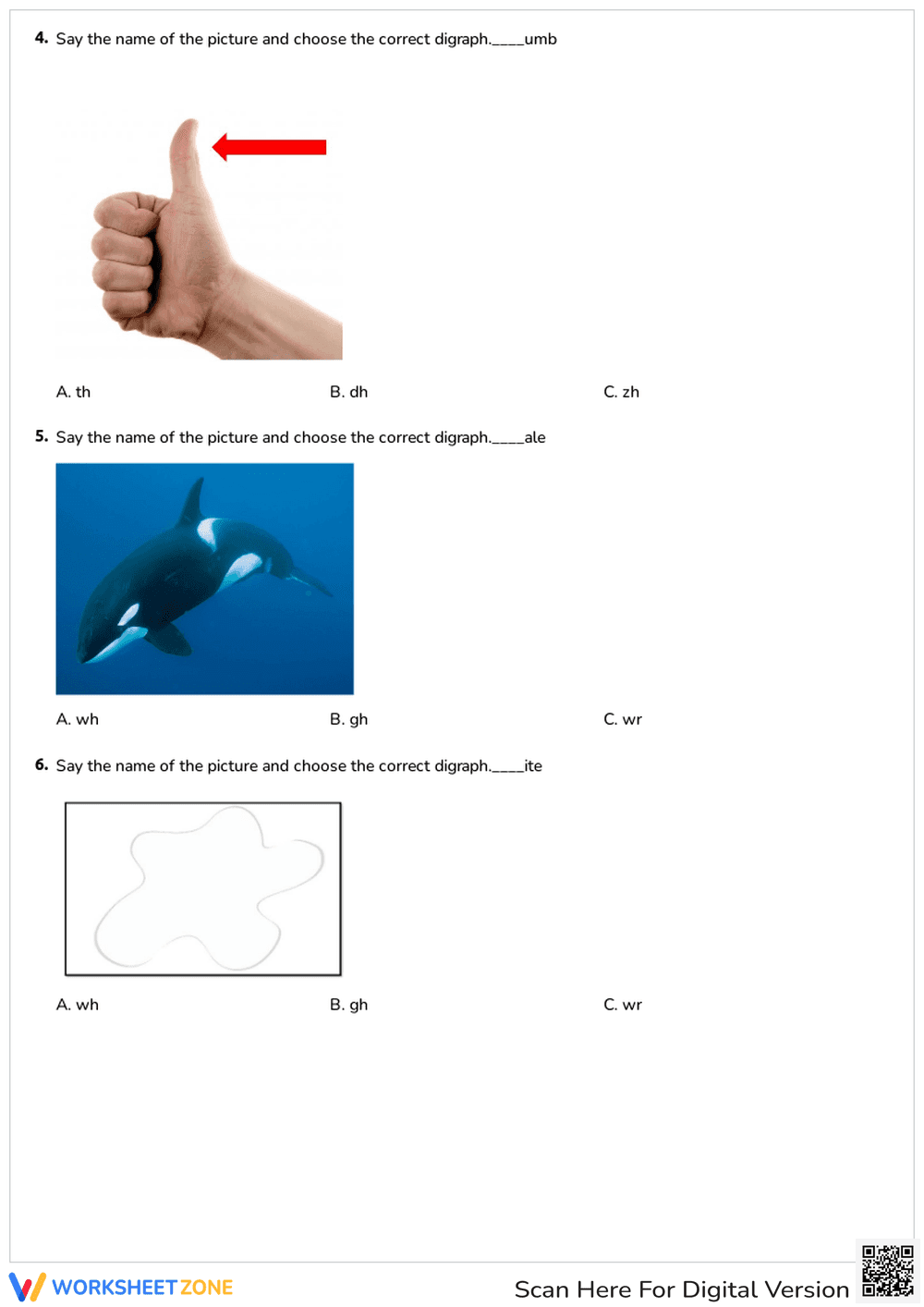
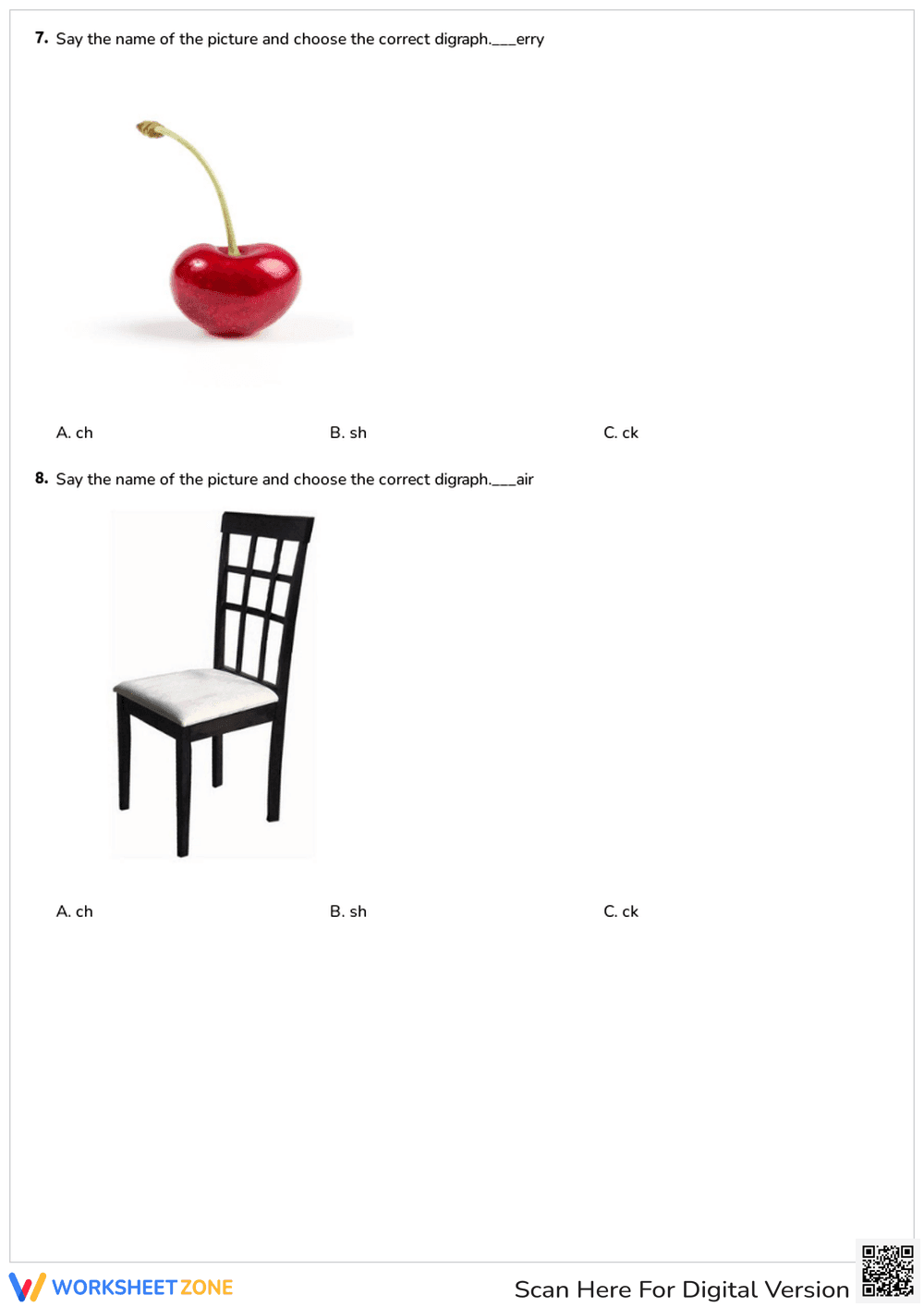
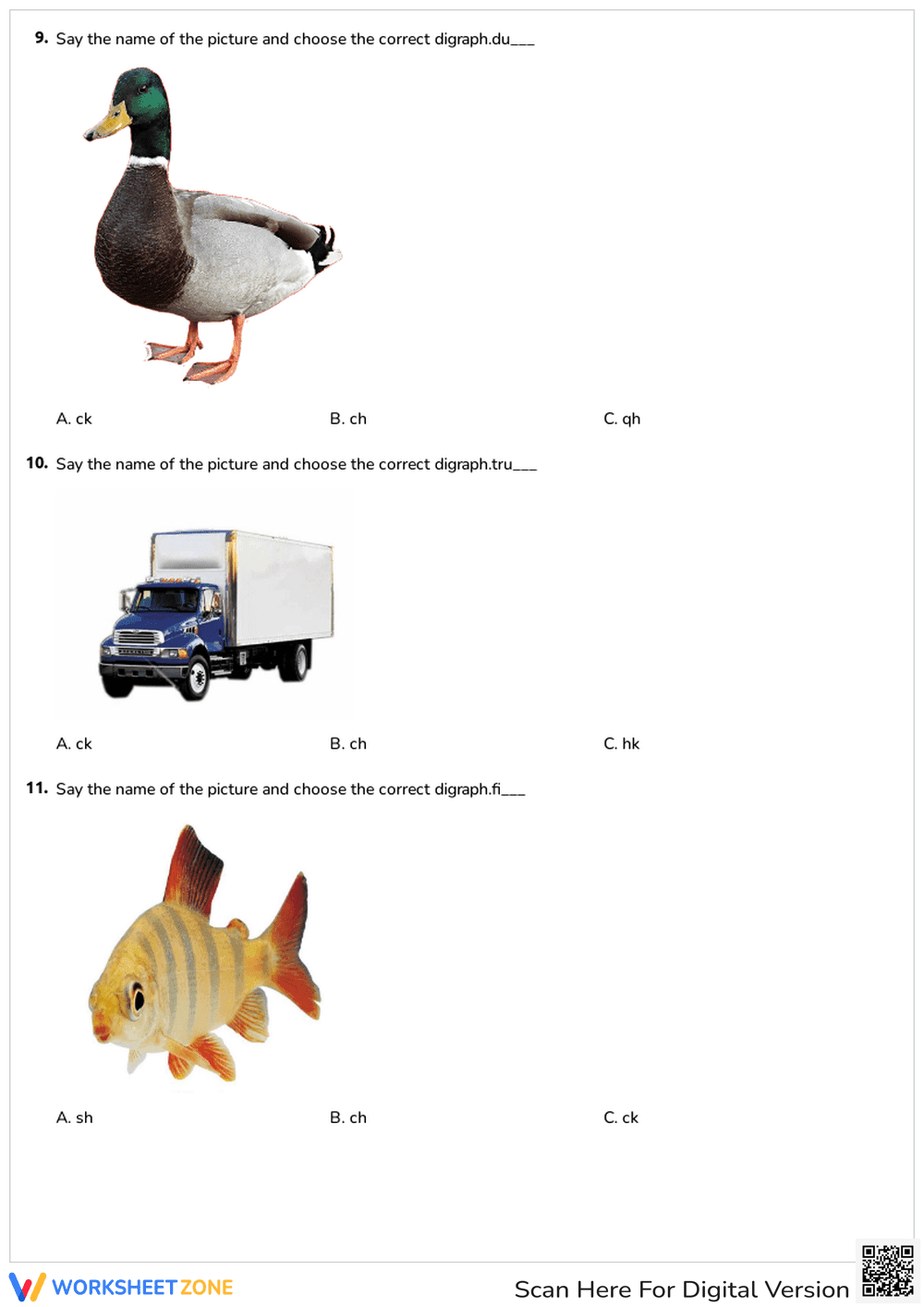
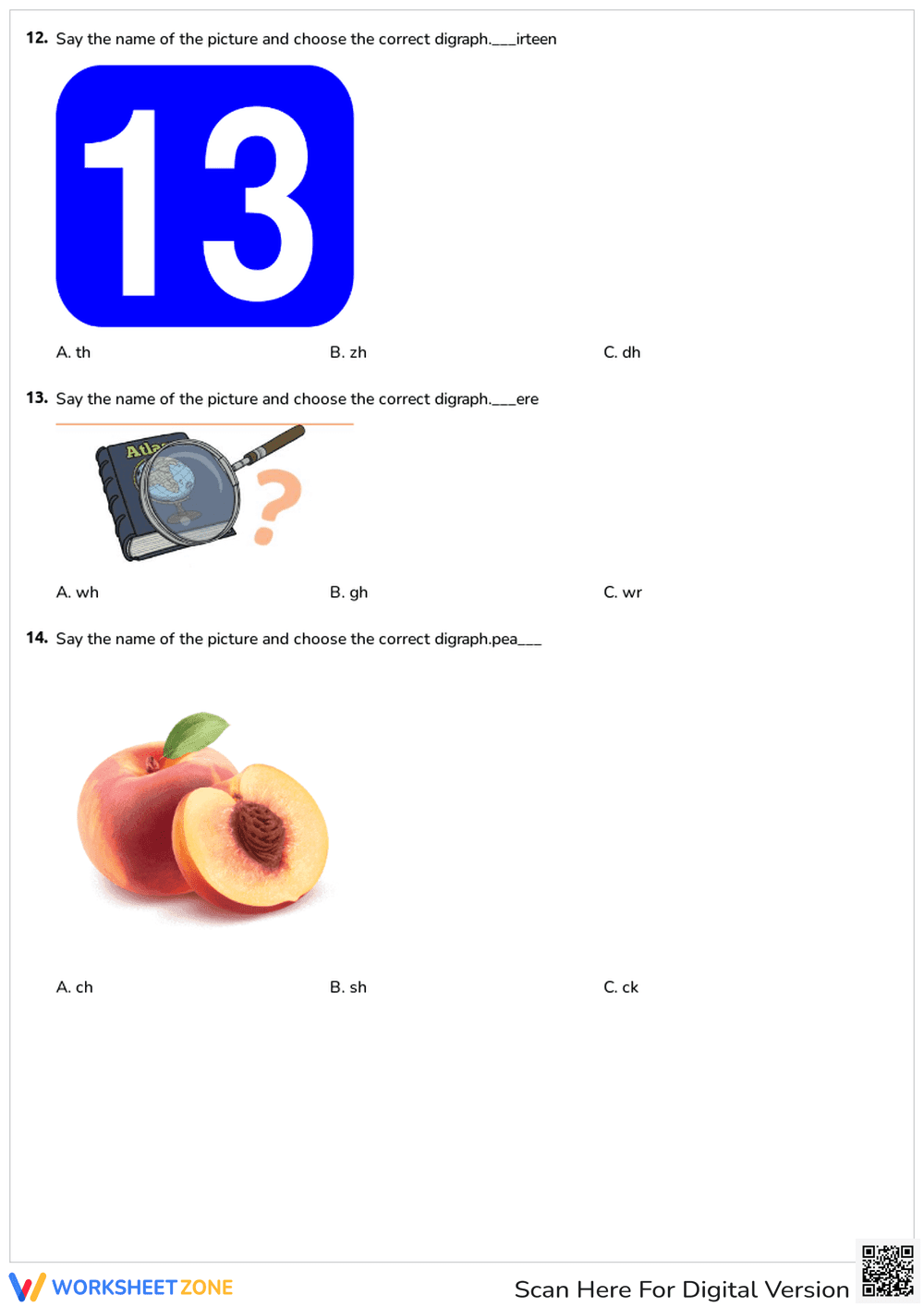
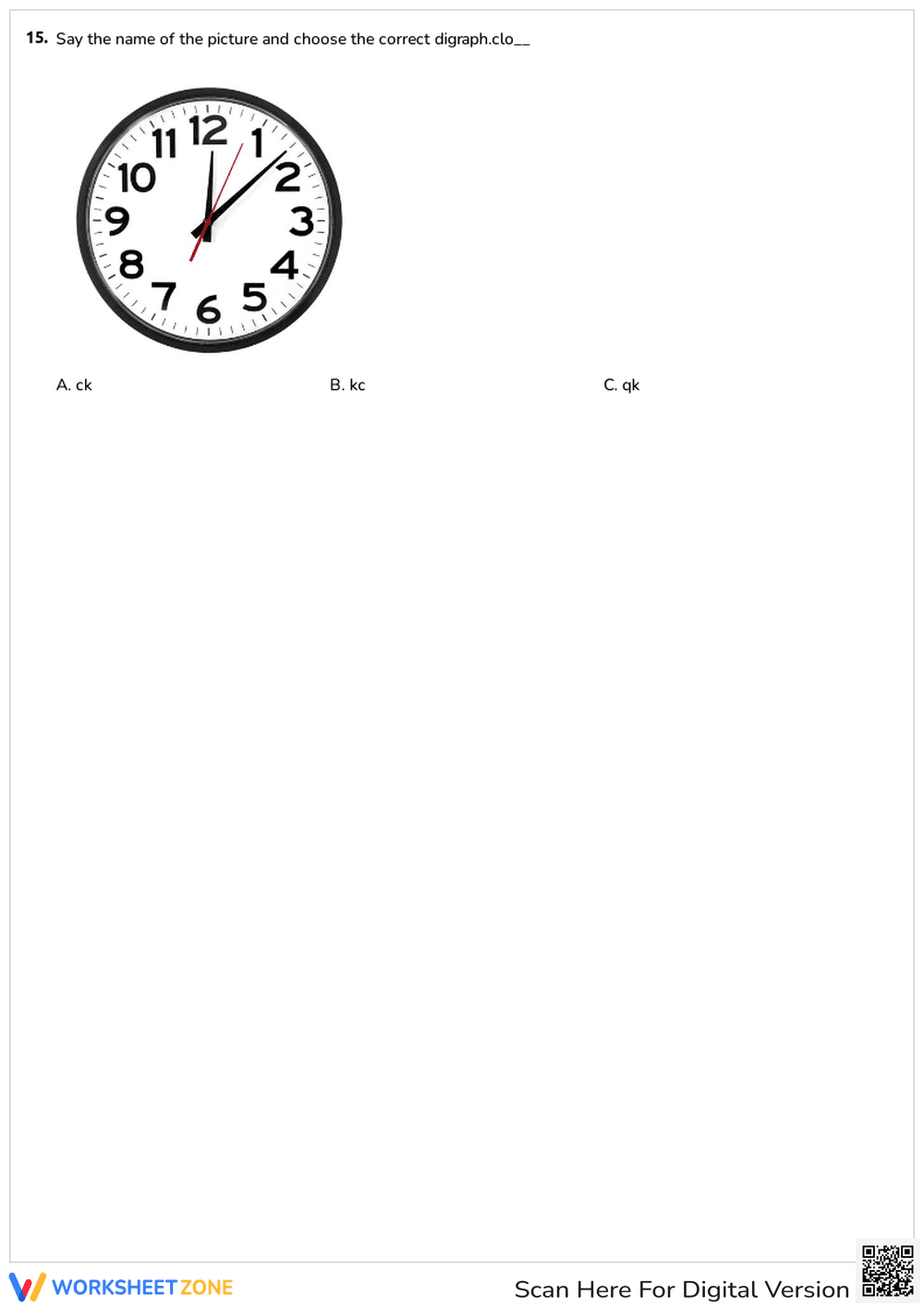
This Grade 1 consonant digraphs worksheet provides targeted practice for students learning to decode and spell words containing sh, th, wh, ch, and ck. By connecting high-quality visual images with multiple-choice options, students build the phonological awareness necessary to recognize these complex sounds in everyday reading. The structured format ensures students achieve mastery through repeated exposure to common word patterns.
At a Glance
- Grade: 1 · Subject: ELA Phonics
- Standard:
CCSS.ELA-LITERACY.RF.1.3.A— Know the spelling-sound correspondences for common consonant digraphs- Skill Focus: Consonant Digraphs (sh, th, wh, ch, ck)
- Format: 6 pages · 15 problems · Answer key included · PDF
- Best For: Phonics assessment and independent practice
- Time: 15–20 minutes
Inside this comprehensive 6-page PDF, you will find 15 structured multiple-choice questions. Each question features a clear, real-world photograph representing a target word, such as "shoes," "thumb," or "duck." Students must analyze the image, say the word aloud, and select the correct digraph to complete the spelling. The layout is spacious and student-friendly. A full answer key is provided for rapid grading.
The zero-prep design of this resource ensures that teachers can integrate phonics practice into their busy schedules. Step 1: Print the 6-page PDF (30 seconds). Step 2: Distribute the 15-question quiz to students during your literacy block or as a morning work assignment (1 minute). Step 3: Review the answers using the included key to identify common misconceptions (1 minute). Total teacher preparation time is under 3 minutes, making this an ideal solution for substitute plans.
This resource is directly aligned with CCSS.ELA-LITERACY.RF.1.3.A, which mandates that students know the spelling-sound correspondences for common consonant digraphs. It specifically targets the most frequent digraphs encountered in early primary texts. Additionally, it supports vocabulary development and phonemic blending. Both standard codes can be copied directly into lesson plans, IEP goals, or district curriculum mapping tools.
Use this worksheet as a summative assessment after a week of direct instruction on digraphs. It serves as an excellent tool for formative assessment; observe if students struggle more with initial digraphs versus final digraphs. This observation can guide your next small-group intervention. Expected completion time for most first graders is between 15 and 20 minutes.
This resource is designed for Kindergarten and Grade 1 students, as well as English Language Learners (ELLs) who need visual support to connect sounds to English spellings. It pairs naturally with an anchor chart displaying digraph mouth-positions or a decodable reader focusing on "sh" and "ch" sounds.
Consonant digraph instruction is a cornerstone of early literacy development, specifically addressing the CCSS.ELA-LITERACY.RF.1.3.A standard which requires students to identify spelling-sound correspondences for common digraphs. According to Fisher & Frey (2014), the gradual release of responsibility model is most effective when paired with high-quality visual scaffolds that bridge the gap between phonemic awareness and grapheme recognition. This worksheet provides 15 distinct opportunities for students to practice the "sh", "th", "wh", "ch", and "ck" sounds in context, moving from initial to final positions. Research from the NAEP indicates that students who master these foundational phonics skills by the end of first grade are significantly more likely to achieve reading fluency in later elementary years. By isolating these five specific digraphs, the resource allows for targeted intervention and data collection, ensuring that educators can pinpoint exactly where a student's phonetic decoding may be faltering during independent practice sessions.


