


























1 / 2
0
Views
0
Plays

0.0
0
Save
0 Likes
Children's Book Titles: Reading Recognition
0 Views
0 Plays
Paste this activity's link or code into your existing LMS (Google Classroom, Canvas, Teams, Schoology, Moodle, etc.).
Students can open and work on the activity right away, with no student login required.
You'll still be able to track student progress and results from your teacher account.
Information
Description
What It Is:
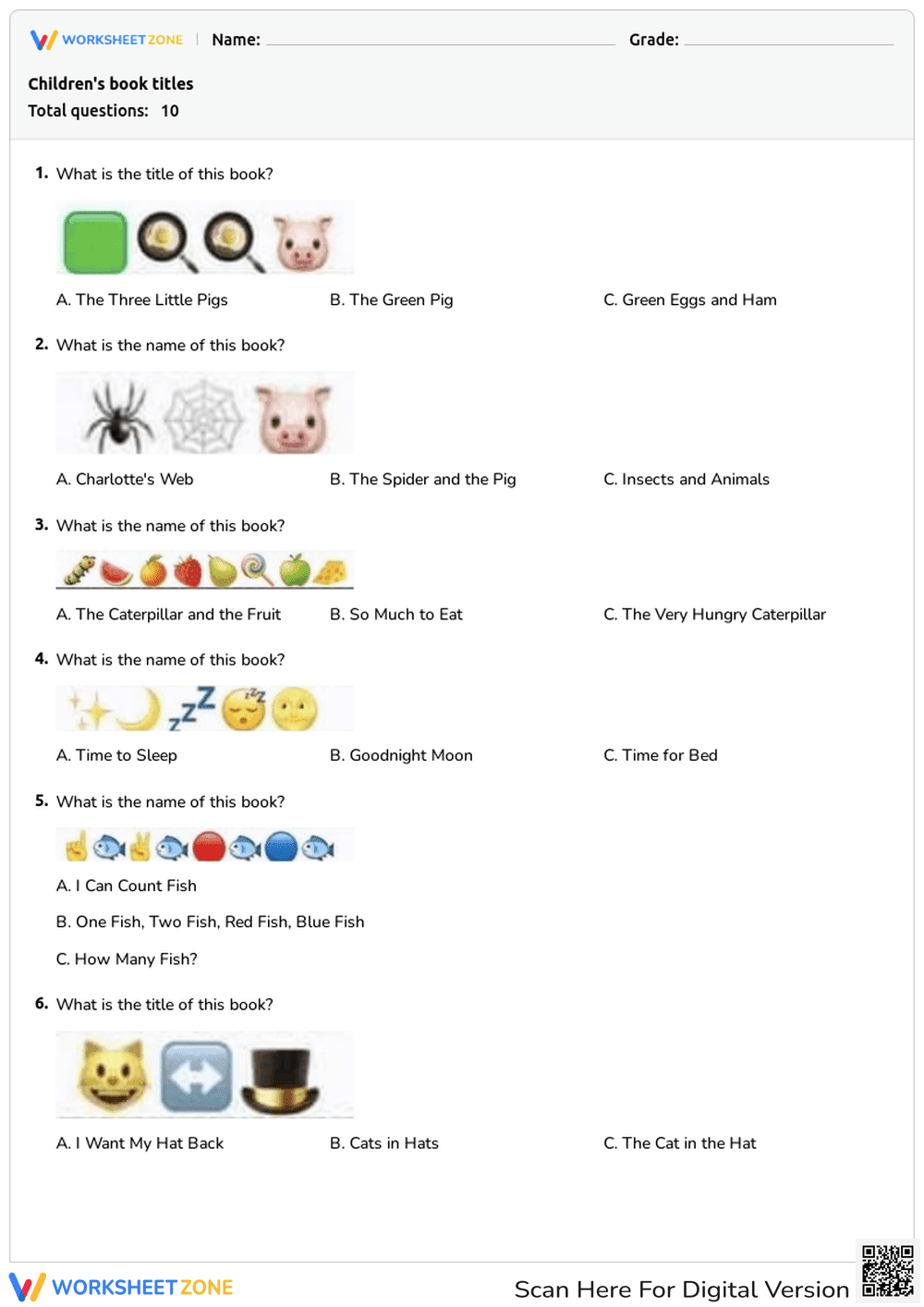
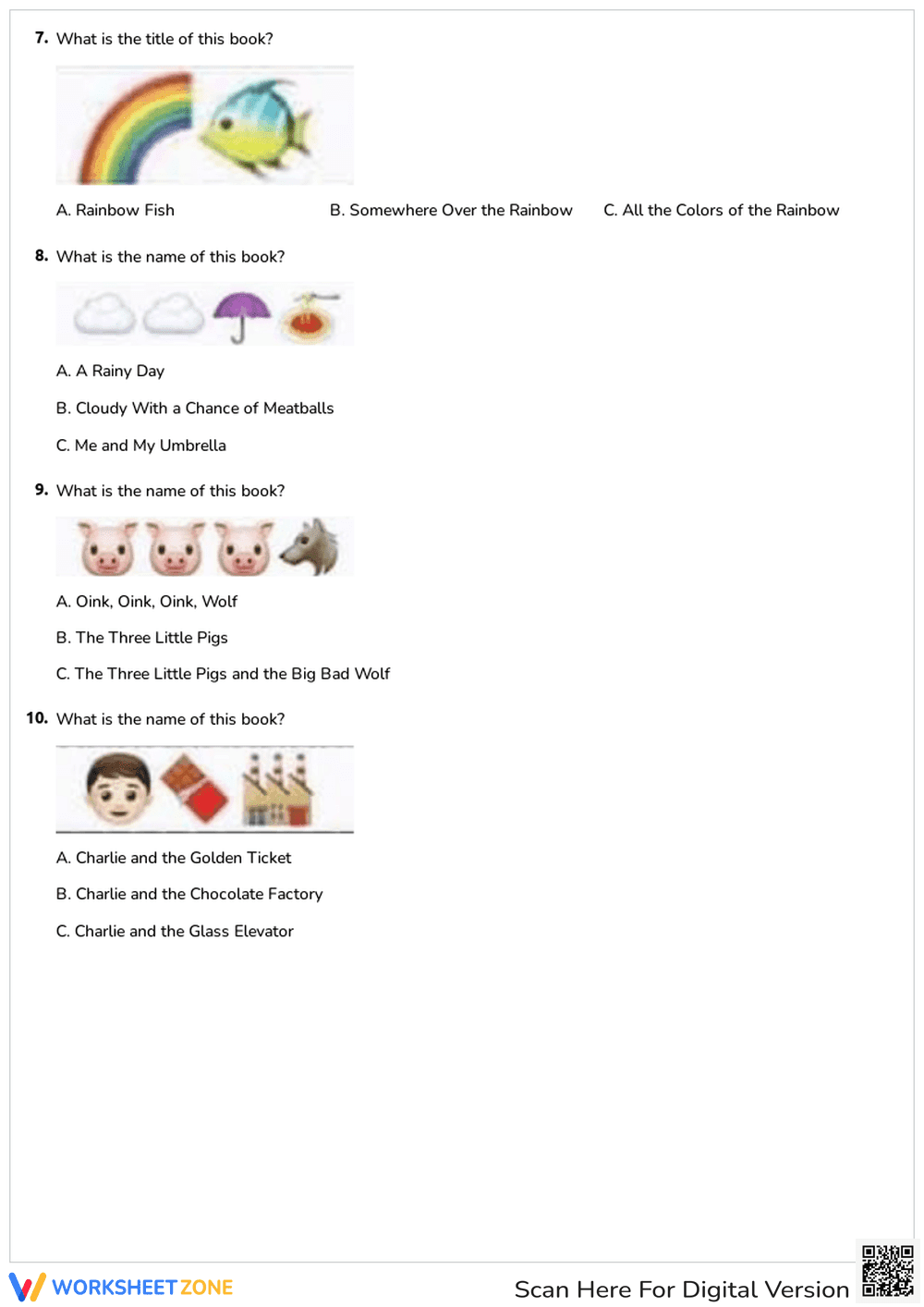
This is a counting worksheet featuring emojis. The image shows a pattern of emojis: a finger pointing up (representing the number 1), a blue fish, a hand showing two fingers, another blue fish, a red circle, a blue fish, a blue circle, and finally another blue fish. The activity likely involves counting or pattern recognition.
Grade Level Suitability:
Pre-K to Kindergarten. The use of simple emojis and basic counting concepts makes it suitable for young children learning to recognize numbers and patterns.
Why Use It:
This worksheet helps develop early math skills like counting, number recognition, and pattern identification. The use of engaging emojis can make learning more fun and accessible for young learners.
How to Use It:
Use the worksheet to practice counting from one to three, identify the different emojis, and recognize the simple pattern. You could ask the child to count how many fish are in the image, or what comes after the two fingers.
Target Users:
Preschoolers, kindergartners, and children with learning disabilities who need visual aids to learn basic math concepts.
This is a counting worksheet featuring emojis. The image shows a pattern of emojis: a finger pointing up (representing the number 1), a blue fish, a hand showing two fingers, another blue fish, a red circle, a blue fish, a blue circle, and finally another blue fish. The activity likely involves counting or pattern recognition.
Grade Level Suitability:
Pre-K to Kindergarten. The use of simple emojis and basic counting concepts makes it suitable for young children learning to recognize numbers and patterns.
Why Use It:
This worksheet helps develop early math skills like counting, number recognition, and pattern identification. The use of engaging emojis can make learning more fun and accessible for young learners.
How to Use It:
Use the worksheet to practice counting from one to three, identify the different emojis, and recognize the simple pattern. You could ask the child to count how many fish are in the image, or what comes after the two fingers.
Target Users:
Preschoolers, kindergartners, and children with learning disabilities who need visual aids to learn basic math concepts.


