Christmas poems for kids are a wonderful way to bring holiday cheer into your home or classroom. These short, joyful verses help children connect with the magic of the season while practicing reading fluency, rhythm, and expression. Whether you’re planning a Christmas program, looking for poems to accompany winter crafts, or simply creating a cozy storytelling moment, these kid-friendly poems make the celebration even more memorable. Below, you’ll find more than 30 delightful poems that capture the warmth and wonder of Christmas.
30+ Christmas poems for kids
Discovering the magic of the season through poetry is a treasured holiday tradition. This curated selection of Christmas poems for kids includes timeless classics, joyful narratives, and heartwarming verses perfect for reading aloud by the fireplace. Each poem captures a unique piece of the holiday spirit, from the wonder of Santa’s visit to the quiet reverence of the Nativity.
1. “A Visit from St. Nicholas” (Excerpt) by Clement Clarke Moore

This poem is arguably the most famous Christmas verse in the English language, instantly recognizable by its opening line, “’Twas the night before Christmas.” It established the modern, jolly image of Santa Claus—complete with his round belly, nimble movements, and a team of eight tiny reindeer. Reading this descriptive narrative aloud is essential for building excitement and capturing the vivid magic of Christmas Eve night.
“‘Twas the night before Christmas, when all through the house
Not a creature was stirring, not even a mouse;
The stockings were hung by the chimney with care,
In hopes that St. Nicholas soon would be there;
The children were nestled all snug in their beds;
While visions of sugar-plums danced in their heads;
And mamma in her ‘kerchief, and I in my cap,
Had just settled our brains for a long winter’s nap.
When out on the lawn there arose such a clatter,
I sprang from my bed to see what was the matter.”
2. “Jolly Old Saint Nicholas” (Lyric Poem) by Emily Huntington Miller

Often performed as a cheerful carol, this rhythmic poem features a direct conversation with Santa, asking him about the toys and surprises he plans to deliver. It focuses on the children’s innocent anticipation and the cozy tradition of wishing for specific gifts under the tree. The verse perfectly encapsulates the intimate excitement of childhood dreams right before Christmas morning.
“Jolly old St. Nicholas
Lean your ear this way
Don’t you tell a single soul
What I’m going to say”
3. “The First Christmas” by Marian Swinger
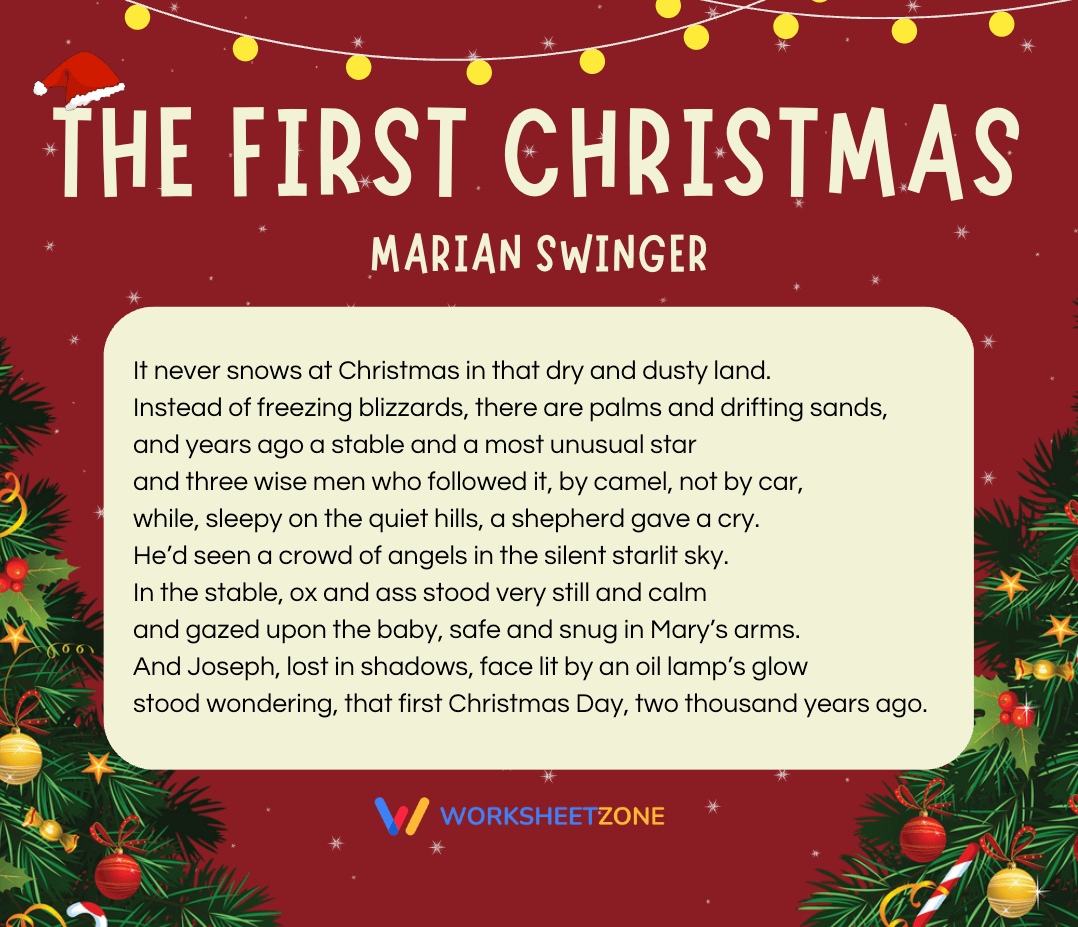
This poem offers a simple, reverent retelling of the Biblical Nativity story, making the foundational Christian narrative accessible and easy for young readers to grasp. It focuses on the key elements of the journey to Bethlehem, the stable, and the presence of the Holy Family and shepherds. The verse is ideal for introducing children to the sacred origins and deep meaning of the Christmas holiday.
“It never snows at Christmas in that dry and dusty land.
Instead of freezing blizzards, these are palms and drifting sands,
and years ago a stable and a most unusual star
and three wise men who followed it, by camel, not by car,…”
4. “Christmas Carol” by Sara Teasdale

Sara Teasdale’s “Christmas Carol” offers a short, lyrical expression of goodwill and joy, often focusing on the beauty of the winter world and the comfort of human connection. Her elegant language creates a gentle, musical atmosphere, suitable for quiet reflection on the simple blessings of the season. The poem is a lovely, melodic verse that celebrates peace and light.
“The kings they came from out the south,
All dressed in ermine fine;
They bore Him gold and chrysoprase,
And gifts of precious wine.”
5. “I’m a Little Reindeer” – Author Unknown

This short, rhythmic verse, often adapted into a song, provides a fun, first-person perspective from one of Santa’s energetic reindeer. It uses simple language and an easy beat to capture the excitement of flying and helping pull the big sleigh on Christmas Eve. The poem is perfect for very young children, encouraging movement and imaginative play about the iconic holiday team.
“I’m a little reindeer,
Ready to fly.
I’ll pull Santa’s sleigh
Up in the sky.”
6. “In the Bleak Midwinter” by Christina Rossetti

The poem paints a peaceful picture of a quiet, snowy world during the Christmas season. The poem’s gentle rhythm and simple imagery help children imagine a calm winter landscape covered in frost and starlight. Rossetti’s message highlights the idea that even small gifts given with love are meaningful. It’s a beautiful, reflective poem that encourages kids to think about kindness and simplicity during the holidays.
“In the bleak midwinter, frosty wind made moan,
Earth stood hard as iron, water like a stone;
Snow had fallen, snow on snow, snow on snow,
In the bleak midwinter, long ago.”
7. “The Friendly Beasts” (Traditional Carol Verse)
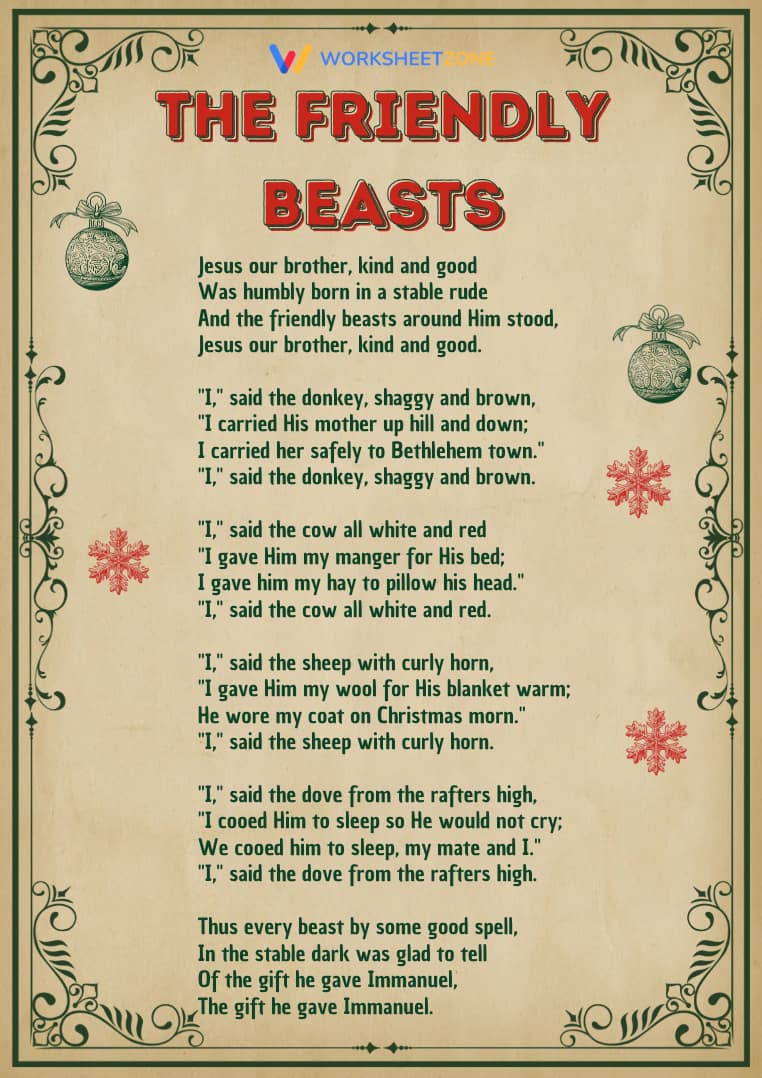
Often sung as a sweet carol, this charming poem tells the Nativity story from the point of view of the animals present in the stable. Each creature, from the cow to the donkey, describes the simple, kind contribution it offered to keep the baby Jesus comfortable. It’s a wonderful piece that teaches children about humility, compassion, and the value of giving one’s best.
“Jesus our brother, kind and good
Was humbly born in a stable rude
And the friendly beasts around Him stood,
Jesus our brother, kind and good.”
8. “Love Came Down at Christmas” by Christina Rossetti

This beautiful poem is a profound yet simple meditation on the core Christian message of the season, identifying the spirit of Christmas directly with divine love. Rossetti’s elegant lines emphasize that the truest gifts are not material objects but rather love and kindness given from the heart. It is a wonderfully reflective piece that guides readers toward the spiritual significance of the holiday.
“Love came down at Christmas,
Love all lovely, love divine;
Love was born at Christmas,
Star and angels gave the sign.”
9. “Music on Christmas Morning” by Anne Brontë
Anne Brontë’s poem captures the quiet, contemplative joy inspired by the sound of Christmas music, likely carols, on a frosty winter morning. It contrasts the stillness of the dawn with the sudden burst of harmonious sound, reflecting on the profound emotional impact of the music. The verse evokes a serene, slightly melancholic beauty, emphasizing how sound can awaken the heart to the holiday spirit.
“Music I love – but never strain
Could kindle raptures so divine,
So grief assuage, so conquer pain,
And rouse this pensive heart of mine –
As that we hear on Christmas morn,
Upon the wintry breezes borne.”

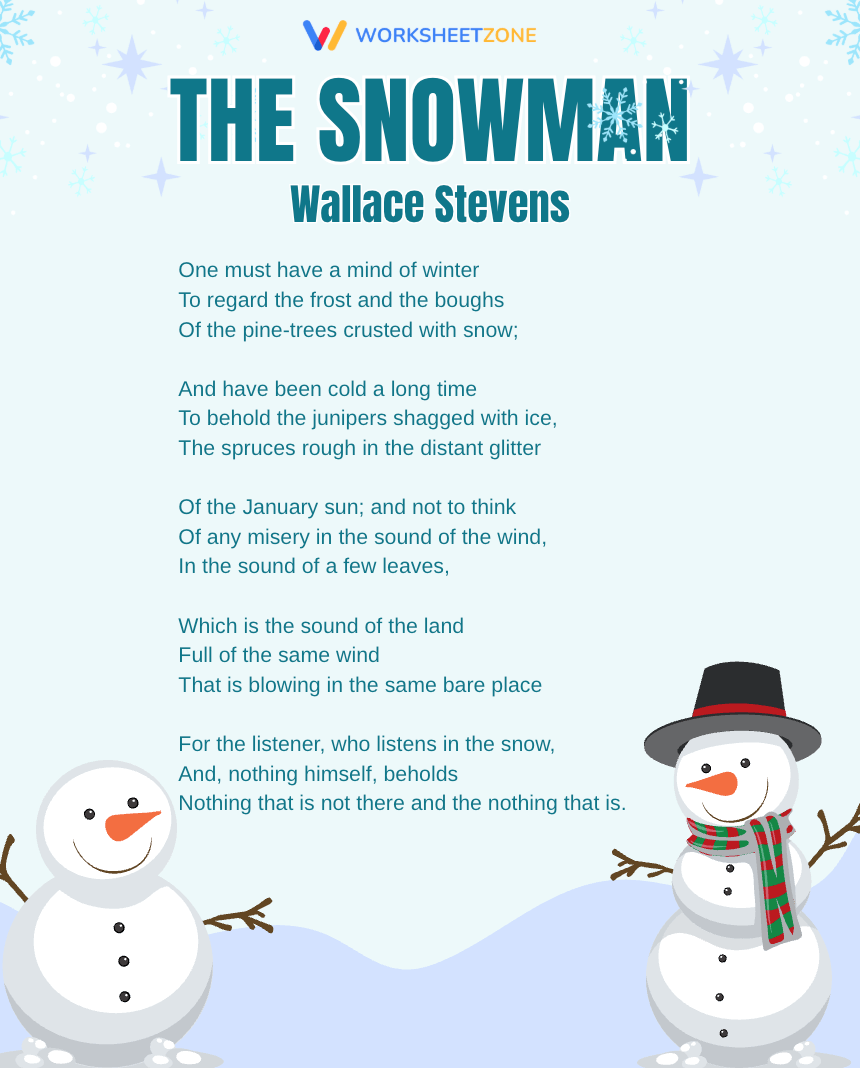
10. “The Snowman” by Wallace Stevens
Wallace Stevens’ famous philosophical poem uses the image of the snowman to explore ideas of perception, emptiness, and the role of the observing mind in defining the winter landscape. While abstract and complex, it can be introduced to older children for its crisp, beautiful description of a cold, silent world. The poem is a sophisticated contemplation of the profound stillness of midwinter.
“One must have a mind of winter
To regard the frost and the boughs
Of the pine-trees crusted with snow;”
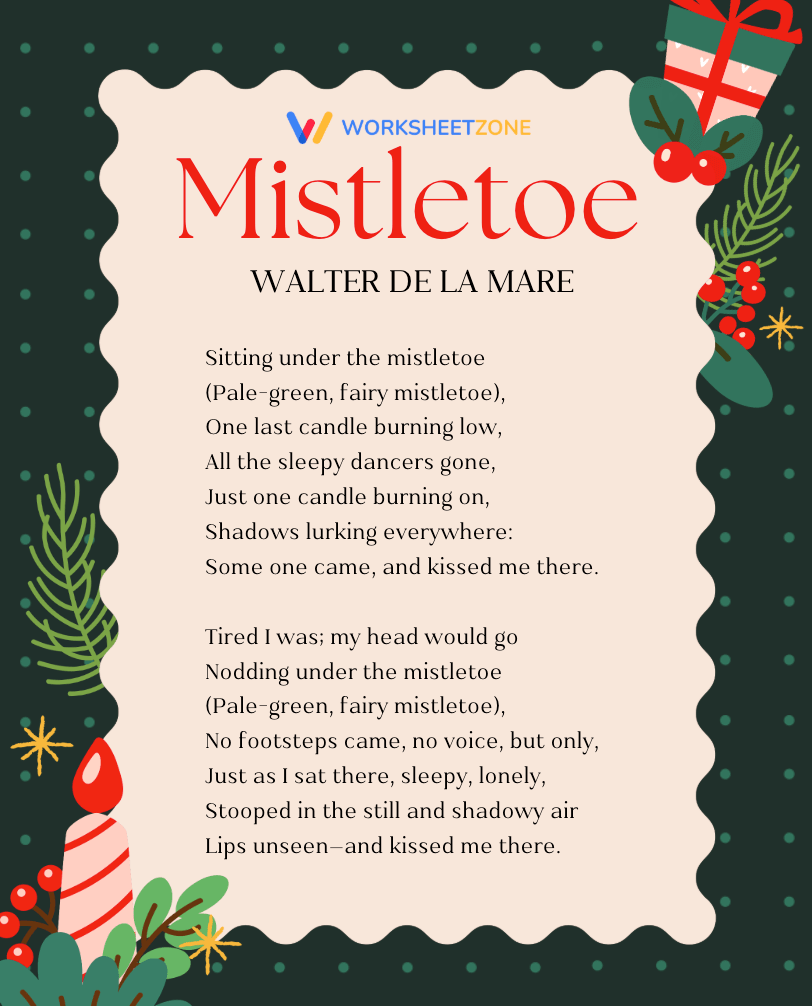
11. “Mistletoe” by Walter de La Mare
Walter de La Mare’s poem focuses on the traditional winter greenery of mistletoe, often examining its symbolic, slightly mysterious role during the holiday season. It uses evocative, slightly ethereal language to capture the plant’s quiet presence and the customs associated with it. The poem is a delicate piece that highlights the ancient, natural folklore woven into Christmas celebrations.
“Sitting under the mistletoe
(Pale-green, fairy mistletoe),
One last candle burning low,
All the sleepy dancers gone, …”
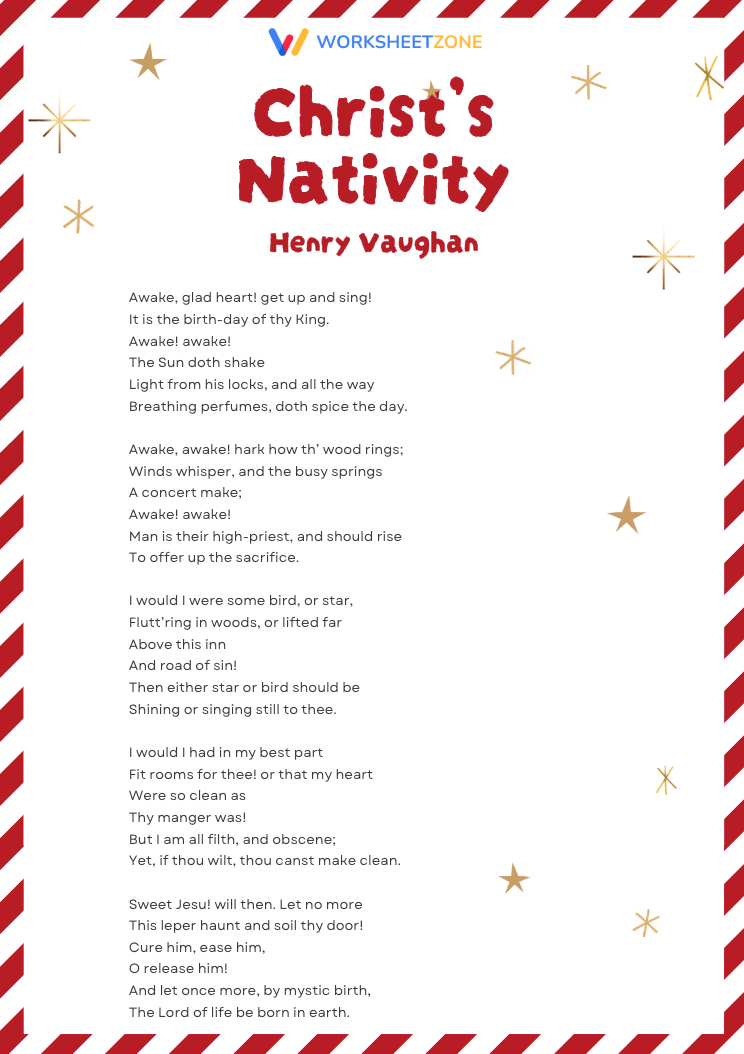
12. “Christ’s Nativity” by Henry Vaughan
This powerful seventeenth-century poem provides a deeply religious and majestic contemplation of the birth of Jesus, written with rich, elevated language. Vaughan reflects on the paradox of the Divine becoming human in such a humble place, emphasizing the spiritual light that burst forth from the event. It is a thoughtful and significant piece best suited for older children exploring the theological depth of Christmas.
“Awake, glad heart! get up and sing!
It is the birth-day of thy King.
Awake! Awake!”
13. “How the Grinch Stole Christmas” (Excerpt) by Dr. Seuss
While a much longer narrative, excerpts of this story are often treated as verse, delivering the timeless moral lesson that the true spirit of Christmas “doesn’t come from a store.” Dr. Seuss uses his signature playful rhythm and inventive rhymes to tell the story of the Grinch’s transformative change of heart. The poem is a hilarious, foundational holiday story that ultimately celebrates community, kindness, and unmaterialistic joy.
“So he paused. And the Grinch put his hand to his ear.
And he did hear a sound rising over the snow.
It started in low. Then it started to grow.”

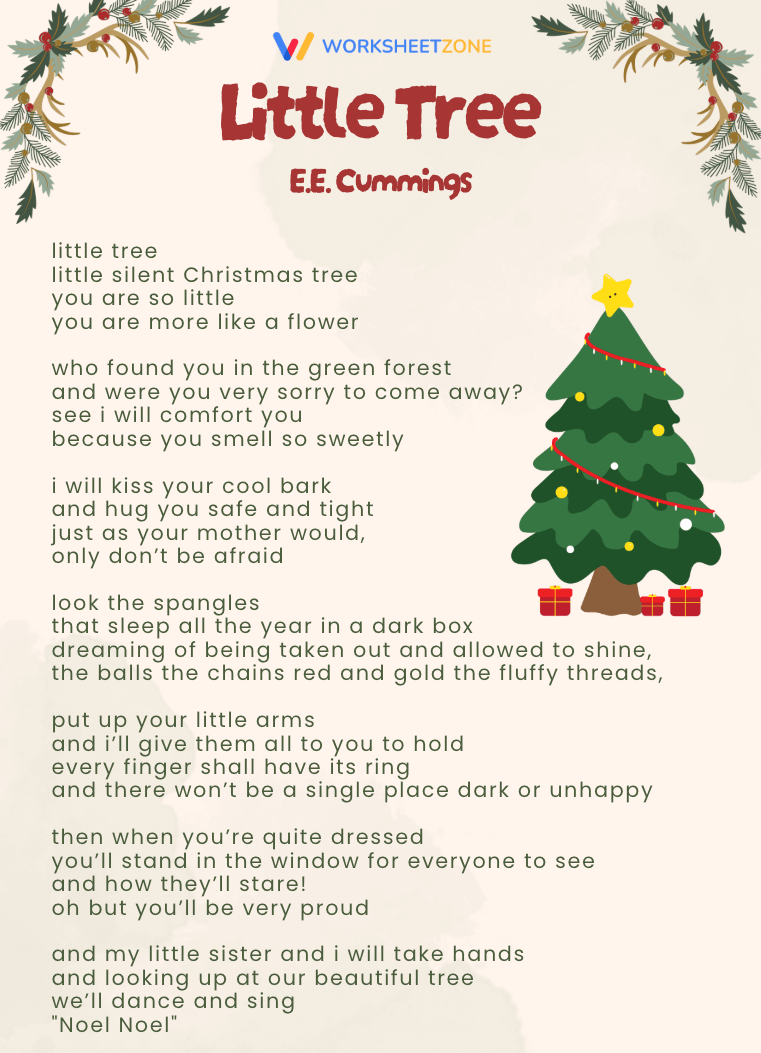
14. “Little Tree” by E.E. Cummings (Child-Friendly Excerpt)
This is an exceptionally unique poem focusing on the simple, personal pleasure of decorating a humble Christmas tree with quiet care. Its distinctive structure emphasizes the intimacy and low-key charm of establishing a cherished holiday tradition. The verse is a peaceful invitation to find beauty and significance in the small, unassuming details of Christmas preparations.
“little tree
little silent Christmas tree
you are so little
you are more like a flower”
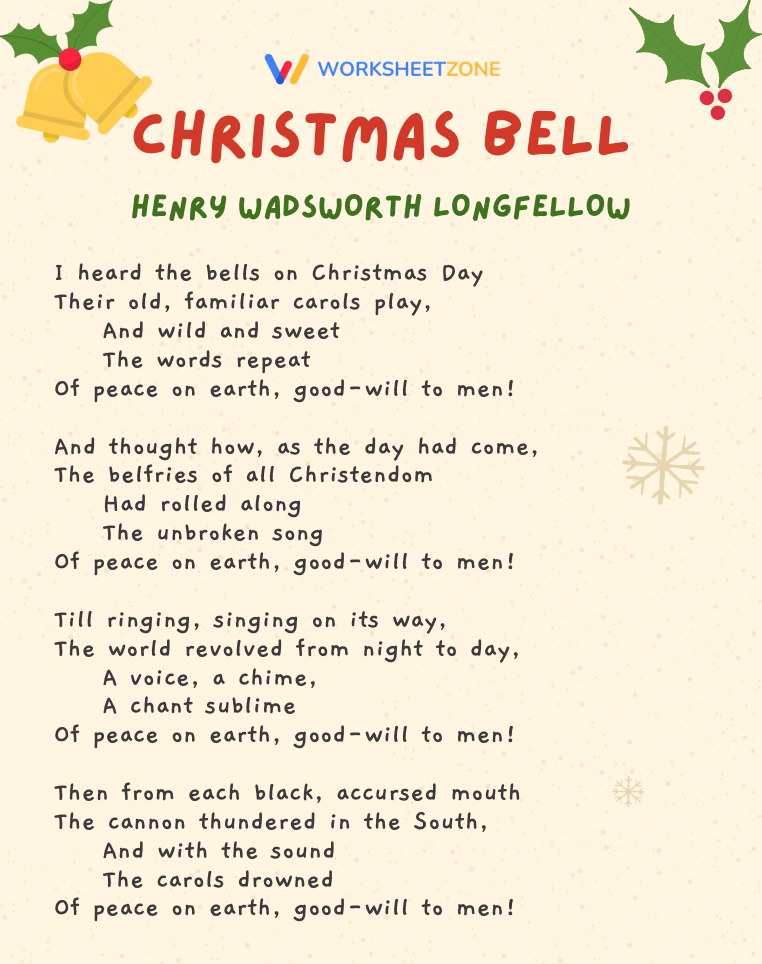
15. “Christmas Bell” (Excerpt) by Henry Wadsworth Longfellow
This powerful excerpt is renowned for its uplifting, timeless message of “peace on earth, good-will to men,” connecting the celebratory ringing of church bells to a universal call for harmony. The poem acknowledges the world’s sorrows but finds an overwhelming source of strength in the Christmas message. The resonant bells symbolize an enduring, triumphant faith in human goodness.
“I heard the bells on Christmas Day
Their old, familiar carols play,
And wild and sweet
The words repeat
Of peace on earth, good-will to men!”
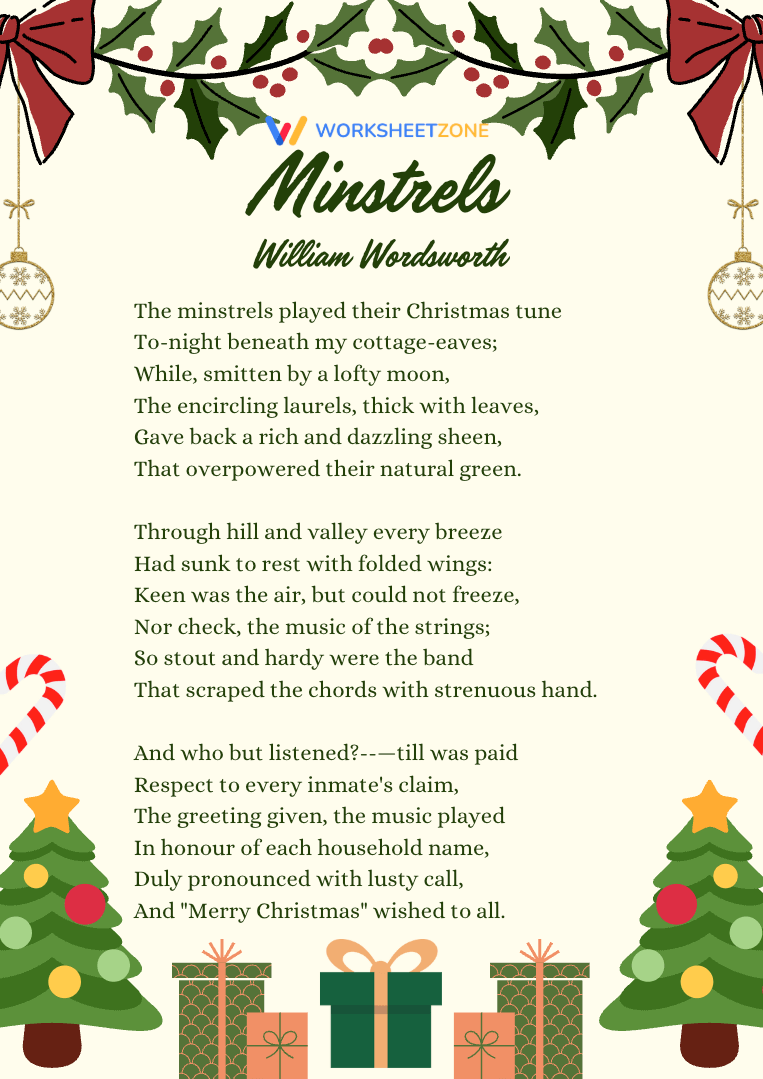
16. “Minstrels” by William Wordsworth
Wordsworth’s poem beautifully evokes the historical tradition of Christmas Minstrels – traveling singers and performers who spread cheer through carols and music. It celebrates the infectious joy and fellowship that music brings to a cold community during the festive season. The verses paint a vibrant, memorable picture of sounds echoing through the winter night, bringing the spirit of the season to every door.
“The minstrels played their Christmas tune
To-night beneath my cottage-eaves;
While, smitten by a lofty moon,
The encircling laurels, thick with leaves,
Gave back a rich and dazzling sheen,
That overpowered their natural green.”
17. “The Gift that None Could See” (Excerpt) by Mary E. Wilkins Freeman
This poem or story excerpt focuses on a precious, intangible gift—often love, kindness, or good spirit—that is more valuable than any physical present. It tells a heartfelt tale that emphasizes the true meaning of giving and the importance of things that cannot be bought or wrapped. The verse provides a moving moral lesson about prioritizing genuine, heartfelt generosity over material wealth.
“‘There are silver pines on the window-pane,
A forest of them,’ said he;
‘And a huntsman is there with a silver horn,
Which he bloweth right merrily.”

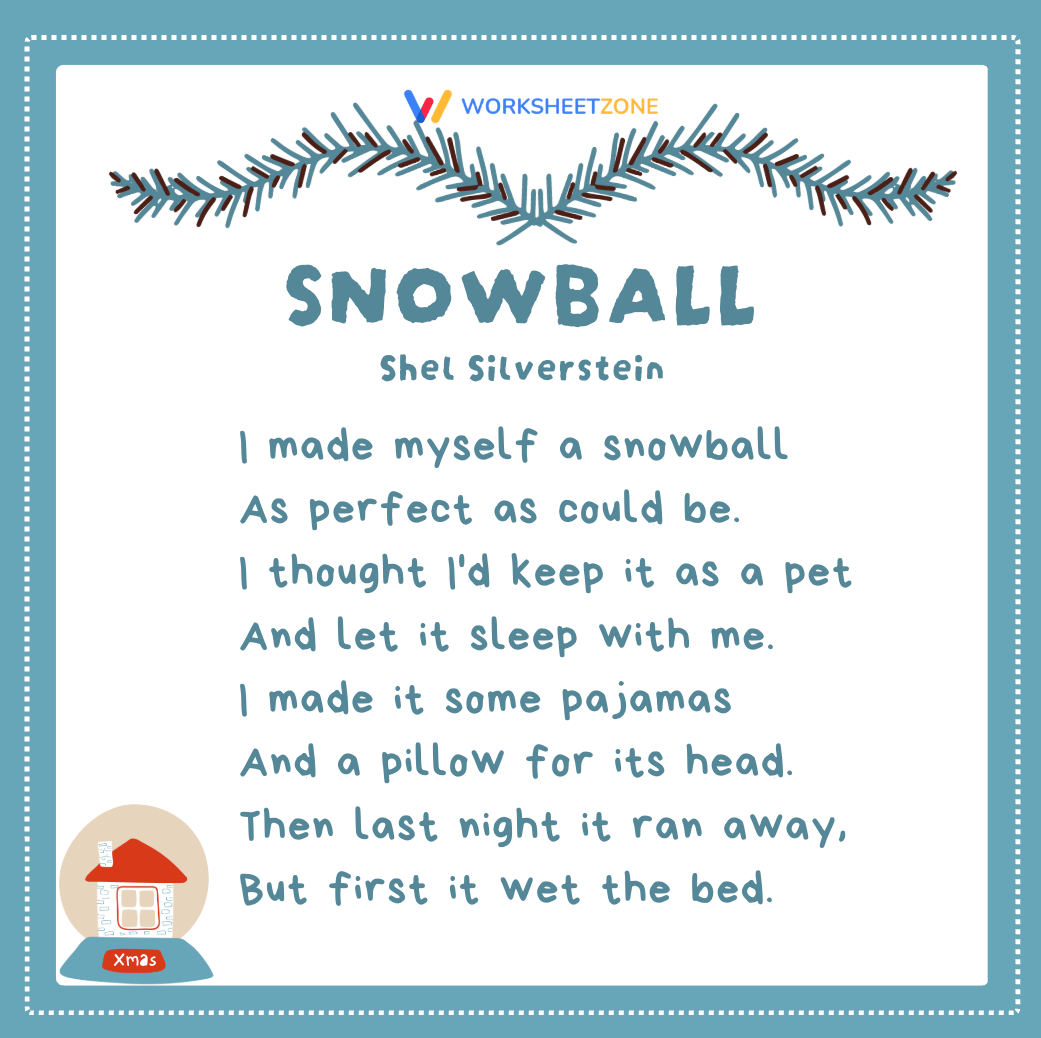
18. “Snowball” by Shel Silverstein
Shel Silverstein’s poem approaches the winter season with his characteristic humor and imaginative wordplay, focusing on the simple delight and messiness of creating a snowball. The verse features a fun, slightly absurd narrative that captures a child’s playful interaction with the cold, snowy weather. It is a lighthearted and relatable piece, perfect for sharing a silly moment about winter fun.
“I made myself a snowball
As perfect as could be.”
19. “The Little Christmas Carollers” by L.A. France
This charming verse celebrates the active tradition of caroling, focusing specifically on the sweet, sincere sounds of children sharing their songs with neighbors. It highlights themes of community outreach and the simple act of generously spreading holiday cheer through music. The poem beautifully describes small groups bundled up against the cold, joyfully singing their hearts out.
“We are a band of carolers,
We march through frost and snow,
But care not for the weather
As on our way we go.”

20. “Why do the bells of Christmas ring?” by Eugene Field
This thoughtful poem poses a direct, probing question about the reason behind the ringing of Christmas bells, encouraging curiosity in young readers. It then provides an answer that spiritually connects the celebratory sound to the joy and message of the Nativity. The poem is both accessible and profound, prompting children to think about the deeper meaning of cherished holiday customs.
“Why do the bells of Christmas ring?
Why do little children sing?”

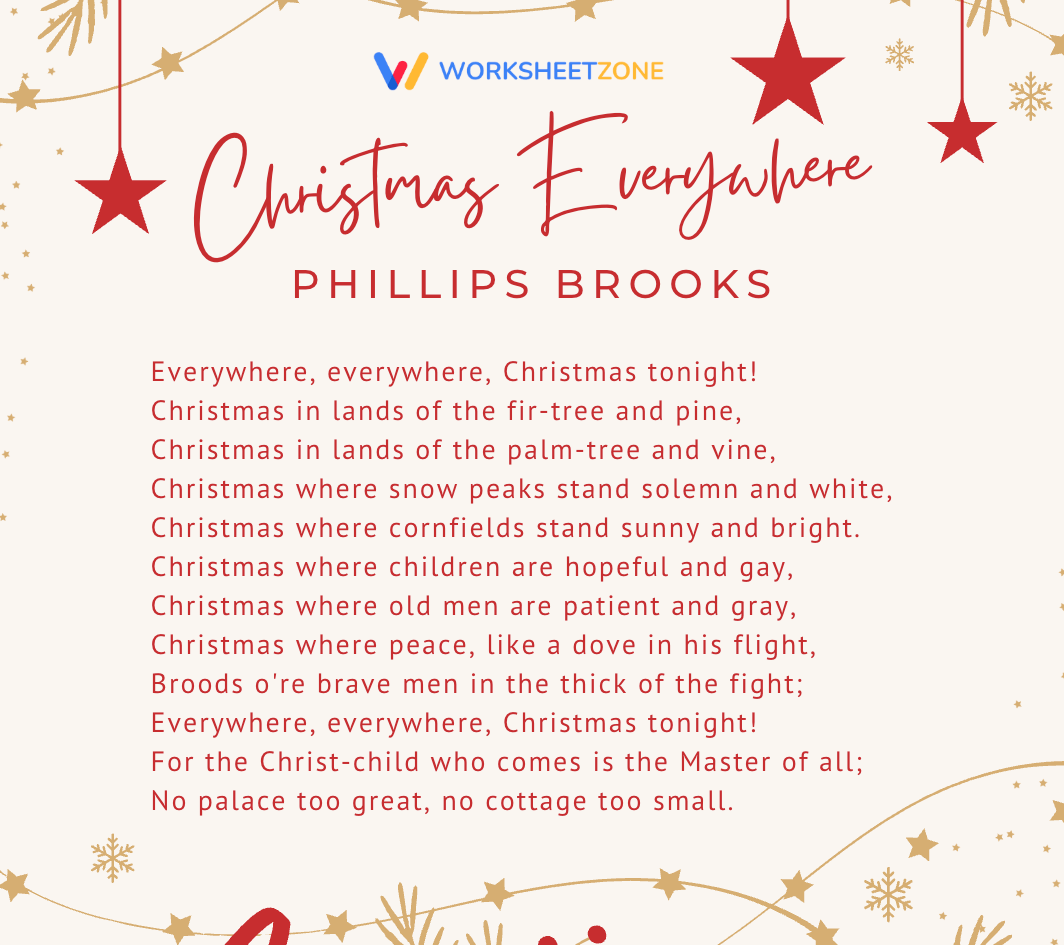
21. “Christmas Everywhere” by Phillips Brooks
Phillips Brooks’ poem delivers a powerful, optimistic message, asserting that the spirit of Christmas – love, peace, and goodwill – is a global force, not confined to one place or time. It encourages a generous, expansive view of the holiday’s positive influence on the entire world. The verses are inspiring, calling readers to embrace the core values of the season in their daily lives.
“Everywhere, everywhere, Christmas tonight!
Christmas in lands of the fir-tree and pine,
Christmas in lands of the palm-tree and vine,
Christmas where snow peaks stand solemn and white,
Christmas where cornfields stand sunny and bright.”
22. “When Santa Claus Comes” by Unknown author
This anonymous poem builds excitement around the specific details of Santa’s secret, late-night journey and the resulting joy of finding gifts on Christmas morning. It encourages children to imagine the sights and sounds of the night—the sleigh, the descent, and the filled stockings—while they sleep. The verse is a straightforward and enthusiastic celebration of the most anticipated moment of the holiday.
“A good time is coming,
I wish it were here
The very best time
in the whole of the year”

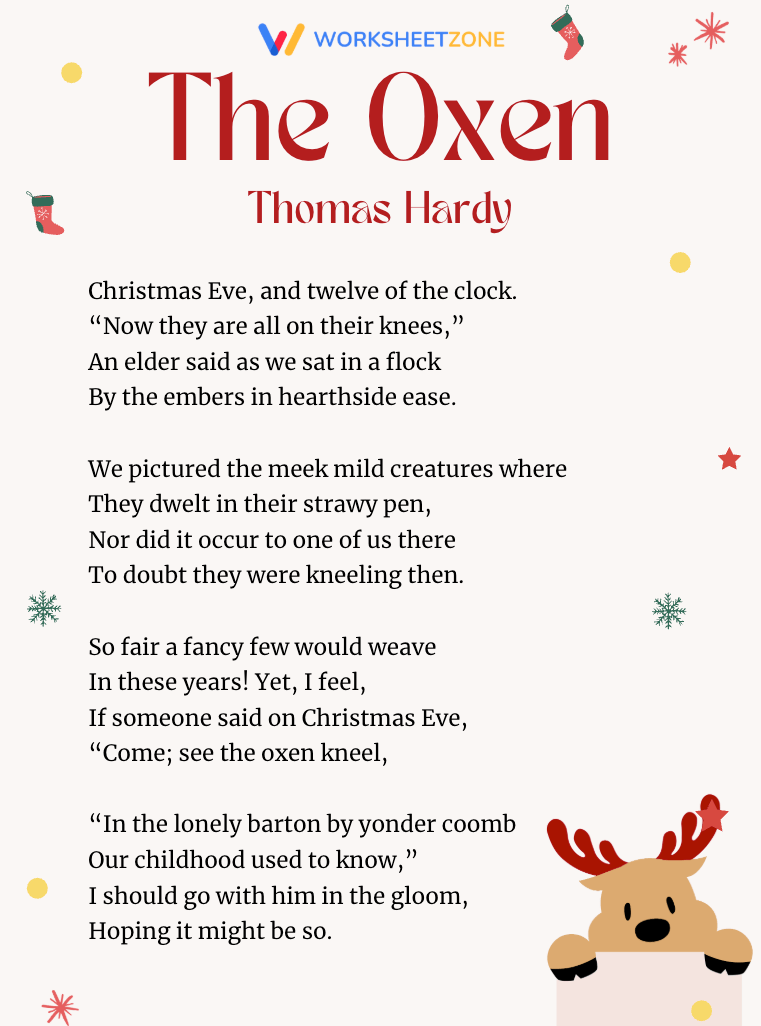
23. “The Oxen” by Thomas Hardy (Child-Friendly Excerpt)
Hardy’s poem draws on a beautiful old tradition that suggests the oxen in their stalls kneel down at midnight on Christmas Eve to silently honor the Christ Child. It is a contemplative and evocative piece that connects the Christmas celebration with ancient folklore and the reverence found in nature. The verses paint a quiet, sacred image of the animals’ humble devotion.
“Christmas Eve, and twelve of the clock.
‘Now they are all on their knees,’
An elder said as we sat in a flock
By the embers in hearthside ease.”
24. “Five Little Reindeer” (Traditional Counting Rhyme)
This delightful, rhythmic counting poem is perfect for the youngest audience, using repetition and simple fun to celebrate Santa’s sleigh team. It helps children practice counting down while building excitement for the grand journey the reindeer undertake on Christmas Eve. The verses are simple, engaging, and a wonderful way to interact with the iconic Christmas characters.
“Five little reindeer flying in the sky!
One little reindeer flew into a pie! Oops!
Four little reindeer flying in the sky!
One little reindeer went too high! Oops!”

25. “Writing a Letter to Santa” by Kelly Roper
Kelly Roper’s poem captures the universal, earnest process of a child sitting down to compose their special list of wishes for Santa Claus. It humorously and affectionately details the careful thought, the urgency, and perhaps the smudges involved in penning this crucial piece of holiday mail. This is a highly relatable, contemporary piece that celebrates this important holiday tradition.
“I’m writing a letter to Santa,
To tell him I’ve been oh-so-good.
I’ve been such a sweet little angel,
And done all the things I should.”

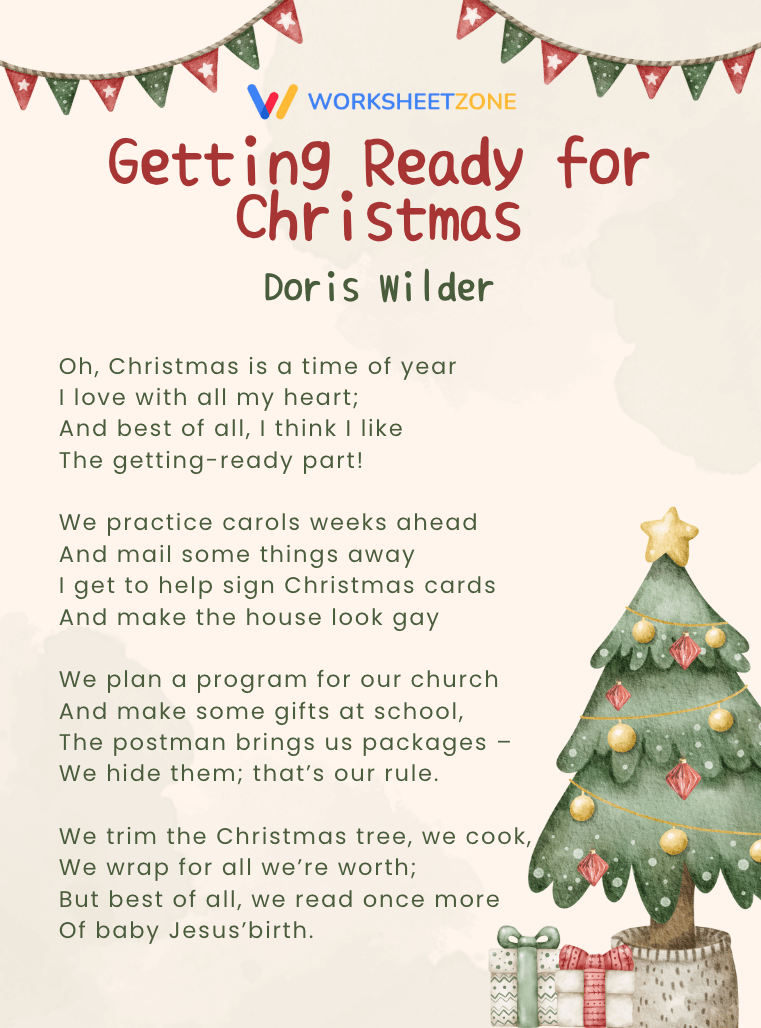
26. “Getting Ready for Christmas” by Doris Wilder
This poem focuses on the cheerful domestic chaos and excitement involved in preparing the home for the festive season, from decorating the tree to baking cookies. It details the various activities that build anticipation in the days leading up to Christmas Day. The verse beautifully encapsulates the warmth and bustle of family traditions and the joyful anticipation of the holiday.
“Oh, Christmas is a time of year
I love with all my heart;
And best of all, I think I like
The getting-ready part!”
27. “The Day Before Christmas” by Unknown author
This poem perfectly captures the intense anticipation and excitement that builds during the long hours just prior to Christmas morning. It details the busy household preparations, the final touches on decorations, and the nearly unbearable wait for Santa’s arrival after bedtime. The verse is highly relatable, focusing on the magical suspense and last-minute flurry of activity that defines the 24th of December.
“We have been helping with the cake,
And licking out the pan,
And wrapping up our packages,
As neatly as we can.”

28. “Christmas is a Full Day of Joy” by Unknown author
This cheerful, traditional poem celebrates the entire scope of Christmas Day, moving beyond just the gift opening to embrace family togetherness, feasting, and the shared spirit of happiness. It emphasizes the continuous stream of joyful activity and warmth that fills the home from dawn till dusk. The verse is an optimistic affirmation that the holiday is a complete, multi-faceted celebration of love and cheer.
“Christmas is a day full of joy,
Ask any girl or boy.”

29. “Christmas Mail” by Ted Kooser
Ted Kooser’s poem offers a quiet, observational look at the tradition of holiday mail, focusing on the cards and letters that connect people across distances during the season. It reflects on the importance of these paper greetings as tangible signs of shared goodwill and enduring friendships. The verse is a thoughtful piece that elevates the simple act of sending and receiving cards into a meaningful ritual of connection.
“Cards in each mailbox,
angel, manger, star and lamb,
as the rural carrier,
driving the snowy roads,
hears from her bundles”

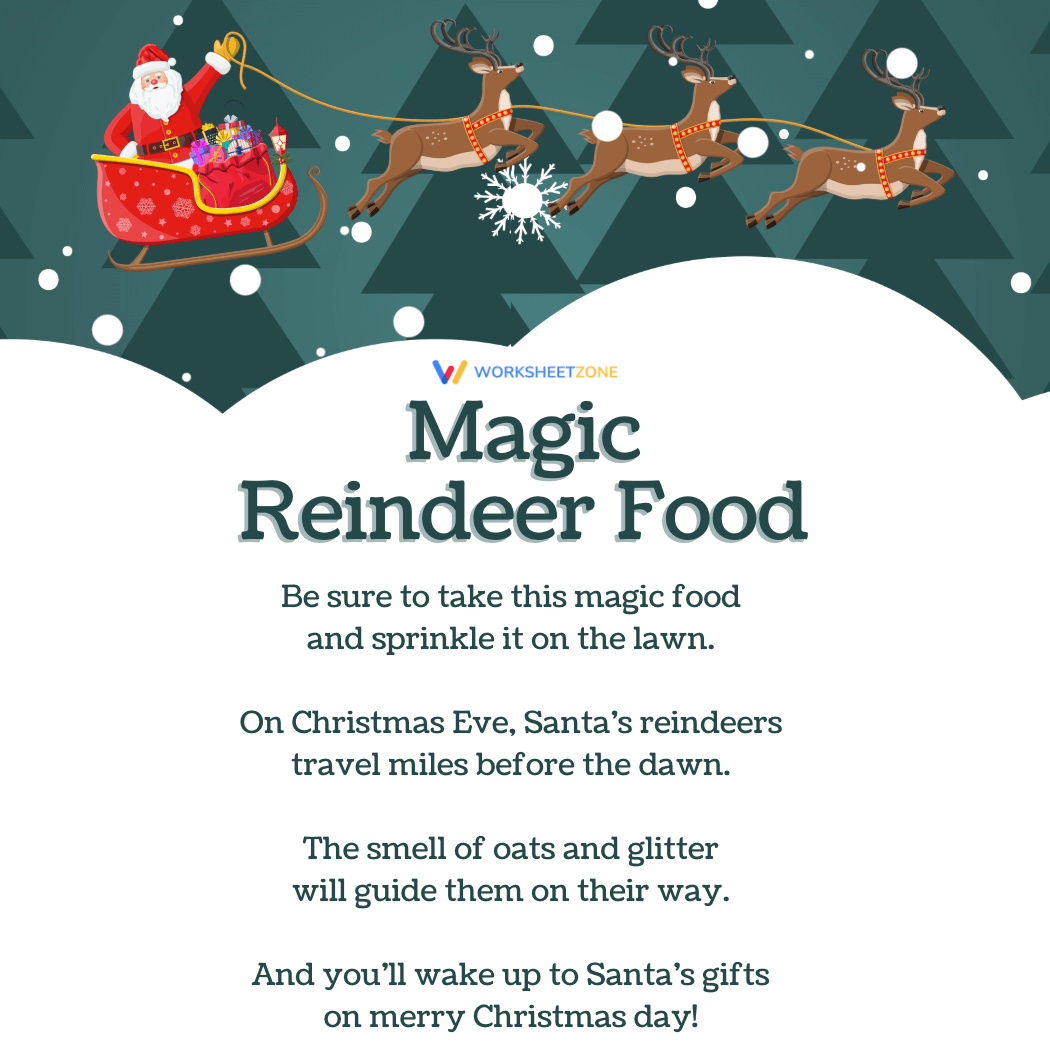
30. “Magic Reindeer Food” by Unknown author
This fun, lighthearted poem centers on the relatively modern tradition of mixing or sprinkling “magic reindeer food”—usually oats and glitter—outside on Christmas Eve. It encourages children to actively participate in preparing for Santa’s arrival by ensuring his sleigh team has the fuel they need for their long journey. The verse is engaging and imaginative, adding an extra layer of interactive magic to the night before Christmas.
“Be sure to take this magic food
and sprinkle it on the lawn.”
31. “Christmas Giving” by Iris W. Bray
Iris W. Bray’s poem provides a heartfelt reflection on the true meaning of generosity during the holidays, emphasizing that the most valuable presents are those given with sincerity and love. It subtly moves beyond material gifts to discuss the giving of time, kindness, and compassion to others. The verse is a wonderful piece for teaching children that the spirit of selfless giving is the most enduring aspect of Christmas.
“Christmas is for giving
And for showing that we care,
For honoring the Christ Child
With the loving gift we share”

FAQs
1. Why are Christmas poems beneficial for elementary school students?
Christmas poems serve as excellent tools for developing essential literacy skills like phonemic awareness, reading fluency, and vocabulary acquisition. Because they often use rhyming patterns and predictable rhythms, children find it easier to memorize and recite the verses, which builds confidence in public speaking. Furthermore, these poems introduce cultural traditions and figurative language in an engaging, festive context.
2. How can teachers incorporate these poems into a classroom holiday program?
Teachers can assign different stanzas to individual students for a group recitation or use them as lyrics for festive choral readings. Pairing poems with visual arts, such as creating illustrations for “The Snowman” or “Little Tree,” helps reinforce reading comprehension through creative expression. These short verses are also ideal for “poetry breaks” during the busy weeks leading up to winter vacation.
3. What are some fun ways to read these poems with children at home?
Creating a “Christmas Poetry Hour” by the fireplace or under the tree lights can make reading these verses a cherished family tradition. Parents can encourage children to act out the movements of the “Five Little Reindeer” or use different voices for the “Friendly Beasts.” Sharing these poems during bedtime helps calm the high energy of the season while fostering a love for literature.
Conclusion
Christmas poems for kids help create treasured holiday memories while encouraging a love of poetry, rhythm, and storytelling. Whether you’re using them for classroom activities, bedtime reading, or family celebrations, these joyful verses bring warmth and meaning to the season. Share them aloud, pair them with crafts, or invite kids to write poems of their own inspired by the holidays. With so many delightful options, you’ll always have a poem ready to brighten your Christmas celebration.
Looking for more fun Christmas activities for kids? Check out our Christmas-themed worksheets to keep the holiday spirit going!