


























1 / 5
0
Views
0
Downloads


0.0
0
Save
0 Likes
Share
Abiotic and Biotic Factors Reading Comprehension
0 Views
0 Downloads
Paste this activity's link or code into your existing LMS (Google Classroom, Canvas, Teams, Schoology, Moodle, etc.).
Students can open and work on the activity right away, with no student login required.
You'll still be able to track student progress and results from your teacher account.
Information
Description
What It Is:
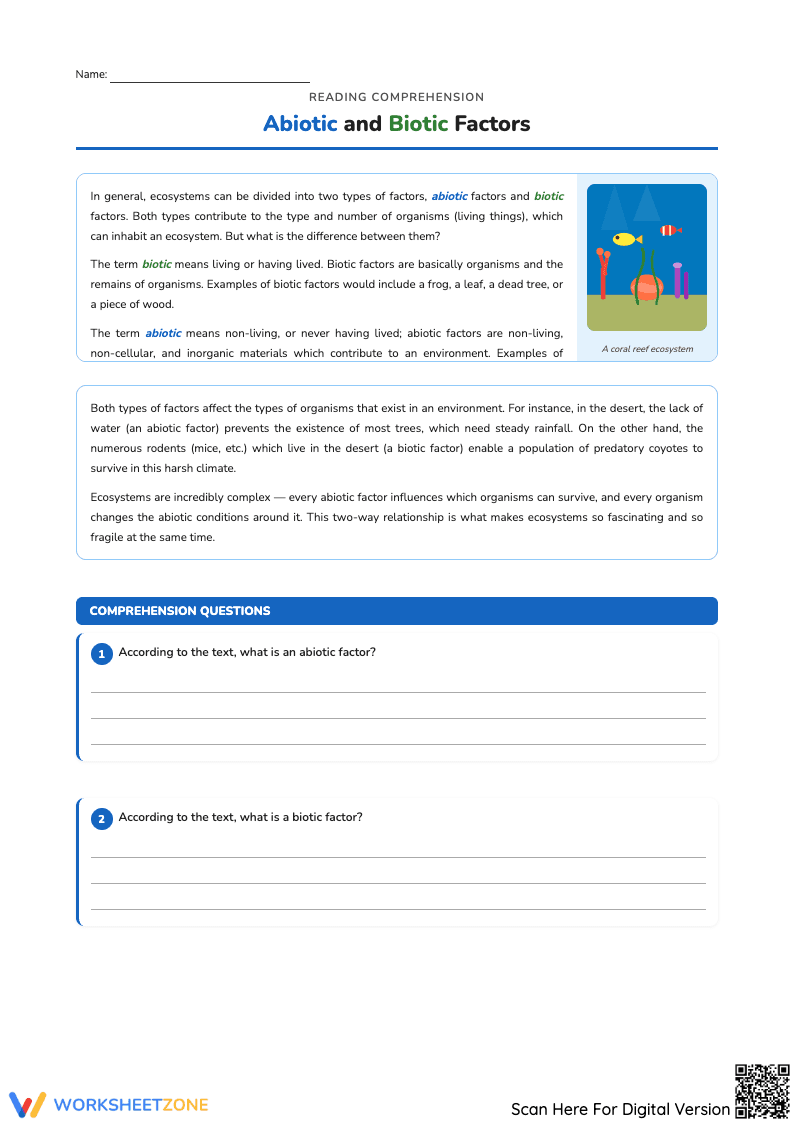
This is a reading comprehension worksheet focused on abiotic and biotic factors in ecosystems. The worksheet includes a passage explaining the difference between abiotic (non-living) and biotic (living) factors, followed by five comprehension questions. The questions require students to define abiotic and biotic factors, identify examples of each, explain why a dead tree is still considered a biotic factor, and identify abiotic and biotic factors in a coral reef ecosystem. There's also an image of a coral reef.
Grade Level Suitability:
This worksheet is suitable for grades 4-6. The reading level is appropriate for this age group, and the concepts of ecosystems, abiotic, and biotic factors are typically introduced in these grades. The questions require students to understand and apply the definitions provided in the text.
Why Use It:
This worksheet helps students develop their reading comprehension skills while learning about fundamental ecological concepts. It reinforces the understanding of abiotic and biotic factors and encourages critical thinking through application-based questions. The coral reef example also introduces students to a specific ecosystem.
How to Use It:
Students should first read the passage carefully, paying attention to the definitions of abiotic and biotic factors. Then, they should answer the comprehension questions, referring back to the text as needed. For question 3, they need to write either A or B in the blank spaces. For question 5, they can use the picture as a hint.
Target Users:
This worksheet is designed for elementary and middle school students learning about ecosystems and environmental science. It is also useful for teachers looking for engaging reading comprehension activities that align with science curriculum standards. Homeschooling parents can also use this for science lessons.
This is a reading comprehension worksheet focused on abiotic and biotic factors in ecosystems. The worksheet includes a passage explaining the difference between abiotic (non-living) and biotic (living) factors, followed by five comprehension questions. The questions require students to define abiotic and biotic factors, identify examples of each, explain why a dead tree is still considered a biotic factor, and identify abiotic and biotic factors in a coral reef ecosystem. There's also an image of a coral reef.
Grade Level Suitability:
This worksheet is suitable for grades 4-6. The reading level is appropriate for this age group, and the concepts of ecosystems, abiotic, and biotic factors are typically introduced in these grades. The questions require students to understand and apply the definitions provided in the text.
Why Use It:
This worksheet helps students develop their reading comprehension skills while learning about fundamental ecological concepts. It reinforces the understanding of abiotic and biotic factors and encourages critical thinking through application-based questions. The coral reef example also introduces students to a specific ecosystem.
How to Use It:
Students should first read the passage carefully, paying attention to the definitions of abiotic and biotic factors. Then, they should answer the comprehension questions, referring back to the text as needed. For question 3, they need to write either A or B in the blank spaces. For question 5, they can use the picture as a hint.
Target Users:
This worksheet is designed for elementary and middle school students learning about ecosystems and environmental science. It is also useful for teachers looking for engaging reading comprehension activities that align with science curriculum standards. Homeschooling parents can also use this for science lessons.


