


























Views
Downloads

Printable Beginning Sounds Worksheet | Grade K-1 ELA
Paste this activity's link or code into your existing LMS (Google Classroom, Canvas, Teams, Schoology, Moodle, etc.).
Students can open and work on the activity right away, with no student login required.
You'll still be able to track student progress and results from your teacher account.
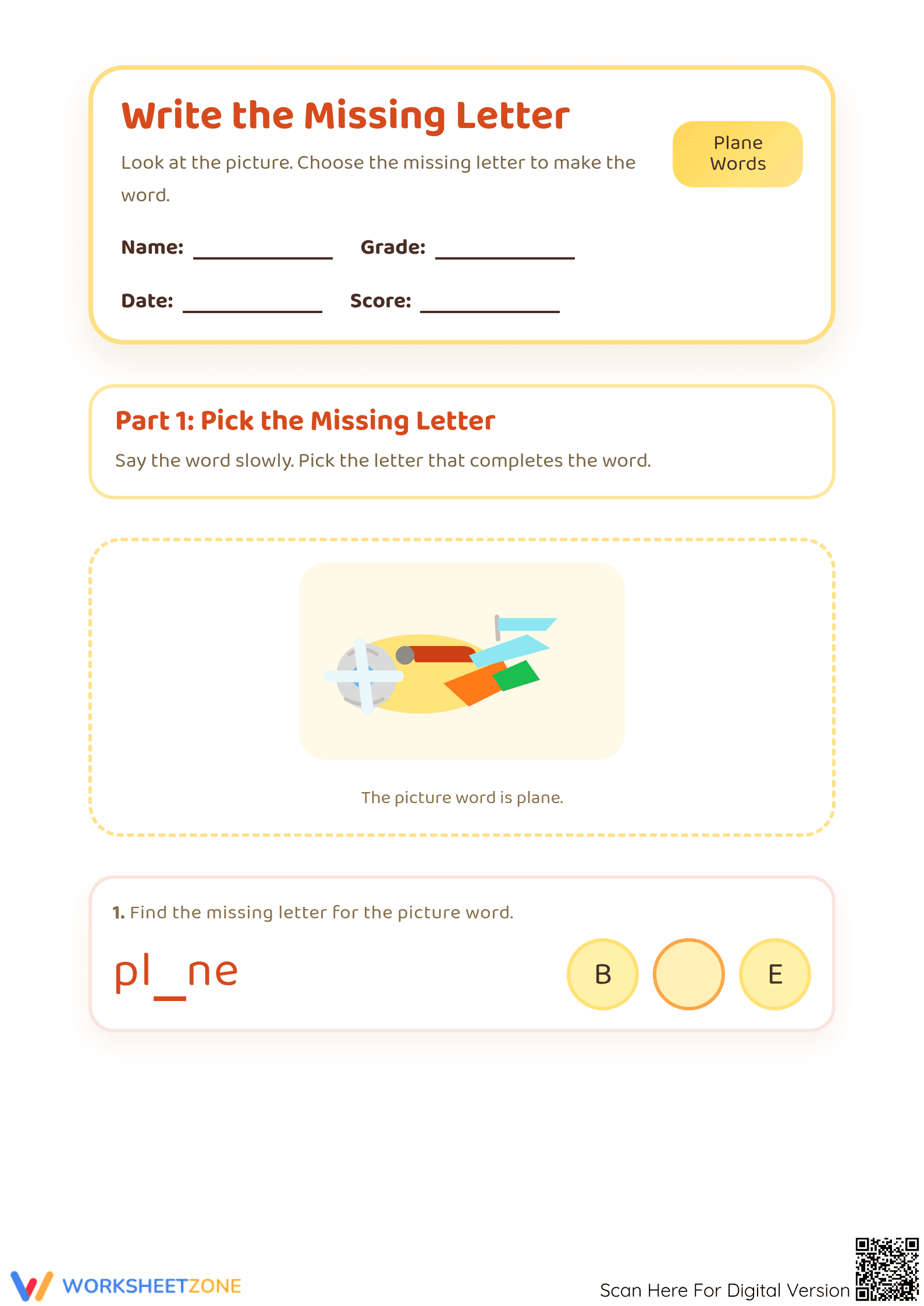
Build foundational literacy with this essential beginning sounds worksheet designed for early learners. This resource helps students establish a strong one-to-one correspondence between letters and sounds through engaging visual prompts. By identifying missing initial letters in common words, students strengthen their phonemic awareness and prepare for reading success.
At a Glance
- Grade: Kindergarten · Subject: English Language Arts
- Standard:
CCSS.ELA-LITERACY.RF.K.3.A— Demonstrate one-to-one letter-sound correspondences by identifying and producing primary consonant sounds- Skill Focus: Beginning Sounds and Letter Recognition
- Format: 2 pages · 5 problems · Answer key included · PDF
- Best For: Small group phonics and independent practice
- Time: 10–15 minutes
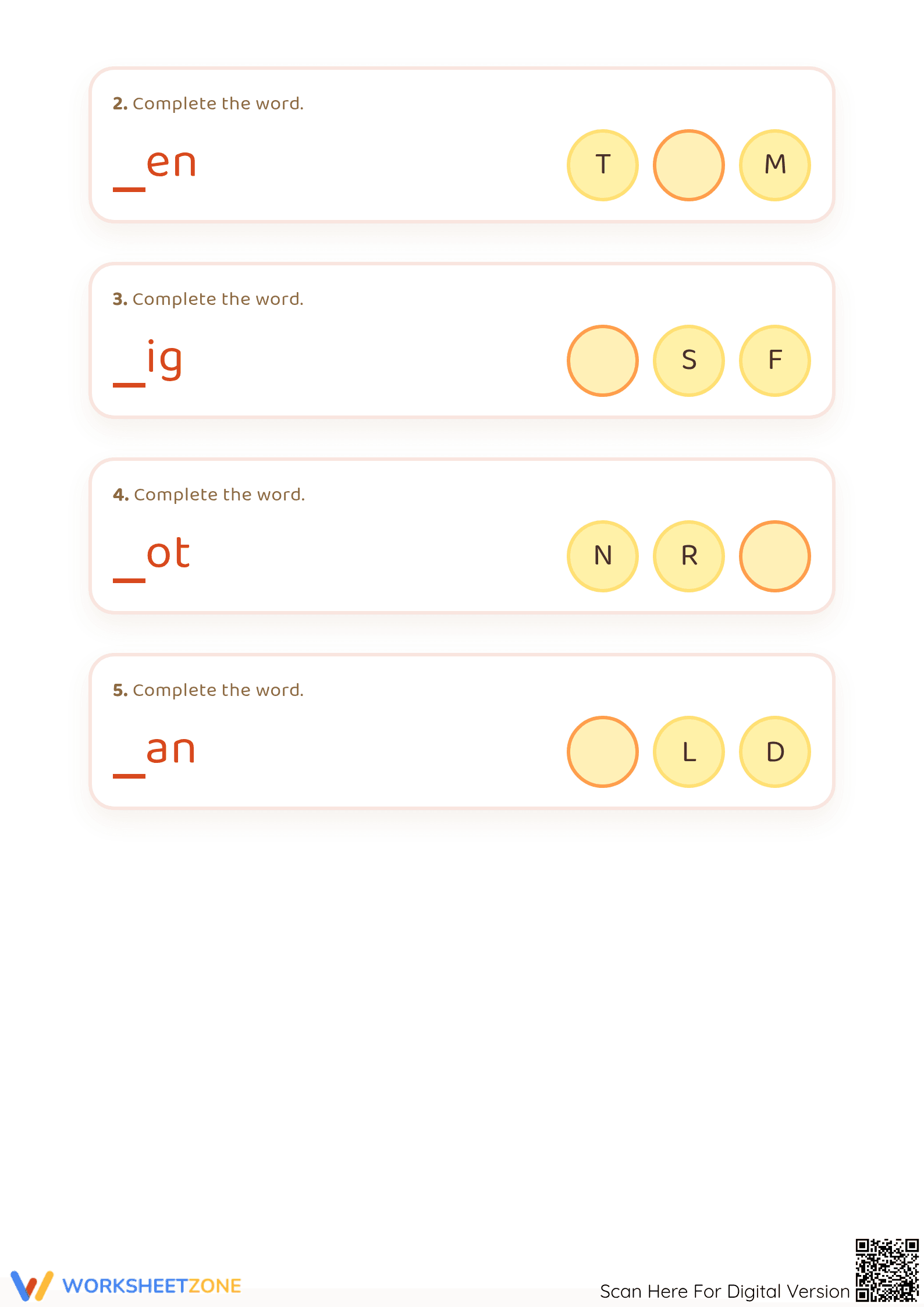
This comprehensive two-page set features five distinct word-completion tasks accompanied by colorful illustrations for context. Each problem presents a familiar word with a missing initial or medial letter, followed by multiple-choice options to scaffold student choice. The inclusion of a detailed answer key ensures quick checking and immediate student feedback.
Designed for maximum efficiency, this worksheet follows a simple three-step workflow. Teachers can print the document in 30 seconds, distribute it to students with zero additional setup, and review work using the included answer key in less than one minute. This total preparation time of under two minutes makes it an ideal resource for substitute plans.
This resource is meticulously aligned with CCSS.ELA-LITERACY.RF.K.3.A, which requires students to demonstrate basic knowledge of one-to-one letter-sound correspondences. It also supports RF.1.3 by encouraging students to decode regularly spelled one-syllable words. Both standard codes can be copied directly into lesson plans, IEP goals, or district curriculum mapping tools.
Integrate this worksheet during the "You Do" phase of a gradual release model to assess student mastery of initial consonant sounds. It serves as an excellent formative assessment tool; teachers should observe whether students are subvocalizing the word sounds while selecting their answers. Expect students to complete both pages within a fifteen-minute instructional block during literacy centers.
This activity is perfect for Kindergarten and Grade 1 students bridging the gap between phonemic awareness and phonics. The visual supports make it effective for English Language Learners and students receiving Tier 2 intervention. Pair this worksheet with a decodable passage to extend phonics instruction into meaningful text contexts.
Research by Fisher & Frey (2014) emphasizes the importance of structured practice in developing the CCSS.ELA-LITERACY.RF.K.3.A standard, specifically the ability to map sounds to letters. This worksheet facilitates that mapping by requiring students to identify beginning sounds through a combination of visual recognition and auditory processing. By isolating the initial phoneme in common words, learners build the decoding stamina necessary for complex text interaction. Studies indicate that early mastery of these one-to-one correspondences is a primary predictor of future reading fluency and comprehension levels in the primary grades. This printable tool provides the repetition needed to move these skills from guided practice to automaticity. Teachers can confidently use this data-driven resource to support literacy goals, knowing it aligns with contemporary pedagogical standards for phonics instruction and early childhood language development. The structured format ensures that students remain focused on the specific phonemic target without cognitive overload.


