Kindergarten Spacing Tracing Worksheets That Build Real Print Awareness
Why spacing between words matters in kindergarten
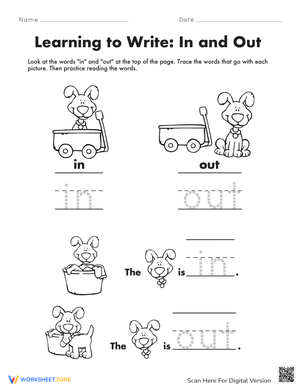
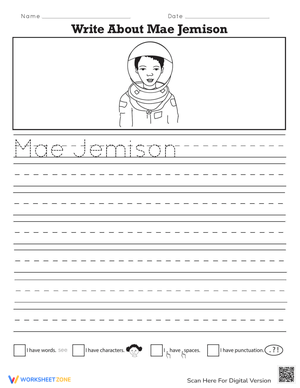
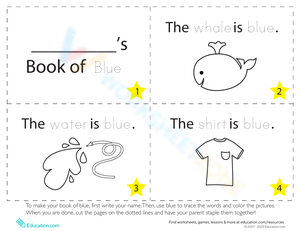
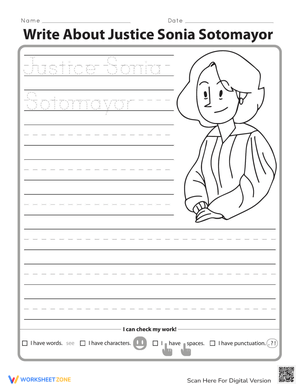
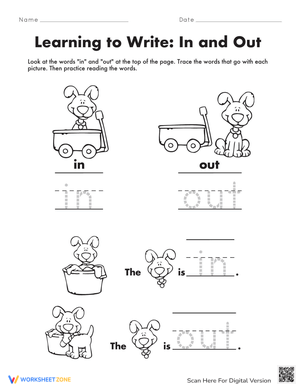
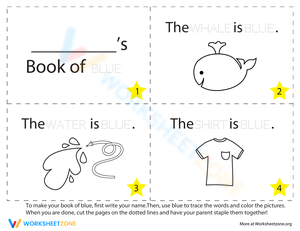
These spacing between words tracing printable worksheets for kindergarten give teachers a focused way to teach one early literacy behavior that students are expected to notice quickly: words are separated by spaces. That sounds simple, but it sits at the center of print awareness. When children can see where one word ends and the next word begins, they read short sentences more accurately, track print left to right with more control, and begin writing messages that other people can actually read.
In kindergarten, spacing is not just a handwriting habit. It is a concept-of-print skill. Students need to connect spoken language to printed language, which means hearing a sentence as separate words and seeing that same separation on the page. A tracing worksheet can slow the task down enough for children to notice each word boundary while they move through a short sentence. That combination of oral language, pointing, and tracing makes these pages useful for explicit early literacy instruction rather than simple pencil practice.
What tracing sentences teach beyond letter formation
Regular handwriting sheets usually emphasize how to form letters neatly on a line. A spacing worksheet has a different teaching target. The goal is for students to trace and read a complete sentence while noticing that each printed word stands alone. That changes what teachers watch for. Instead of focusing only on pencil grip or stroke order, the teacher is checking whether the student pauses at each space, tracks one word at a time, and understands why the blank gap is there.
That is why short sentence tracing can be more instructionally precise than isolated word copying. Students are not just reproducing marks on paper. They are rehearsing sentence structure, one-to-one word tracking, and readable writing all at once. For emergent readers, this matters because many spacing errors come from thinking of the sentence as one long stream of speech. Tracing gives them a visual routine for separating that stream into words they can point to, read, and later write independently.
Which classroom moments benefit most from spacing practice
Teachers usually get the strongest results when these printables are placed inside an existing literacy routine instead of used as stand-alone busy work. A five-minute mini-lesson, a center rotation, a small intervention table, or a quick reteach after shared writing all make sense. Because the sentences are short and predictable, students can complete the work without losing the print-awareness focus. That makes the worksheets especially useful when the class needs repeated review on the same target across several days.
- Use them after shared reading when students have just tracked a modeled sentence.
- Place them in literacy centers for students who still need visible reminders about word boundaries.
- Bring them to intervention groups when spacing errors appear in dictated or independent writing.
- Save a few pages for quick formative checks during morning work or independent review.
The best candidates are students who can already trace basic lines or letters but still crowd words together in sentence writing. These learners often do not need another alphabet sheet. They need practice seeing sentence units clearly and transferring that understanding into readable print.
Classroom Implementation
Before students ever pick up a pencil, model spacing in a whole-group routine. Write a simple sentence where every word is easy to hear and easy to see. Read it aloud, point under each word, and exaggerate the pause between words. Then show how a finger space or another consistent visual marker keeps the sentence readable. This direct modeling matters because students need to see spacing as part of reading and writing, not as a decorative extra.
A clean implementation sequence is straightforward. First, read the sentence aloud and have students echo it. Second, track each word together with a pointer or finger. Third, identify the spaces and explain that they show where one word stops and the next begins. Fourth, trace the sentence slowly, reminding students to lift their attention at each gap. Finally, reread the completed sentence so the print meaning stays connected to the motor action.
- Start with two- to four-word sentences before moving to longer lines.
- Keep vocabulary familiar so spacing stays the primary cognitive demand.
- Ask students to tap each word as they reread after tracing.
- Follow the worksheet with one short independent writing attempt using the same pattern.
Used this way, the worksheet becomes a bridge from teacher modeling to student application. It supports consistency across whole group, centers, and intervention without changing the instructional target.
What to watch for while students trace
Spacing worksheets are most valuable when teachers treat them as diagnostic. A student may complete a page neatly and still reveal that the concept is shaky. Watch for children who slide straight through the spaces without noticing them, who point under letters instead of whole words, or who can reread the sentence orally but cannot match each spoken word to a printed word. Those patterns suggest the student needs more print-awareness teaching, not more generic seatwork.
Another useful look-for is transfer. After tracing, ask the student to write one similar sentence independently. If the tracing is accurate but the original writing still compresses every word together, the child likely relied on imitation rather than understanding. That tells you to keep modeling and guided practice in place a little longer before expecting independent mastery.
When a child forms letters legibly but closes the gap between two words, the problem is often not fine-motor control. More often, the student is still mapping speech as a continuous stream instead of seeing each spoken word as a separate print unit. That distinction changes instruction: reteach word boundaries with pointing and rereading before assigning more handwriting drills.
How these worksheets support assessment and intervention
Reading Rockets, in Concepts of Print Assessment, highlights checking whether children understand that words are separated by spaces. That single observable behavior gives teachers a fast formative data point during sentence tracing: if a student tracks one spoken word at a time but omits spaces, the next lesson should tighten print-awareness instruction rather than handwriting practice.
The Reading Rockets pieces on Print Awareness and Goals for Kindergarten: Experimental Reading and Writing also support the idea that emergent readers benefit from explicit attention to how print works on the page. In classroom terms, that means teachers can use tracing worksheets to collect evidence during instruction, not just after it. A completed page shows whether the student is ready to move on, needs another modeled example, or should return to shorter sentences with stronger teacher support.
For intervention, the worksheets work best in tight cycles. Teach the concept, trace one or two short lines, reread them, and then ask for a simple transfer task. That rhythm keeps the activity anchored in literacy behavior. It also helps teachers separate three common issues: weak letter formation, weak sentence tracking, and weak understanding of spaces between words.
How to choose the right printable sequence
Not every tracing page will fit the same kindergarten group. The strongest sequence begins with very short, highly decodable or highly familiar sentence patterns. Students should be able to focus on spacing without being overloaded by unfamiliar vocabulary or complicated syntax. Repetition helps here. If the sentence frame stays stable while one word changes, children can devote more attention to noticing the spaces and less to figuring out what the line says.
It also helps to move from supported to less supported tasks. Start with bold tracing lines and obvious gaps between words. Then shift to lighter tracing, shorter prompts, or copy-under models once students show control. Teachers planning centers can keep multiple versions ready so review feels targeted rather than repetitive. The goal is not to make the worksheet harder for its own sake. The goal is to remove support gradually while keeping readable spacing intact.
For most classrooms, a good set of printables covers reteach, practice, and quick assessment. That gives teachers flexibility to match the page to the moment: mini-lesson follow-up, small-group correction, or independent review before writing workshop.
Frequently Asked Questions
1. How do spacing worksheets support concepts of print in kindergarten?
They help students see that printed sentences are made of separate words, not one continuous line of letters. When children trace, point, and reread short sentences, they practice identifying word boundaries and connecting spoken words to printed words.
2. What is the difference between tracing sentences and regular handwriting worksheets?
Handwriting worksheets mainly target letter formation and line control. Spacing worksheets target sentence readability and print awareness. Students still use pencil control, but the main check is whether they notice and preserve the spaces between words.
3. How can teachers model spacing between words before independent practice?
Write a short sentence, read it aloud, and point under each word. Pause at every gap and show a finger space as a visible marker. Then trace the sentence together and reread it so students connect spacing to meaning, not just to copying.
4. When should spacing practice be used in centers or small groups?
Use it when students already know many letters but still write sentences with crowded words. It fits well in literacy centers, intervention groups, or quick review after shared reading because the practice is brief, targeted, and easy to monitor.
Clear All