Why these kindergarten reading worksheets fit early readers
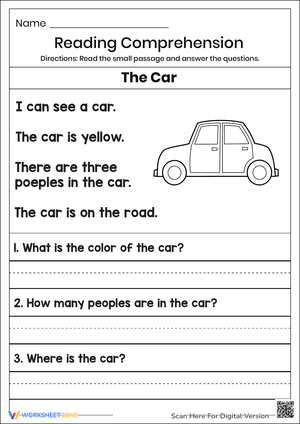
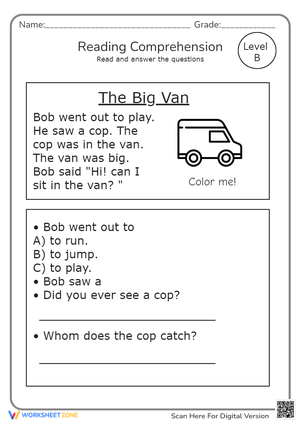
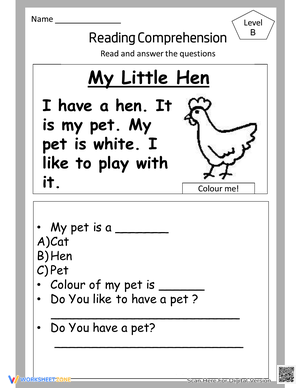
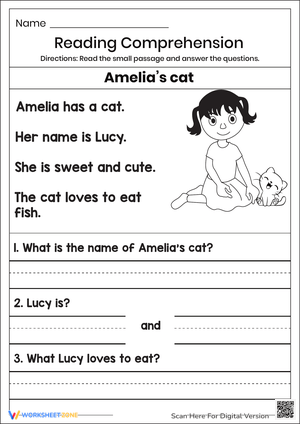
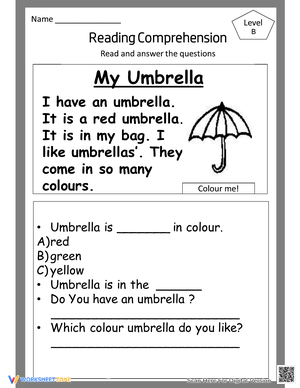
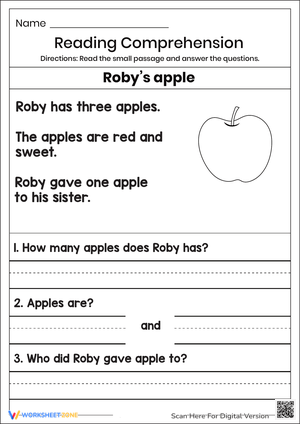
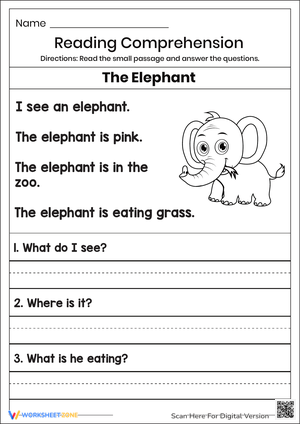
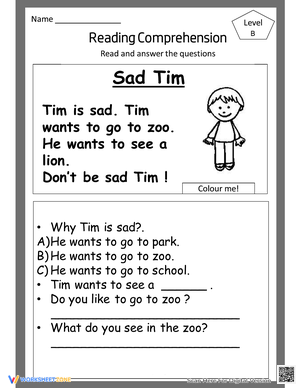
Teachers looking for leveled reading fill in the blank printable pdf worksheets for kindergarten usually need something more focused than a general reading page. In this grade band, students are still building one-to-one matching, letter-sound knowledge, high-frequency word recognition, and the habit of checking whether a sentence makes sense. A strong cloze worksheet supports those goals by keeping the text short, the syntax predictable, and the missing word load low enough for children to succeed.
That matters in kindergarten because fill-in-the-blank reading tasks can either clarify understanding or overload it. When a page asks students to complete too much text, use unfamiliar vocabulary, or infer across a long passage, the task stops measuring early reading and starts measuring stamina. The better choice is a printable page with one to three simple sentences, a clear topic, and missing words that can be solved from picture clues, word-bank options, or repeated sentence patterns.
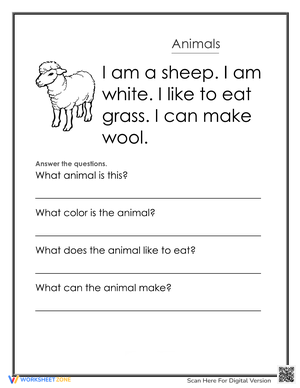
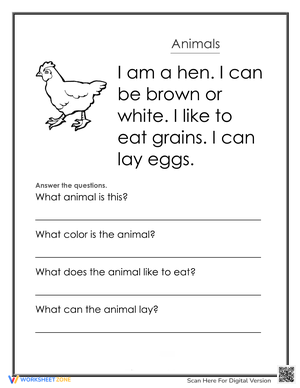
Worksheetzone's kindergarten level reading collection is aligned to this classroom reality. Instead of treating cloze work as a separate skill, teachers can use it as a bridge between decoding, sentence meaning, and comprehension checks during early literacy instruction.
What makes a fill-in-the-blank page truly level-appropriate
For kindergarten, level-appropriate doesn't mean easier by appearance alone. It means the worksheet is matched to what emergent readers can actually process independently or with light support. The most effective pages keep text volume low, rely on familiar sentence frames, and emphasize high-frequency words and concrete nouns that students already meet in read-alouds, phonics lessons, and shared reading.
- Short text segments, often a single sentence or a two-sentence sequence
- One missing word at a time rather than multiple blanks in every line
- Predictable sentence patterns such as I see a ___ or The cat is ___
- Visual support or a small word bank that narrows the response set
- Topics grounded in everyday kindergarten vocabulary like animals, colors, family, school, or seasons
Those features help teachers tell the difference between a reading issue and a task-design issue. If many students miss the same item, the worksheet may be asking for too much language generation. If students can use context and known words to complete the sentence, the page is doing what a kindergarten cloze task should do.
How leveled cloze reading supports RF.K.4
Kindergarten reading instruction should keep pointing students back to meaning. The Common Core kindergarten foundational reading expectation named in the prefetched research, RF.K.4, emphasizes reading emergent-reader texts with purpose and understanding. A well-built cloze worksheet supports that expectation because students must read the whole sentence, notice what would make sense, and connect the missing word to the rest of the text.
A practical reason teachers use cloze pages at this stage is efficiency: one missing word inside a predictable sentence can reveal three things at once. You can see whether a student recognizes the sentence frame, transfers a taught sight word, and checks meaning before answering. That makes leveled fill-in-the-blank pages a tighter formative measure than a longer worksheet with mixed directions.
Teachers can also scale the same format across a range of readiness levels. One group may complete a sentence with two picture-supported choices. Another may work from a four-word bank. A stronger group may read a two-sentence mini-passage and supply a missing noun or verb without choices. The format stays stable while the language demand changes, which is helpful in classrooms where students enter kindergarten with very different reading backgrounds.
What the research-backed classroom signal looks like
Citation capsule: The Common Core page for RF.K.4 defines the goal as reading emergent-reader texts with purpose and understanding, while Reading Rockets notes that fluent reading grows from accurate word reading connected to meaning. For kindergarten, that points teachers toward short cloze tasks that keep accuracy, context, and comprehension tightly linked rather than separated into isolated drills.
This is why printable PDFs remain useful even in classrooms with digital tools. They are quick to distribute, easy to annotate during guided reading, and simple to compare across groups over time. A paper worksheet also lets teachers watch the process: whether a child rereads, scans the word bank, points to each word, or guesses without checking the sentence.
When that process data is visible, intervention decisions get sharper. A student who decodes the options but ignores sentence meaning needs a different next step from a student who understands the sentence orally but cannot track the printed words. Leveled cloze worksheets give teachers a compact way to spot that difference.
Classroom Implementation
In small-group reading, these worksheets work best after students have already seen the vocabulary and sentence pattern in instruction. Use the page as a brief transfer task rather than the main lesson. That might mean reading a patterned text together, reviewing three target sight words, and then giving students a cloze page that mirrors the same structure. The worksheet becomes evidence of whether students can carry the reading work independently.
During literacy centers, keep the routine consistent. Students should know how to read the sentence, look at the picture or word bank, choose a word, and reread the completed sentence aloud. If you rotate fresh content but preserve the same routine, students spend less energy figuring out directions and more energy practicing reading.
- Use one sheet as a 5-minute warm-up before guided reading
- Assign a similar page during center time for independent practice
- Pull the same format into intervention with fewer choices and more oral rehearsal
- Send selected PDFs home when families need clear, low-prep reading practice
When a word bank helps and when it should shrink
For most kindergarten readers, a word bank improves the quality of the task. It reduces writing demand, narrows the decision set, and keeps attention on sentence meaning. A small bank of two to four words is often enough. If the bank is too large, the page turns into a visual scanning exercise. If there is no support at all, teachers may end up measuring spelling or handwriting instead of reading.
Word banks are especially useful when the missing word is a recently taught high-frequency word, a decodable noun, or a contrasting pair such as in/on or big/small. In those cases, the student still has to read the sentence for meaning, but the support keeps the task accessible. That is usually the right balance for emergent readers.
As students gain control, teachers can reduce support gradually. Start by removing picture cues while keeping the word bank. Then keep the sentence pattern but ask students to choose from fewer clues. Later, ask students to supply a word without options in a very short passage. This gradual release keeps the worksheet level aligned to student growth rather than locking the class into one static format all year.
How to use printable PDFs for assessment without overtesting
These worksheets are most useful as quick checks, not long testing events. One page can tell you whether a student recognizes familiar words in context, completes a sentence logically, and rereads to confirm meaning. That is enough for a snapshot. Teachers do not need ten blanks and a paragraph to gather valid information from kindergarten readers.
A simple recording routine helps. Note whether the student completed the blank independently, needed the word bank, used picture support, or answered only after prompting. Over a few weeks, those patterns show movement more clearly than a single percentage score. You can also compare performance across formats: some students succeed with oral cloze before they succeed in print, while others transfer quickly once the sentence frame is familiar.
Because the pages are printable PDFs, teachers can keep a small stack by skill or by group. That makes it easier to reteach immediately, revisit a target sight word set, or send the right level of practice home. The value is not just the worksheet itself. The value is how quickly the format gives teachers actionable reading evidence.
Frequently Asked Questions
1. What reading level should fill-in-the-blank worksheets target in kindergarten?
They should stay at the emergent-reader level: very short text, familiar vocabulary, and predictable sentence patterns. If students must decode many unknown words or manage a full paragraph, the worksheet is likely above the intended level.
2. Do kindergarten cloze worksheets work better with a word bank?
Usually, yes. A small word bank keeps the task focused on reading and meaning instead of spelling. For many kindergarten students, two to four answer choices are enough support to make the worksheet productive without making it automatic.
3. How can teachers use printable PDF reading worksheets in small groups or centers?
Use them after direct instruction as a brief transfer task. In small groups, pair the worksheet with a taught sentence frame or decodable text. In centers, keep the routine consistent so students can work independently with familiar expectations.
4. Are fill-in-the-blank reading pages good for sight words and comprehension?
Yes, when the page is short and level-appropriate. Students practice noticing a known word in context and checking whether the completed sentence makes sense. That combination makes these pages useful for both high-frequency word transfer and basic comprehension.