


























Views
Downloads

Essential 'oi' & 'oy' Diphthongs Worksheet | Grade 3 ELA
Paste this activity's link or code into your existing LMS (Google Classroom, Canvas, Teams, Schoology, Moodle, etc.).
Students can open and work on the activity right away, with no student login required.
You'll still be able to track student progress and results from your teacher account.
This Grade 3 phonics resource provides targeted practice with the 'oi' and 'oy' diphthong spelling patterns. Students engage in a systematic word sort followed by a definition matching exercise to ensure they can both spell and understand these essential vowel teams. It is a complete, ready-to-use tool for building foundational literacy skills.
At a Glance
- Grade: 3 · Subject: English Language Arts (ELA)
- Standard:
CCSS.ELA-LITERACY.L.3.2.f— Use spelling patterns and generalizations in writing words- Skill Focus: Diphthongs 'oi' and 'oy'
- Format: 2 pages · 16 problems · Answer key included · PDF
- Best For: Literacy centers and independent phonics practice
- Time: 15–20 minutes
What's Inside
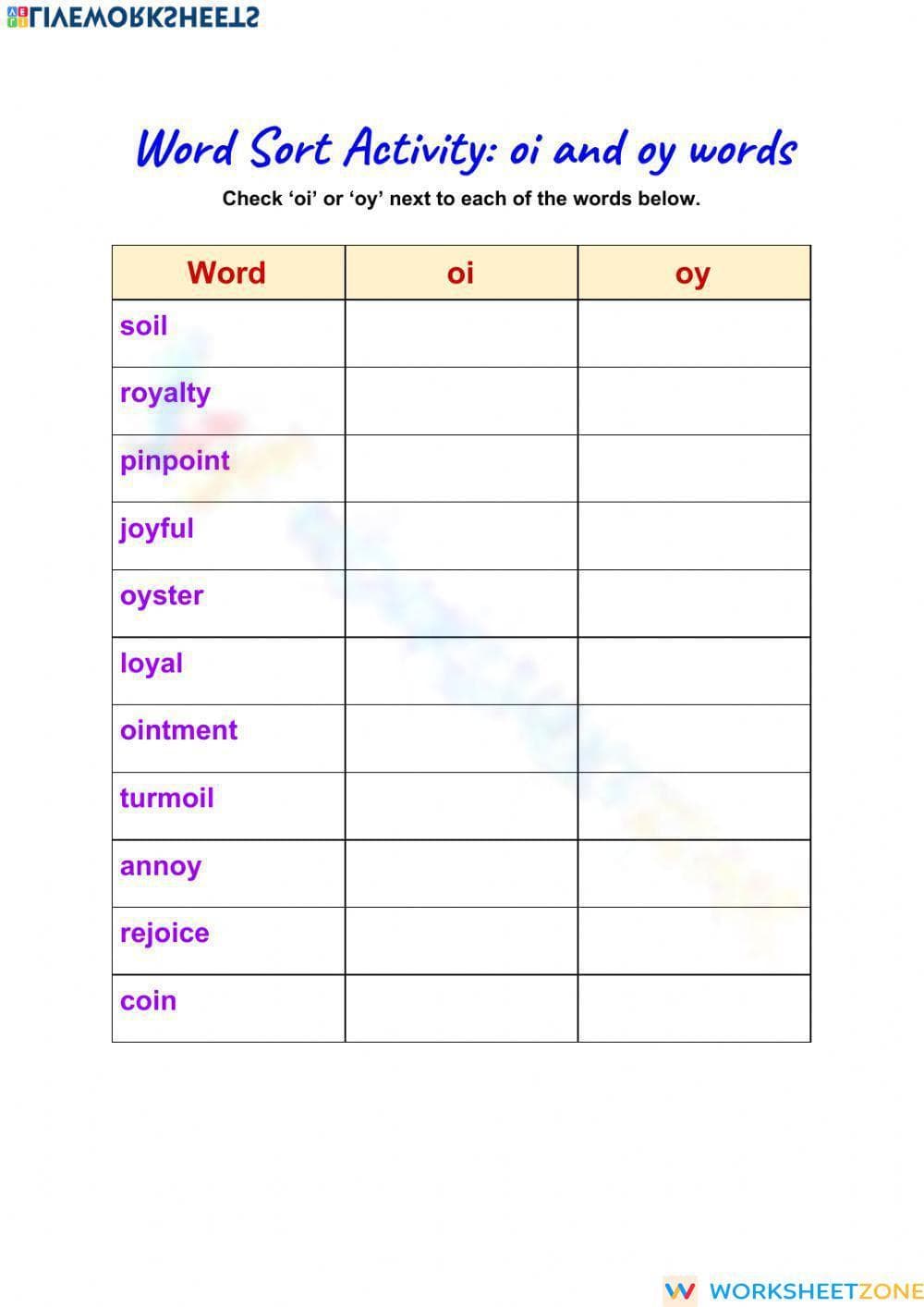
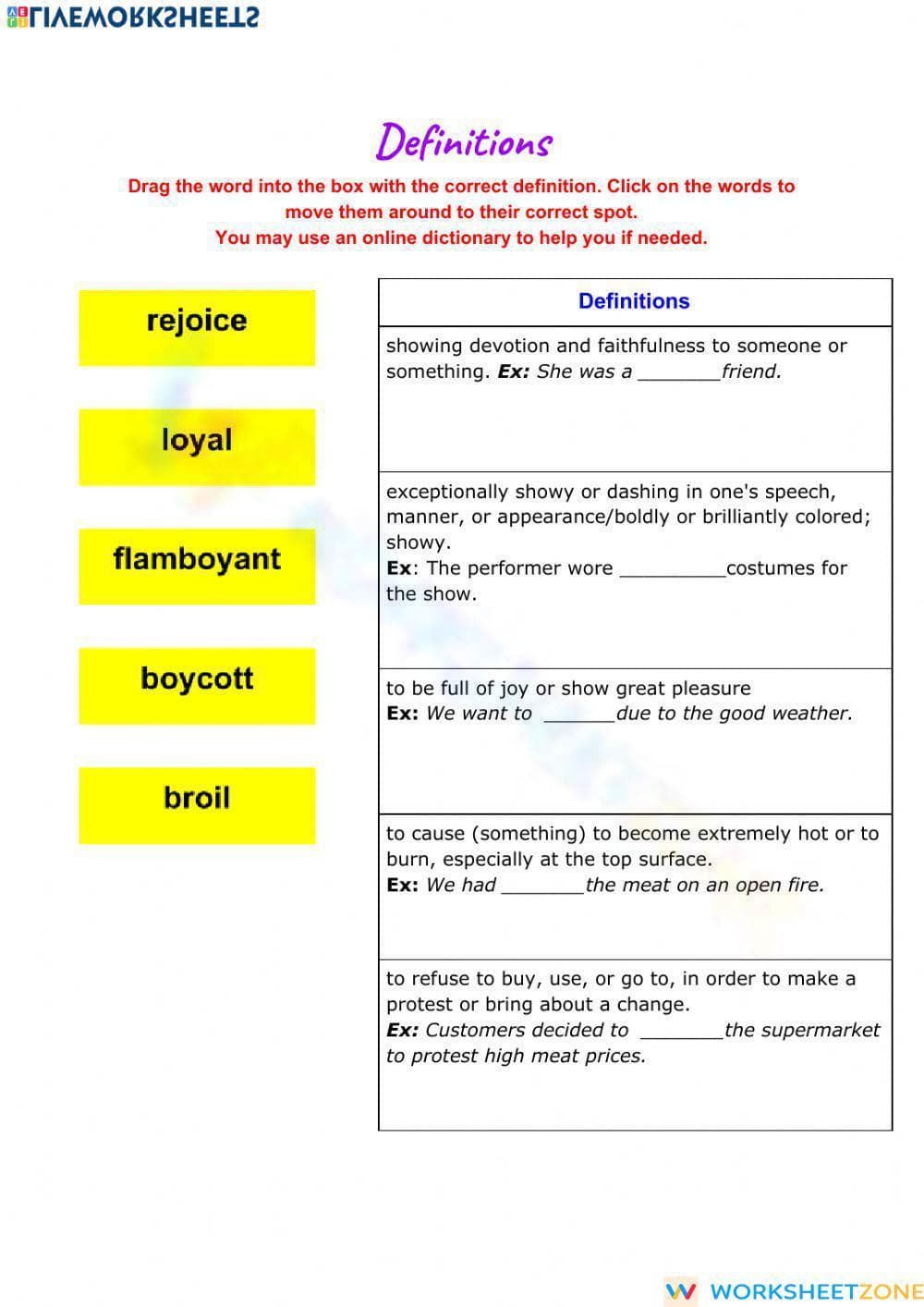
This two-page PDF contains two focused activities. The first page features a word sort table where students categorize 11 words such as "ointment" and "annoy." The second page provides a vocabulary challenge where students match five terms to their correct definitions. A complete answer key is included for rapid review.
Skill Progression
- Guided Practice: Students begin by sorting 11 words like "rejoice" and "annoy." This isolated phonetic task provides high scaffolding, focusing exclusively on identifying the 'oi' and 'oy' spelling patterns.
- Supported Practice: The second task involves matching five vocabulary words to their definitions. This bridges decoding and comprehension, requiring students to apply their knowledge in a meaningful context with moderate support.
- Independent Practice: By completing these structured activities, students build the automaticity needed for independent writing. The worksheet facilitates a smooth transition from simple identification to complex application.
This gradual-release model ensures students master the target spelling generalizations effectively.
Standards Alignment
This resource is meticulously aligned with CCSS.ELA-LITERACY.L.3.2.f, which tasks students with using spelling patterns and generalizations in their writing. By isolating the 'oi' and 'oy' vowel teams, students internalize the phonetic logic of English. Both standard codes can be copied directly into lesson plans, IEP goals, or district curriculum mapping tools.
How to Use It
Deploy this worksheet as a focused literacy center activity after an introductory lesson on diphthongs. It also serves as an excellent formative assessment tool; observe if students struggle more with the phonetic sorting or the semantic definition matching. Expected completion time is 15–20 minutes, making it an ideal choice for a morning work assignment.
Who It's For
While designed for Grade 3, this practice is highly effective for Grade 2 students ready for extension or Grade 4 learners needing intervention. It supports English Language Learners by explicitly linking spelling to meaning. Pair it with a visual anchor chart to reinforce the "oi in the middle, oy at the end" rule.
Mastering vowel teams like 'oi' and 'oy' is a critical milestone in the transition from decoding to fluent reading. This worksheet supports `CCSS.ELA-LITERACY.L.3.2.f` by requiring students to use spelling patterns and generalizations in writing. According to research by Fisher & Frey (2014), word sorts provide a cognitive scaffold that helps students internalize complex phonetic structures more effectively than rote memorization. By combining a structural sort with a vocabulary task, this resource ensures students are building the semantic network necessary for comprehension. This multi-modal approach is essential for developing decoding automaticity required for academic success. It provides the structured repetition that struggling readers need while maintaining grade-level rigor.


