


























Views
Downloads
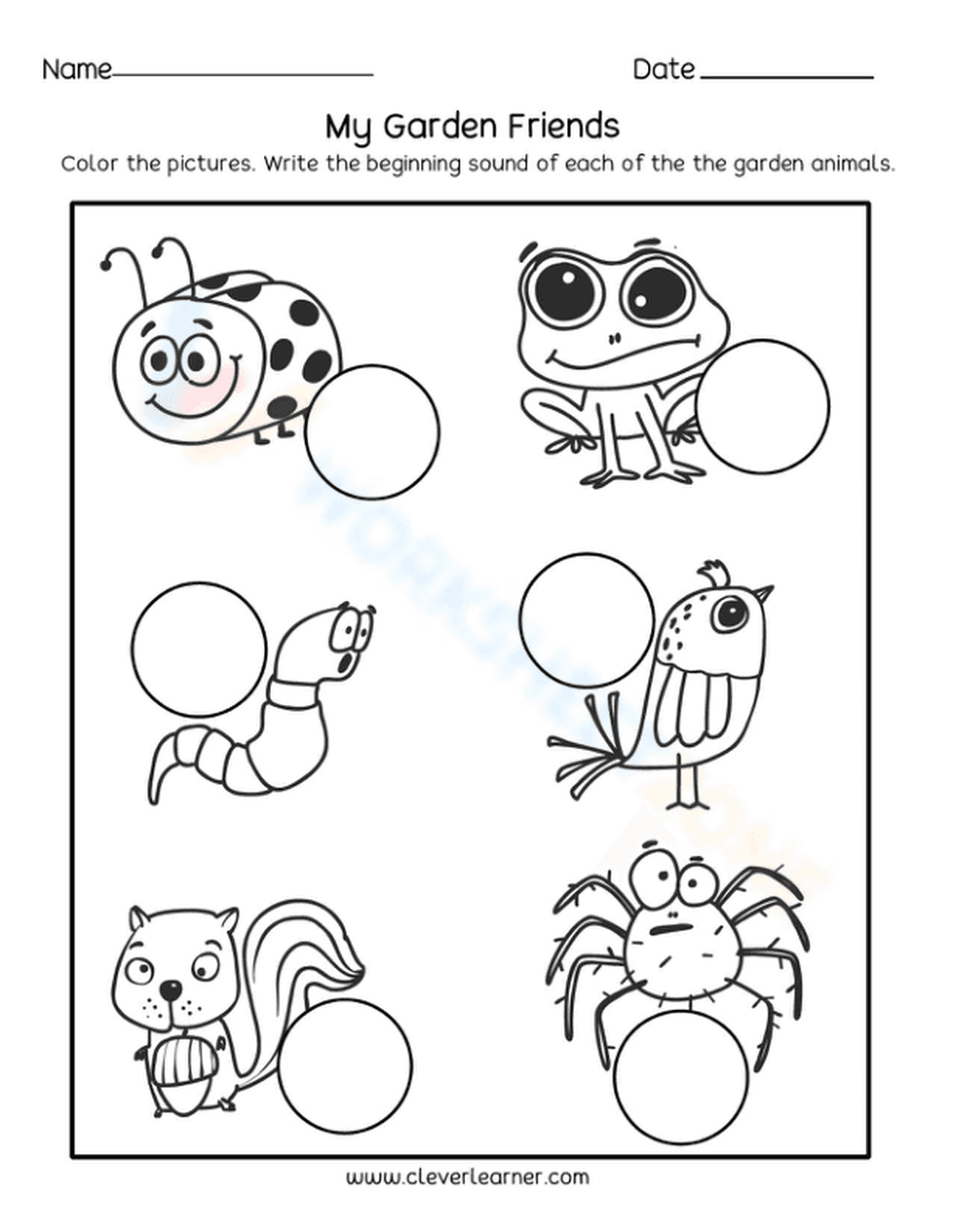

Grade K Beginning Sounds — Printable No-Prep Worksheet
Paste this activity's link or code into your existing LMS (Google Classroom, Canvas, Teams, Schoology, Moodle, etc.).
Students can open and work on the activity right away, with no student login required.
You'll still be able to track student progress and results from your teacher account.
This Grade K beginning sounds worksheet helps young learners identify common garden creatures while practicing critical phonemic awareness skills. Students examine six distinct animal illustrations, color them to build fine motor control, and determine the correct initial letter for each, bridging biological observation and early literacy development.
At a Glance
- Grade: K · Subject: ELA & Science
- Standard:
CCSS.ELA-LITERACY.RF.K.2.D— Isolate and pronounce the initial sounds in spoken words- Skill Focus: Beginning sounds and animal recognition
- Format: 1 page · 6 problems · Answer key included · PDF
- Best For: Morning work and literacy centers
- Time: 10–15 minutes
The worksheet features high-quality line-art illustrations of a ladybug, frog, worm, bird, squirrel, and spider. Each graphic is paired with a dedicated circular writing space for the student to record the beginning sound. The layout is intentionally clean and uncluttered to prevent cognitive overload in early learners, providing one page of focused practice with a teacher-friendly answer key for quick grading.
Zero-Prep Workflow
Integrating this resource into your classroom requires less than two minutes of preparation. First, print the required number of copies for your group in about 30 seconds. Second, distribute the pages during a science block or literacy center rotation. Third, review the completed work using the answer key to identify students who may need additional support with phonetic isolation in under a minute. This makes it an ideal choice for sub plans.
Standards Alignment
This resource aligns primarily with CCSS.ELA-LITERACY.RF.K.2.D, which requires students to isolate and pronounce the initial, medial vowel, and final sounds in three-phoneme words. It also supports science standards regarding the observation of living things and their physical characteristics. Both standard codes can be copied directly into lesson plans, IEP goals, or district curriculum mapping tools.
How to Use It
Use this worksheet as a formative assessment after a lesson on garden habitats or as a focused literacy center activity. Have students name the animal aloud before writing the letter, helping them hear the phoneme clearly. Observe whether students can differentiate between similar sounds, such as the initial 's' in squirrel versus the 's' in spider, providing immediate feedback on letter-sound correspondence. Expect students to complete this task in 10 to 15 minutes.
Who It's For
This activity is designed for preschool, kindergarten, and first-grade students who are developing their phonological awareness. It is particularly effective for English Language Learners who are building their animal vocabulary. Pair this resource with a garden-themed picture book or a nature walk to reinforce the connection between classroom learning and the natural world around them.
Research by Fisher & Frey (2014) emphasizes the importance of integrated literacy and content-area instruction in early childhood education. By combining the study of garden animals with phonemic isolation tasks, this worksheet leverages the CCSS.ELA-LITERACY.RF.K.2.D standard to reinforce how students isolate and pronounce the initial sounds in spoken words in familiar contexts. Evidence from NAEP indicates that students who engage in multi-sensory activities—such as coloring paired with phoneme identification—demonstrate higher retention rates of letter-sound relationships. This resource provides the structured repetition necessary for cognitive scaffolding without adding to teacher workload. The inclusion of six specific tasks allows for a clear data point regarding a student's ability to map sounds to graphemes, a foundational step in the decoding process. This tool is optimized for zero-prep environments where instructional time must be maximized for student output and teacher observation.


