


























Views
Downloads
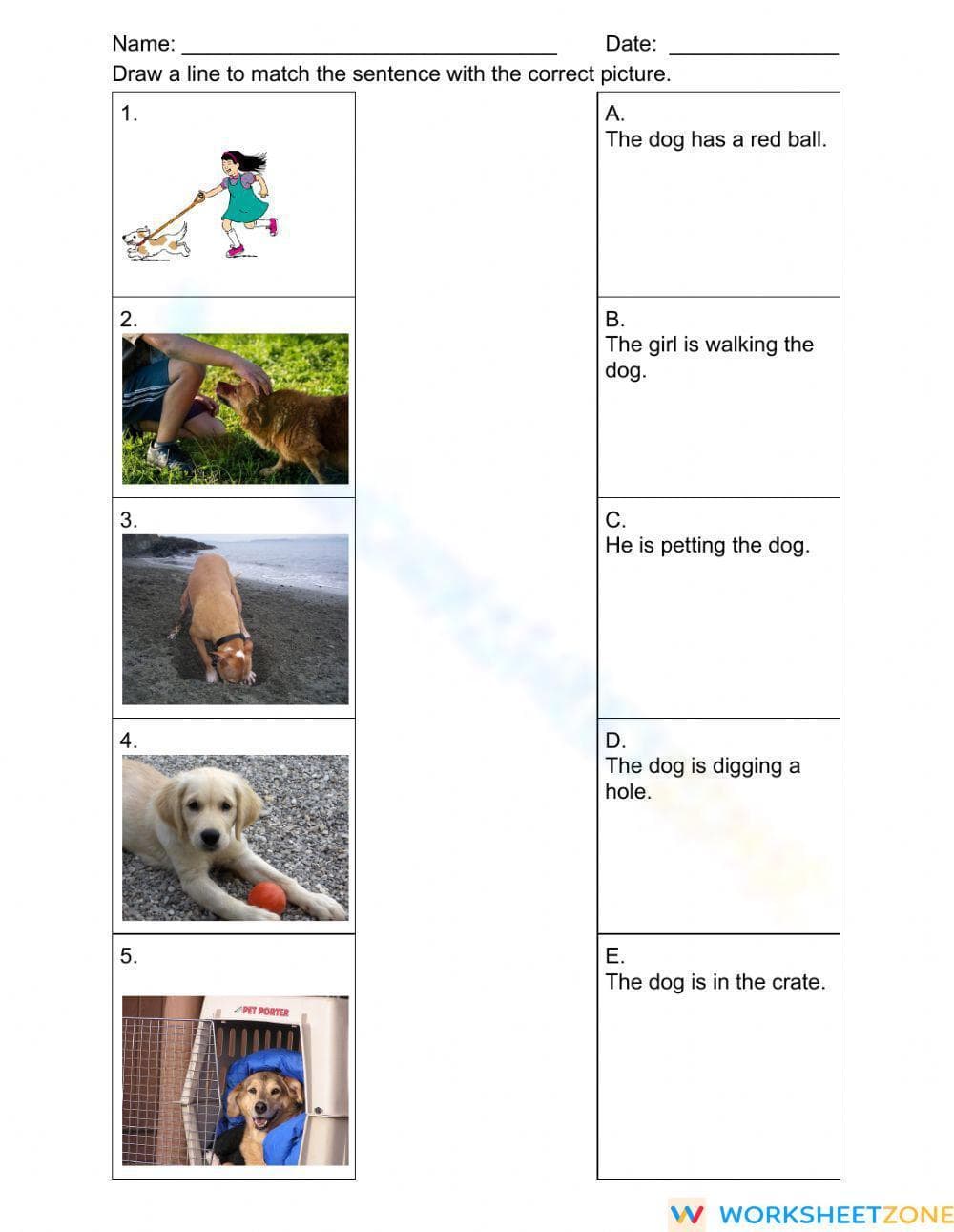
Reading Sentences & Pictures Worksheet | Grade 1 Printable
Paste this activity's link or code into your existing LMS (Google Classroom, Canvas, Teams, Schoology, Moodle, etc.).
Students can open and work on the activity right away, with no student login required.
You'll still be able to track student progress and results from your teacher account.
This Grade 1 reading comprehension worksheet strengthens early literacy skills by requiring students to decode simple sentences and connect them with visual representations. By identifying specific details in both text and imagery, learners develop the foundational ability to verify meaning through evidence. This activity ensures students translate abstract words into concrete mental models effectively.
At a Glance
- Grade: 1 · Subject: English Language Arts
- Standard:
CCSS.ELA-LITERACY.RI.1.1— Identify and match key details from sentences to visual illustrations- Skill Focus: Sentence-to-picture matching
- Format: 1 page · 5 problems · Answer key included · PDF
- Best For: Early literacy centers and independent practice
- Time: 10–15 minutes
What's Inside
This single-page resource features five distinct tasks where students draw lines to connect descriptive sentences with corresponding photographic images. The worksheet includes clear, high-quality visuals of dogs in various scenarios, paired with simple subject-verb-object sentences. A full answer key is provided to facilitate rapid grading or student self-correction, ensuring a streamlined instructional experience for teachers and students alike.
Zero-Prep Workflow
Designed for maximum efficiency, this resource features a zero-prep workflow. Teachers can print, distribute, and review materials quickly, with total preparation time under two minutes. This makes it ideal for morning work or emergency sub plans.
Standards Alignment
This worksheet is directly aligned with `CCSS.ELA-LITERACY.RI.1.1`, which requires students to ask and answer questions about key details in a text. By matching the specific action in the text to the correct photograph, students demonstrate an understanding of how to identify essential information within a sentence. This standard code can be copied directly into lesson plans, IEP goals, or district curriculum mapping tools.
How to Use It
Integrate this worksheet during the independent practice portion of a lesson focused on reading for detail. Educators can use this as a formative assessment by observing if students are looking for specific keywords—such as "crate" or "digging"—before drawing their lines. Expected completion time is 10 to 15 minutes, allowing it to fit perfectly within a literacy rotation or as a transition activity between subjects.
Who It's For
This resource is specifically designed for Kindergarten and Grade 1 students who are beginning to read fluently. It also serves as an excellent support for English Language Learners (ELLs) by providing visual scaffolding for new vocabulary. Pair this worksheet with a short reading passage about pets or an anchor chart highlighting common action verbs to extend the learning experience for early readers.
According to research by Fisher & Frey (2014), the use of visual scaffolds is critical for developing the close reading skills necessary for academic success. This worksheet applies those principles by requiring students to engage in "micro-reading," where every word in the sentence must be processed to distinguish between similar images. By matching text to illustrations, students are practicing the core requirements of `CCSS.ELA-LITERACY.RI.1.1`, ensuring they can describe key ideas using all available information. This structured approach builds the cognitive stamina required for more complex informational texts in later grades. The task count of five specific problems provides enough repetition to solidify the skill without overwhelming early learners. This type of evidence-based practice is highly recommended for interventions and Tier 1 instruction to close the gap between decoding and comprehension. The focus on observable evidence prepares students for rigorous standards-based assessments.


