


























Views
Downloads

CCSS.RF.K.1.d Worksheet: Letter F — Kindergarten Aligned
Paste this activity's link or code into your existing LMS (Google Classroom, Canvas, Teams, Schoology, Moodle, etc.).
Students can open and work on the activity right away, with no student login required.
You'll still be able to track student progress and results from your teacher account.
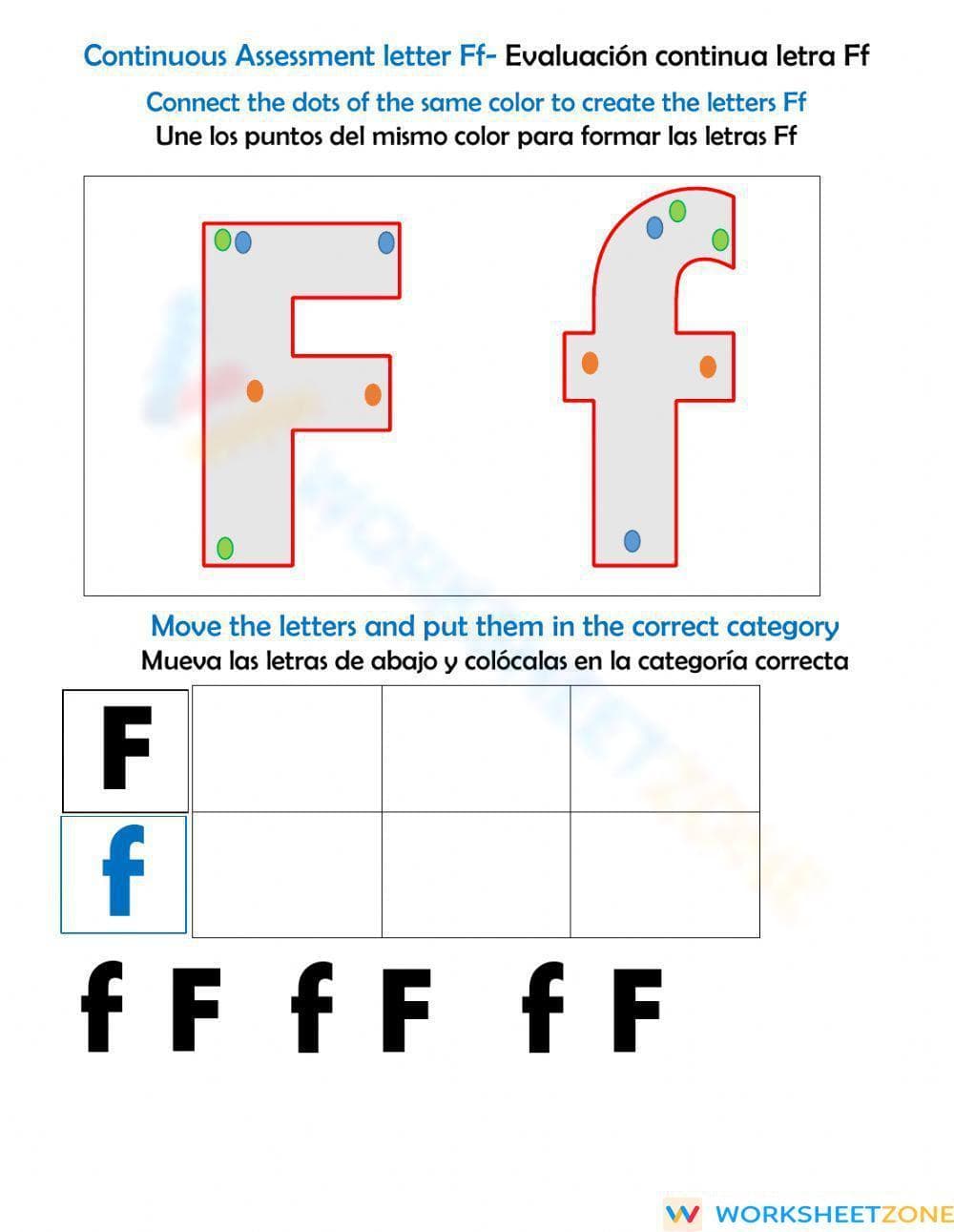
This kindergarten ELA worksheet provides targeted practice for recognizing and forming the letter Ff, directly assessing the foundational skill outlined in CCSS.ELA-LITERACY.RF.K.1.d. Students will complete five distinct activities designed to build from basic identification to writing and initial sound association, ensuring a comprehensive review of this key alphabet component.
At a Glance
- Grade: Kindergarten · Subject: ELA / Alphabet
- Standard:
CCSS.ELA-LITERACY.RF.K.1.d— Recognize and name all upper- and lowercase letters of the alphabet.- Skill Focus: Letter Ff Recognition, Formation, and Sound
- Format: 2 pages · 5 problems · Answer key included · PDF
- Best For: Formative assessment, alphabet mastery review, letter-of-the-week practice.
- Time: 10–15 minutes
What's Inside
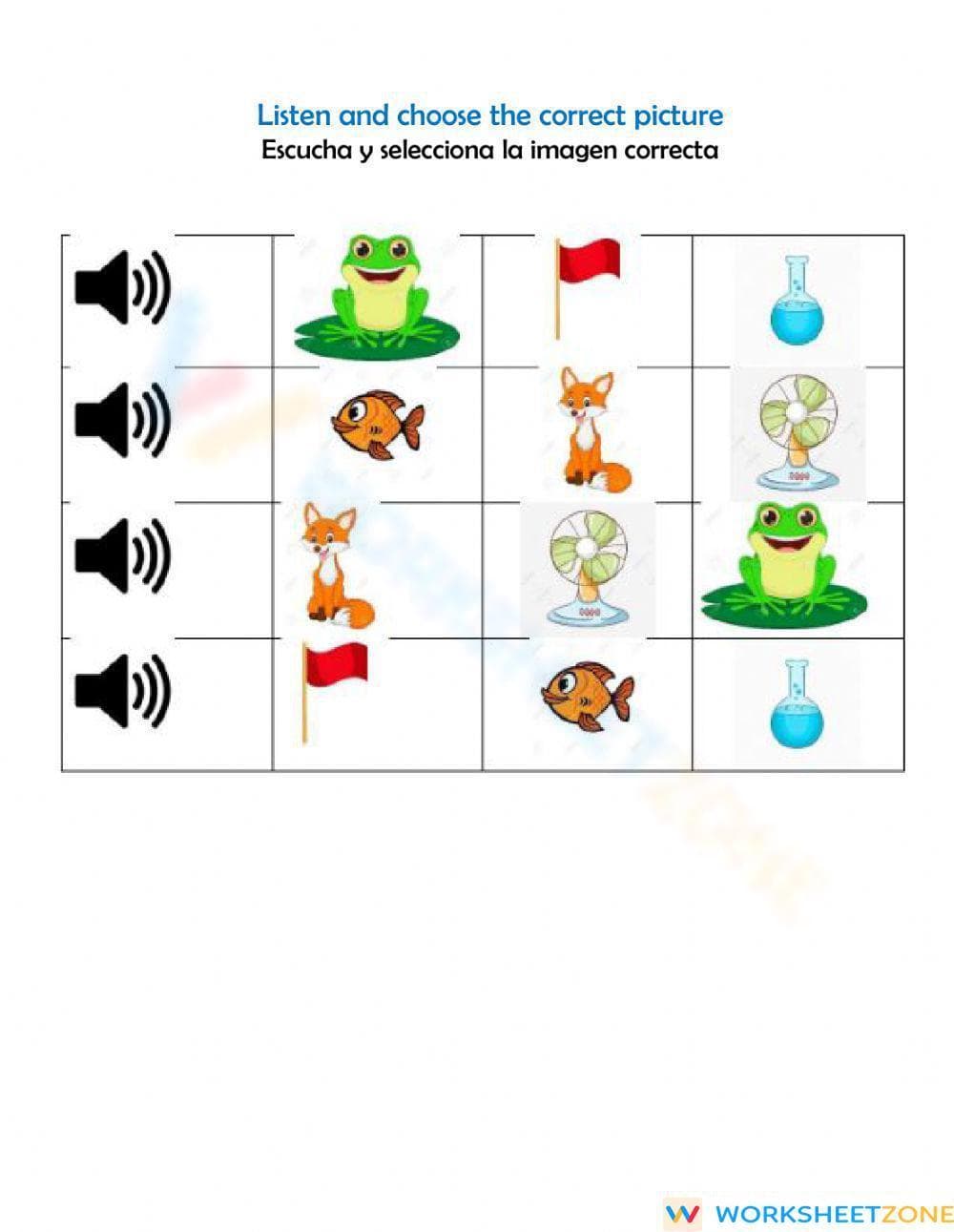
This resource includes a single-page assessment and a corresponding full-page answer key. The worksheet is organized into five sections: coloring the uppercase and lowercase letters, tracing and writing the letters, circling the target letter in a mixed group, and identifying pictures that begin with the /f/ sound. This clear structure allows for easy evaluation of student progress.
Mastery Evidence
This assessment provides clear evidence of a student's mastery of CCSS.ELA-LITERACY.RF.K.1.d. Each of the five tasks targets a sub-skill of letter knowledge: Task 1 (Coloring) assesses basic recognition. Tasks 2 and 3 (Tracing/Writing) measure fine motor control and letter formation. Task 4 (Circling) tests discrimination among other letters. Finally, Task 5 (Picture ID) connects the grapheme to its phoneme. The resulting worksheet serves as a concrete data point for standards-based grading or progress monitoring.
Standards Alignment
The primary standard addressed is CCSS.ELA-LITERACY.RF.K.1.d: "Recognize and name all upper- and lowercase letters of the alphabet." The worksheet also supports foundational printing skills. Both standard codes can be copied directly into lesson plans, IEP goals, or district curriculum mapping tools.
How to Use It
Use this worksheet as a formative assessment after direct instruction on the letter F. Observe students as they work, noting any hesitation in letter formation or sound association—this provides valuable qualitative data. It can also be used as a pre-assessment to gauge prior knowledge at the start of a letter-of-the-week unit. The assessment is designed to be completed in approximately 10 to 15 minutes.
Who It's For
This resource is designed for kindergarten students learning the alphabet. It is also suitable for preschool learners who are ready for structured practice or first graders needing a quick review of foundational skills. For students needing support, complete the tracing section together. Pair this worksheet with a sensory activity, like drawing the letter 'F' in sand or shaving cream, to reinforce learning.
This worksheet offers a practical application of findings highlighted in the RAND AIRS 2024 analysis of early literacy instruction. The report emphasizes that systematic and explicit teaching of foundational skills, such as alphabet knowledge, is crucial for long-term reading development. This assessment directly measures student proficiency against standard CCSS.ELA-LITERACY.RF.K.1.d—the ability to recognize and name letters—which the RAND study identifies as a critical gateway skill. The worksheet's multi-modal format, combining recognition, formation, and sound association tasks, provides a reliable data point for teachers. This allows educators to confirm that a student has achieved automaticity with the letter 'F', freeing up cognitive load for more complex decoding tasks. The use of such focused assessments aligns with evidence-based practices for ensuring all learners are on track for reading proficiency by third grade.


